
Article At A Glance
- Overthinking and critical thinking are fundamentally different: one moves you forward, the other keeps you stuck in a loop of anxiety and indecision.
- Critical thinking is a structured, goal-oriented process that uses logic and evidence to reach clear decisions — it is a learnable skill anyone can develop.
- Overthinking is passive and emotionally driven, often leading to analysis paralysis where no action is ever taken despite endless mental effort.
- There are specific, actionable strategies that can help you break the overthinking cycle and shift into productive critical thinking — covered in detail below.
- Most people cannot tell which mode they are in while it is happening — knowing the warning signs changes everything.
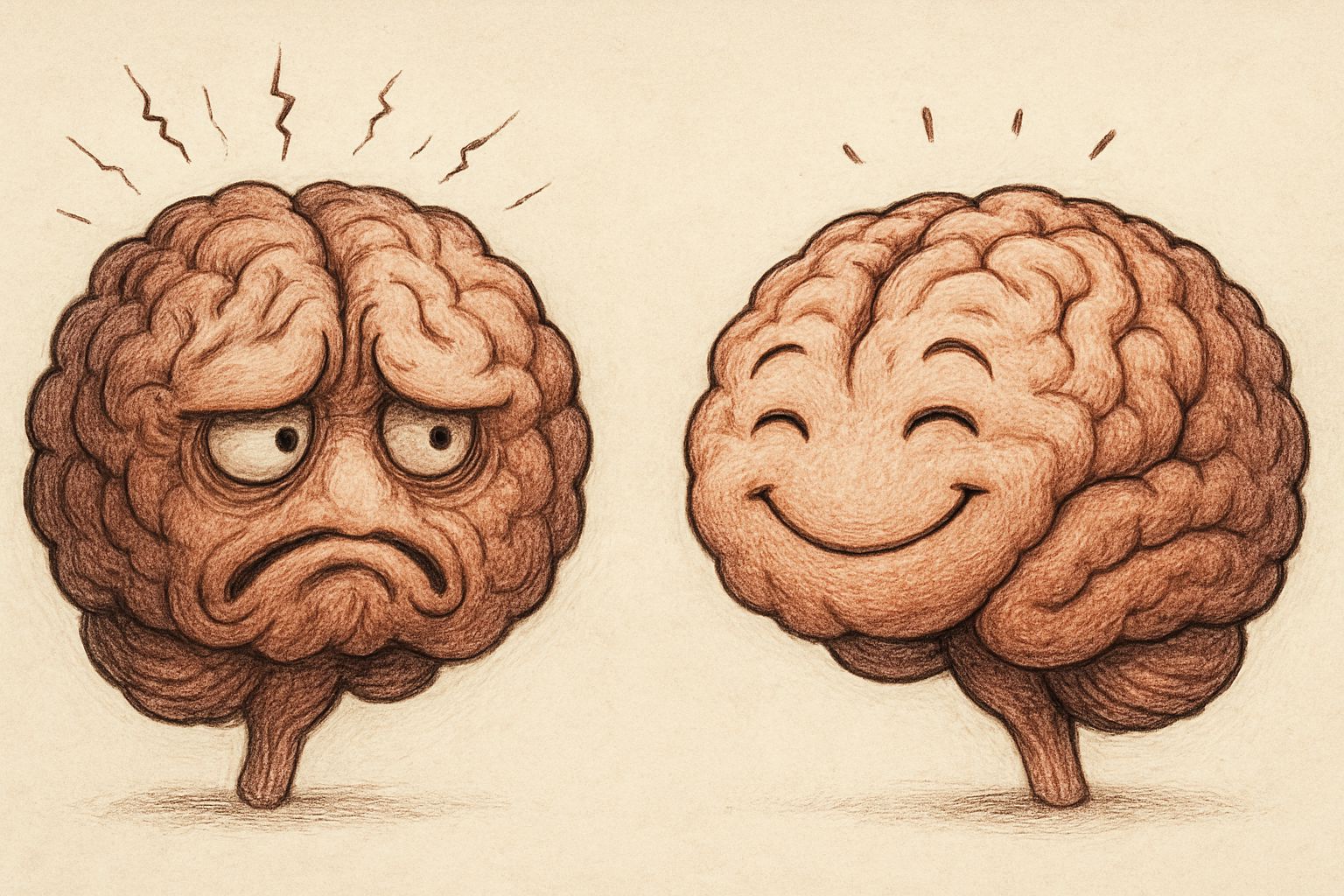
Your brain is working hard, but that does not always mean it is working for you.
There is a fine line between thinking something through carefully and getting completely trapped inside your own head. Most people cross that line without realizing it, convincing themselves they are being thorough when they are actually just spinning. Understanding the difference between overthinking and critical thinking is one of the most practical things you can do for your mental clarity, your decisions, and your overall wellbeing.
Overthinking and Critical Thinking Are Not the Same Thing
Both involve deep thought, but the similarity stops there. Critical thinking is intentional, structured, and leads somewhere useful. Overthinking is repetitive, emotionally charged, and tends to lead nowhere at all. Confusing the two is easy because they can feel similar in the moment — your brain is active, you feel engaged, and it seems like you are doing something productive. But the outcomes could not be more different. For insights on managing thought processes, consider exploring behavioral change therapy.
What Overthinking Actually Is
Overthinking is the habit of dwelling on a thought, problem, or situation far beyond what is useful or necessary. It is not about thinking carefully — it is about thinking excessively, usually in circles, without arriving at any resolution. It often centers on worst-case scenarios, past regrets, or future uncertainties that are largely out of your control.
The Cycle That Keeps You Stuck
The reason overthinking is so difficult to escape is that it creates a self-reinforcing loop. A triggering thought appears, you begin analyzing it, that analysis generates more questions or fears, and those new thoughts demand even more analysis. The loop does not resolve — it just grows. Research has linked this pattern of repetitive negative thinking to heightened stress, impaired decision-making, and increased risk of anxiety and depression.
What makes this cycle so insidious is that it feels productive. You are thinking hard, after all. But thinking hard in circles is not the same as thinking effectively. The mental energy is real; the progress is not.
How Overthinking Feels vs. How It Looks From the Outside
From the inside, overthinking feels like due diligence. It feels responsible, even cautious. From the outside — or in hindsight — it looks like procrastination dressed up as preparation. You might spend three hours researching a decision you could have made in twenty minutes, or replay a conversation from last week without changing a single thing about it. If you’re struggling with breaking this cycle, you might find insights from behavioral change therapy helpful.
Common Triggers That Pull You Into Overthinking
Overthinking does not just appear randomly — it tends to be activated by specific circumstances. High-stakes decisions, social situations, past failures, and uncertainty about the future are among the most common entry points. Recognizing your personal triggers is the first step toward interrupting the cycle before it takes hold.
- Fear of making the wrong decision
- Past experiences that ended in failure or embarrassment
- Perfectionism and unrealistic standards
- Lack of trust in your own judgment
- Uncertain or high-pressure environments
- Excessive focus on what other people think
What Critical Thinking Actually Is
Critical thinking is a deliberate, disciplined process of evaluating information, questioning assumptions, and reasoning toward a well-supported conclusion. It is not about being skeptical of everything or arguing for the sake of it — it is about being intentional with how you process information before you act on it. Where overthinking is reactive and emotional, critical thinking is proactive and logical.
The goal of critical thinking is always to arrive somewhere useful. You are moving toward a decision, a solution, or a clearer understanding. Every step in the process has a purpose, and when that purpose is fulfilled, the thinking stops — because it has done its job.
The Five Core Elements of Critical Thinking
Critical thinking is not a single skill — it is a set of interconnected mental habits that work together to improve the quality of your reasoning and conclusions.
- Analysis: Breaking down complex information into its core components to understand what is actually being said or claimed
- Evaluation: Assessing the credibility and relevance of evidence before accepting it as valid
- Inference: Drawing logical conclusions based on available evidence rather than assumptions or emotions
- Interpretation: Understanding the meaning and significance of information in its proper context
- Self-regulation: Reflecting on your own reasoning process to identify and correct bias or error
These five elements do not operate in a rigid sequence — they work together fluidly. A strong critical thinker cycles through all of them naturally, often without even noticing, because the habits have become second nature through deliberate practice.
Why Critical Thinking Leads to Better Decisions
When you think critically, you are not just gathering more information — you are filtering it. You are asking which information is relevant, which sources are credible, and which conclusions are actually supported by evidence. That filtering process is what separates a good decision from a lucky one. Critical thinkers do not always have more data than everyone else; they simply use what they have more effectively.
The Real Differences Between Overthinking and Critical Thinking
Purpose: Problem-Solving vs. Problem-Dwelling
Critical thinking always has a destination. You engage with a problem because you want to understand it, resolve it, or make a better decision because of it. Overthinking, on the other hand, has no real destination — it circles the problem endlessly without ever committing to a direction. The purpose of critical thinking is resolution. The purpose of overthinking, in a strange way, is to avoid it.
Structure: Logical Process vs. Emotional Loop
Critical thinking follows a structure, even when that structure is informal. You identify the question, gather relevant information, evaluate it, and move toward a conclusion. Overthinking has no such structure — it is driven by emotion, not logic. One anxious thought triggers another, and the process expands rather than narrows. Structure is what separates productive analysis from mental spinning.
Outcome: Clarity and Action vs. Paralysis and Anxiety
The clearest way to distinguish the two is to look at what they produce. Critical thinking produces clarity — you finish the process knowing more than you did before and feeling equipped to act. Overthinking produces the opposite: confusion, doubt, and a growing reluctance to make any move at all. This is what psychologists call analysis paralysis, where the volume of thought actually prevents decision-making rather than supporting it.
The emotional aftermath is just as telling. After a session of critical thinking, most people feel more confident and grounded. After a bout of overthinking, most people feel drained, anxious, and no closer to a solution than when they started. That emotional residue is one of the most reliable indicators of which mode you were actually in.
Time Spent: Productive Depth vs. Unproductive Repetition
Critical thinking can be deep and still time-efficient because every moment of thought is moving toward something. Overthinking is time-intensive without being time-productive — you can spend hours on a problem and make zero forward progress because you are revisiting the same fears and scenarios on repeat.
Factor
Critical Thinking
Overthinking
Purpose
Solve or understand a problem
Dwell on a problem without resolution
Structure
Logical and goal-directed
Unstructured and emotionally driven
Outcome
Clarity, confidence, and action
Paralysis, anxiety, and indecision
Time Use
Efficient and productive
Repetitive and time-consuming
Emotional Effect
Grounded and empowered
Drained and overwhelmed
Focus
What can be done
What could go wrong
Looking at these differences side by side makes it obvious why developing critical thinking — and actively interrupting overthinking — is one of the highest-leverage improvements you can make in your daily mental life. The gap between the two is not subtle; it shows up in your energy levels, your confidence, and the quality of your choices every single day.
How to Tell Which One You Are Doing Right Now
- Are you moving closer to a decision, or going in circles?
- Is your thinking based on facts and evidence, or on fears and assumptions?
- Do you feel more or less clear than when you started thinking about this?
- Has your thinking produced any new insight, or just more questions?
- Are you thinking about what you can do, or fixating on what might go wrong?
- Have you been thinking about this same issue repeatedly without resolution?
These questions act as a real-time diagnostic. You do not need to analyze your entire thought process — just pause and honestly answer one or two of them. The answers tend to be immediate and revealing. Most people already know, deep down, when they have crossed the line from productive thinking into rumination.
The challenge is not always awareness — it is interruption. Even when you recognize that you are overthinking, the pull of the loop can feel powerful and even obligatory, as though stopping means you are being careless. That feeling is the overthinking talking. Giving yourself permission to stop is not reckless; it is one of the most rational decisions you can make.
Signs You Are Thinking Critically
You are asking specific questions, weighing actual evidence, and moving toward a conclusion. Your thoughts feel organized rather than scattered, and the process feels focused rather than overwhelming. Most importantly, you have a sense that this thinking is going somewhere — that it will end with a decision or a clearer understanding rather than just more uncertainty.
Signs You Have Crossed Into Overthinking
You are revisiting the same scenarios repeatedly without new insight. Your thinking is increasingly focused on worst-case outcomes, hypothetical disasters, or what other people might think. The more you think, the less clear you feel — and the idea of just making a decision feels more stressful than the problem itself.
Fatigue is another major signal. Critical thinking, even when challenging, tends to leave you feeling mentally engaged. Overthinking leaves you exhausted, because your brain has been running hard without actually getting anywhere useful.
How to Stop Overthinking and Start Thinking Critically
Shifting from overthinking to critical thinking is not about thinking less — it is about thinking with intention. These strategies give your mind a framework to work within, so that your mental energy goes toward progress instead of repetition.
1. Set a Time Limit on Your Thinking
One of the most effective ways to interrupt overthinking is to give yourself a defined window for deliberation. Tell yourself you have ten or fifteen minutes to think about this decision — then you will commit to a direction. This works because overthinking thrives in open-ended time. When there is no boundary, the mind keeps going. A time limit forces a shift from analysis to conclusion.
This does not mean rushing important decisions carelessly. It means recognizing that most decisions do not require hours of deliberation, and that setting a boundary actually improves the quality of your thinking by keeping it focused. Parkinson’s Law — the idea that work expands to fill the time available — applies directly to thinking. Give your thoughts a deadline, and they become more efficient.
2. Ask Yourself What Evidence You Actually Have
Overthinking is largely built on assumptions, not facts. The moment you ask yourself “what evidence do I actually have for this?”, you force your brain to shift from emotional speculation to factual reasoning. Most of the catastrophic scenarios you have been running through have little to no real evidence supporting them — and naming that out loud is often enough to dissolve their power.
Write down the actual facts you know about the situation in one column, and the fears or assumptions you have been treating as facts in another. This simple exercise makes the distinction visceral and immediate. It is not a lengthy process — five minutes of honest writing can cut through hours of circular thinking.
3. Separate Facts From Feelings
Emotions are not the enemy of good thinking — but they become a problem when you treat them as evidence. When you are overthinking, fear, doubt, and anxiety get dressed up as logical concerns. They feel like valid reasons not to act, when in reality they are just feelings. Separating what you know from what you fear is one of the most powerful resets you can give your brain. For additional insights, consider exploring cognitive behavioral therapy tools.
A practical way to do this is to physically write two columns: Facts and Feelings. Under Facts, write only what you can verify. Under Feelings, write everything else — the “what ifs,” the worst-case scenarios, the social anxieties. Most overthinkers are shocked to find how little is in the Facts column. That gap between the two columns is exactly where overthinking lives, and seeing it clearly is often enough to start closing it.
4. Practice Mindfulness to Break the Rumination Loop
Mindfulness does not mean sitting cross-legged in silence for an hour. In practical terms, it simply means noticing what your mind is doing without being pulled into it automatically. When you develop the habit of observing your thoughts rather than being consumed by them, you create a small but critical gap between the trigger and the reaction — and that gap is where your ability to choose critical thinking over overthinking actually lives. For more insights, explore the science behind resilience.
Even two to three minutes of focused breathing when you notice the overthinking loop beginning can interrupt the cycle effectively. Research from Harvard Medical School has highlighted that mindfulness practices reduce activity in the default mode network — the brain region most associated with rumination and self-referential worry. You do not need a full meditation practice to benefit; you just need a consistent pattern of pausing and redirecting your attention when the loop starts.
5. Focus on What You Can Control
The vast majority of overthinking is about things that are either in the past or hypothetically in the future — neither of which you can control right now. Critical thinking, by contrast, naturally gravitates toward actionable variables: what information do I have, what options are available, and what is the most logical next step? Deliberately steering your attention toward what is within your control does not just reduce anxiety — it activates the same structured thinking that defines critical thought. For more insights on managing your focus, consider exploring behavioral change therapy.
A simple but effective reframe is to ask yourself: “Is there anything I can actually do about this right now?” If yes, do it. If no, recognize that continued thinking about it is not preparation — it is just stress. This single question has a way of cutting through hours of mental noise in seconds, because it forces your brain to engage with reality rather than speculation.
Better Decisions Start With the Right Kind of Thinking
The difference between overthinking and critical thinking is not about how much mental effort you put in — it is about where that effort goes. Critical thinking is a tool that sharpens your decisions, builds your confidence, and moves you forward. Overthinking is a trap that drains your energy and keeps you exactly where you are. Recognizing which one you are doing, and knowing how to shift between them, is one of the most quietly powerful self-improvement skills you can develop. The goal is not to think less — it is to think better.
Frequently Asked Questions
Below are answers to the most common questions people have when exploring the difference between overthinking and critical thinking.
Can overthinking ever be useful?
In rare situations, what feels like overthinking may actually be your brain flagging a genuinely complex problem that deserves more time. However, true overthinking — defined by repetition without new insight and a rising sense of anxiety — is not useful in any practical sense. If your extended thinking is producing new perspectives and moving you toward a clearer decision, that is critical thinking, not overthinking. The distinction is always in whether the process is generating progress or just generating stress.
Is critical thinking a skill you can learn or is it natural?
Critical thinking is absolutely a learnable skill. While some people may have natural inclinations toward analytical thinking, the core habits — questioning assumptions, evaluating evidence, structuring your reasoning — are all developed through deliberate practice. Like any cognitive skill, it improves the more intentionally you apply it.
The most effective way to build critical thinking is to practice it on low-stakes decisions first. Challenge yourself to identify one assumption you are making, look for one piece of contradicting evidence, or ask one clarifying question before forming your opinion. These small habits compound quickly and begin to reshape how your brain approaches problems across every area of your life. For additional insights, explore cognitive behavioral therapy tools that can enhance your critical thinking skills.
Why does overthinking increase anxiety?
Overthinking increases anxiety because it repeatedly activates your brain’s threat-detection system without ever resolving the perceived threat. Every time you revisit a worst-case scenario, your nervous system responds as though that scenario is real and imminent — triggering stress hormones like cortisol even though nothing has actually happened. The loop of unresolved thought keeps that system in a state of low-grade activation, which over time builds into chronic anxiety.
There is also a cognitive cost. The mental energy spent on repetitive, unproductive thought depletes the same resources you need for clear reasoning and emotional regulation. This is why overthinkers often feel both exhausted and on edge at the same time — their brain has been working hard, but it has nothing to show for it except a heightened sense of threat and a lower capacity to cope with it.
What is the fastest way to stop overthinking a decision?
The fastest single technique is to set an immediate, firm deadline for your decision — even if that deadline is five minutes from now. Combine that with a quick facts-versus-feelings audit, writing down only what you actually know to be true about the situation. In most cases, the decision becomes obvious or at least manageable the moment you strip away the speculative fears and work only with what is real. Speed does not always mean carelessness — sometimes it just means trusting the information you already have.
How does critical thinking improve decision-making at work?
In a professional context, critical thinking directly improves decision quality by reducing the influence of bias, assumption, and social pressure on your conclusions. When you evaluate a business problem through a critical thinking lens, you are asking for evidence before accepting claims, considering multiple perspectives before committing to a strategy, and stress-testing your own reasoning before presenting it. That process produces decisions that hold up under scrutiny and are easier to communicate and defend to others.
It also makes you significantly more effective in collaborative settings. Teams that practice critical thinking tend to have more productive disagreements — because the focus stays on the quality of ideas rather than the status of the people presenting them. This creates a culture where better information consistently wins out over louder voices, which is one of the strongest predictors of high-performing teams.
Ultimately, the professionals who advance fastest are rarely those who think the most — they are those who think the best. Critical thinking is the mechanism that makes that possible, and it is a skill that pays compounding returns the more deliberately you develop it.