
Article At A Glance
- The gap between who you are and who you want to be isn’t closed by motivation alone, it’s closed by discipline and daily systems.
- Only 18.2% of weight-loss goals get achieved according to a study of 1.4 million people, proving that setting a goal is the easy part.
- Real change happens in reverse order: identity shifts first, then systems follow, then outcomes show up.
- The specific habits that separate people who close this gap from people who stay stuck might surprise you.
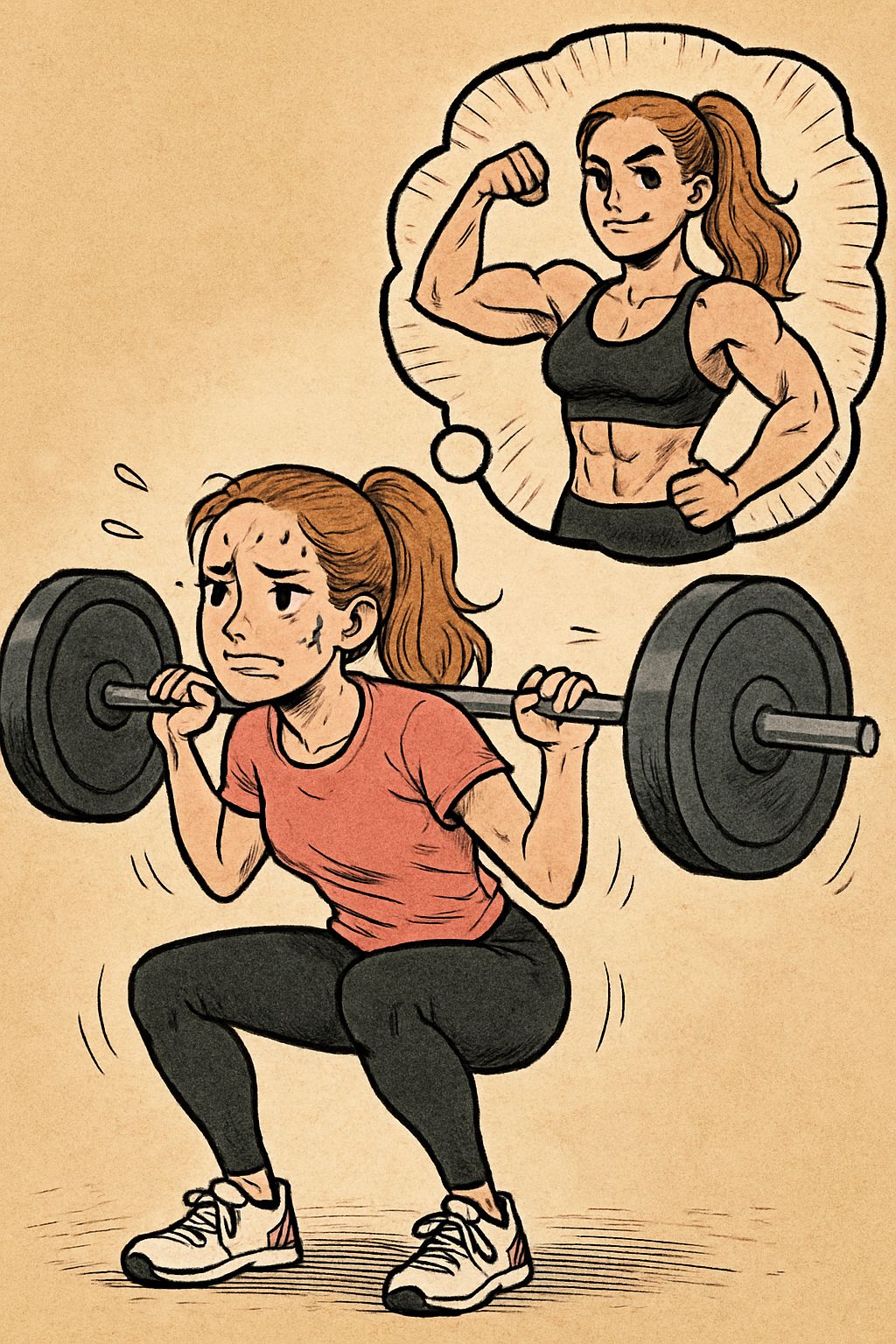
There’s a version of you that wakes up early, finishes what they start, and doesn’t flinch when things get hard. You know this version exists because you’ve glimpsed it on your best days. The problem is that glimpse fades by Tuesday, and you’re back to snoozing the alarm and making the same excuses you made last month.
This space between your current self and your future self has a name in psychology: psychological distance. It’s not just a feeling, it’s a measurable gap that determines whether you take action today or push things off until “someday.” Understanding how this gap works, and more importantly, how to shrink it, is the real work of personal growth.
What Psychological Distance Is and Why It Keeps You Stuck
Psychological distance is the perceived gap between where you stand right now and the outcome you’re chasing. The further away a goal feels, the less your brain treats it as something worth acting on today. This explains why “get healthy” sits on your mental shelf for years, while “walk for 20 minutes right now” actually gets done.
How Your Brain Measures the Distance to Your Goals
Your brain doesn’t process goals the way a calendar does. It processes them emotionally, based on how close or far the reward feels. A goal that feels distant triggers procrastination because the payoff seems abstract and unreal. A goal that feels close triggers action because your brain can already picture the finish line. Understanding the psychology behind decision-making can help you overcome procrastination and achieve your goals.
Why Abstract Goals Motivate But Don’t Move You
Abstract goals like “build a better life” or “become successful” are powerful for sparking initial motivation. They give you a direction to point toward. But abstract goals rarely get you out of bed on a cold morning, because there’s nothing concrete to actually do. Motivation without a next physical step just becomes a thought you had once.
The Difference Between Thinking About Tomorrow vs. Someday
“Someday” is where dreams go to stall. The moment you convert “someday I’ll write a book” into “tomorrow at 7 a.m. I write for 30 minutes,” the entire goal shifts from abstract to real. Tomorrow has a date attached to it. Someday doesn’t. That single shift in language is often the first crack in a gap that’s felt impossible to close.
Stop Chasing Outcomes, Start Building Systems
A 2020 study tracking 1.4 million MyFitnessPal users found that only 18.2% of weight-loss goals were actually achieved, meaning roughly 81% fell short. Yet buried in that same data is a more interesting detail: 90% of people who set harder goals still lost weight, even when they didn’t hit their original target. The lesson isn’t that goals don’t matter. It’s that the system behind the goal matters more than the number itself.
- Outcome-focused thinking asks: “Did I hit the target?”
- System-focused thinking asks: “Did I do the work today?”
One of these questions you can answer every single day. The other one you can only answer months from now, which makes it far less useful for building momentum.
James Clear’s Rule: You Fall to the Level of Your Systems
In Atomic Habits, James Clear put it plainly: “You do not rise to the level of your goals. You fall to the level of your systems. Your goal is your desired outcome. Your system is the collection of daily habits that get you there.” This single idea flips the entire personal development conversation. Instead of obsessing over the destination, you start obsessing over the Tuesday routine that gets you there.
4 Real-Life Systems That Shrink the Gap
Systems work because they remove decision-making from the equation. You’re not asking “should I work out today,” you’re just following the schedule you already committed to. Here’s what that looks like in practice across different goals:
- Weight loss: Working out every Monday, Wednesday, and Friday at 8 a.m., no exceptions and no negotiating.
- Building an online business: Publishing three pieces of content every week, regardless of how “ready” you feel.
- Stronger relationships: Eating dinner at the table with your partner every evening, phones put away completely.
- Better health: Cooking at home six days a week instead of relying on takeout when you’re tired.
None of these systems mention the end goal. They’re just repeatable actions that, strung together over months, make the goal almost inevitable.
“When the Training Is Hard, the Win Is Easy”
World-class long-distance runner Rosemary Wanjiru summed up this entire philosophy in one sentence: “When the training is hard, the win is easy.” The discomfort isn’t a sign you’re doing something wrong, it’s the actual mechanism that makes the outcome feel inevitable later. People who skip the hard training are the ones who find race day impossibly difficult. This concept is similar to the psychology of self-sabotage, where avoiding discomfort can lead to greater challenges down the road.
Identity Change Works Backward From What You Think
Most people try to change their life by chasing an outcome, hoping the outcome will eventually make them feel like a different person. This is backward, and it’s why so many goals quietly die around week three. Real change moves in the opposite direction, and once you see it, you can’t unsee it. Understanding the psychology of self-sabotage can help in recognizing these patterns and making lasting changes.
Identity → System → Outcome: The Correct Order
James Clear describes genuine behavior change as a three-step sequence: identity first, system second, outcome last. Most people flip this and go outcome first, hoping the system and identity catch up eventually. But when you start by deciding who you are, the system becomes obvious, and the outcome becomes almost a formality.
Why Saying “I Am a Runner” Beats “I Want to Run”
There’s a massive difference between “I want to run a 5K” and “I am a runner.” The first statement describes a wish, something you’re hoping happens to you eventually. The second statement describes a fact about who you are right now, which changes how you show up on a rainy Tuesday morning when nobody’s watching.
When you tell yourself “I want to run a 5K,” skipping a workout doesn’t contradict anything, you still want it, you just didn’t do it today. But when you’ve decided “I am a runner,” skipping a run creates friction with your own identity. That friction is uncomfortable, and your brain will often choose to lace up the shoes just to avoid the discomfort of being a liar to yourself.
How Athletes Remove the Daily Negotiation With Themselves
Elite performers rarely wake up debating whether today is a training day. The decision was made the moment they adopted the identity of an athlete, so there’s nothing left to negotiate. This is the hidden advantage identity based change gives you: it kills the internal argument before it starts.
Compare that to someone relying purely on willpower. Every single morning becomes a fresh negotiation, a fresh chance to talk themselves out of it. Decision anxiety shuts that door. Once you see yourself as someone who simply does the thing, the question “should I?” stops being part of the equation.
Discipline Is the Bridge, Not Motivation
Motivation is a feeling, and feelings are unreliable by nature. Discipline is a decision, and decisions can be made regardless of how you feel on any given day. This is why the gap between who you are and who you want to be is often described simply as discipline, because it’s the one thing that holds steady when motivation inevitably disappears.
Why Discipline Fixes 80% of Your Problems
Most personal struggles, from weight gain to stalled careers to messy finances, trace back to the same root issue: a lack of consistent action over time. Discipline fixes the vast majority of these problems because it doesn’t wait for inspiration to strike. When motivation runs dry, which it always does eventually, discipline is what keeps you showing up anyway.
Choosing the Future You Want Over How You Feel Right Now
Every disciplined action is really just a small trade. You’re trading a short-term feeling, comfort, ease, the couch, for a long-term outcome you actually want. Discipline means making that trade consistently, even when the short-term feeling is screaming louder than the long-term goal. The people who close the gap between their current and future selves aren’t the ones who feel like doing the work, they’re the ones who do it anyway.
What Discipline Looks Like From the Outside vs. What It Builds Inside
From the outside, discipline often looks boring. It’s the same workout, the same writing session, the same early bedtime, repeated so many times it stops looking impressive to anyone watching. But internally, something very different is happening. Each repetition is quietly building the exact identity and capability that eventually produces results everyone else only sees at the finish line. This transformation can be hindered by self-sabotage, which is a common psychological barrier to achieving one’s goals.
The Price of Closing the Gap
Nothing about closing this gap is free. Every version of you that you admire, whether it’s a leaner body, a thriving business, or a calmer mind, cost something to build. Understanding that price upfront makes it far easier to pay it without resentment.
Why You Must Do What You’ve Never Done Before
To achieve what nobody else has, you must do what nobody else will do. This isn’t a motivational poster line, it’s a practical observation. If the average approach got average results, then closing an above-average gap requires an approach most people aren’t willing to take on. For instance, understanding decision anxiety can help you make bold choices that others might shy away from.
This might mean waking up before everyone else, saying no to social events that interfere with your goals, or practicing a skill long after it stops being fun. It’s rare for someone to be the complete opposite of who they want to become. Usually it’s less about becoming a totally different person and more about adjusting your current habits in new, often uncomfortable, directions.
The Hidden Sacrifices Behind High Achievers’ Success
Behind every polished result is a less glamorous process nobody posts about. Ballet dancers break toenails and develop bruises from hours of repetitive practice. Karate masters build calloused, scarred knuckles from striking surfaces again and again until their body adapts. These aren’t side effects people chase for fun, they’re the quiet cost of chasing mastery. Understanding the psychology of self-sabotage can help high achievers navigate these challenges and continue their pursuit of excellence.
The gap between amateur and elite in any field is usually filled with exactly this kind of unseen repetition and physical or mental wear. Nobody gets to skip this part. The people who close the gap fastest are simply the ones who accept this cost early instead of resisting it for years.
“If You Want What Nobody Else Has, Do What Nobody Else Will”
This single idea ties the entire section together. Average effort produces average distance closed. If your goal is ordinary, ordinary habits might get you there eventually. But if your goal requires becoming someone genuinely different than who you are today, the habits required to get there will, by definition, be uncommon too.
Actions or Excuses: You Can’t Have Both
Every single day hands you the same choice, whether you notice it or not: take the action that moves you forward, or reach for the excuse that keeps you exactly where you are. There’s no third option where both exist peacefully. The moment you choose the excuse, you’ve already chosen to stay on the far side of the gap for one more day.
The Excuses That Keep You in the Same Place
Most excuses sound reasonable in the moment, which is exactly what makes them dangerous. “I’m too tired today,” “I’ll start Monday,” “It’s not the right time” all feel like legitimate reasons rather than what they actually are: a vote for staying the same. None of these excuses are inherently false, you might genuinely be tired. But truth and usefulness aren’t the same thing, and an excuse can be completely true while still keeping you stuck.
Why a Weak Mindset Costs You More Than a Hard Workout
Your mindset shapes your reality far more than most people give it credit for. It’s the invisible line between “I can” and “I can’t,” and that line gets drawn before you ever attempt the task. When you fill your mind with doubt, every obstacle feels permanent. When you fill it with constructive, forward-focused thoughts, the same obstacle just becomes a problem to solve.
Your mind genuinely functions as either your most powerful weapon or your own worst enemy, depending on which thoughts you allow to take root. This is why a weak mindset is often more expensive than a physically hard workout. A hard workout ends after an hour. A weak mindset follows you into every decision for the rest of the day.
|
Weak Mindset Thought |
Discipline-Based Reframe |
|---|---|
|
“I don’t feel like it today.” |
“I’m choosing the future I want over how I feel right now.” |
|
“I already messed up, so why continue.” |
“One slip doesn’t erase the system, I continue today.” |
|
“I’ll start when things calm down.” |
“Things rarely calm down, so I start with what I have now.” |
Every day, you’re actively making a choice through your thoughts, habits, and behaviors about which direction your life heads next. That choice rarely feels dramatic in the moment, which is exactly why it’s so easy to underestimate.
You Don’t Look Like Your Goals, You Look Like Your Habits
Here’s an uncomfortable truth worth sitting with: people don’t look like their goals, they look like their habits. You can want a healthier body, a thriving business, or a calmer mind all you want, but your actual daily habits are the only honest reflection of where you’re headed. Consistency brings action, action breeds progress, and progress eventually becomes the success you were chasing all along. Small daily habits, repeated without fanfare, earn compound interest the same way money does, quietly at first and then all at once.
Frequently Asked Questions
What is the real gap between who I am and who I want to be?
The real gap is discipline, not talent, luck, or circumstance. It’s the distance between the daily choices you’re currently making and the daily choices your future self would make, and it closes one repeated action at a time.
How long does it take to close the gap between current and future self?
There’s no universal timeline, because the gap size and the consistency of your system both affect the answer. That said, a few patterns tend to hold true across most personal growth journeys:
- Small identity shifts, like calling yourself “a runner” instead of “someone trying to run,” can change behavior within days.
- Visible physical or financial changes typically take months of consistent system-following, not weeks.
- The gap rarely closes in a straight line, expect plateaus even when your habits stay consistent.
Can discipline really replace motivation completely?
Discipline doesn’t need to completely replace motivation, it just needs to outlast it. Motivation is useful for getting started, but discipline is what keeps the system running on the days motivation doesn’t show up, which research and real-world results suggest is most days.
What’s the fastest way to reduce psychological distance to a goal?
Convert the abstract goal into a specific, repeatable action with a day and time attached to it. “Get in shape” stays distant forever, but “gym at 7 a.m. Monday, Wednesday, Friday” feels immediate and achievable, which is exactly what shrinks the psychological gap.
Why do easy goals sometimes lead to worse results than hard ones?
Easy goals rarely demand a new system or identity shift, so people default back to old habits almost immediately after achieving them. Harder goals force a complete overhaul of daily behavior, which is likely why the MyFitnessPal study found that 90% of people who set harder weight-loss goals still lost weight, even when they fell short of their original target.
Closing the gap between who you are and who you want to be starts with one honest system, built one day at a time.