Article At A Glance
- Choice overload happens when having too many options makes decisions harder instead of easier, often leading to stress, regret, or no decision at all.
- Research shows a tipping point exists; studies found that offering more than 22 options actually increased the odds shoppers would walk away empty-handed.
- Analysis paralysis and decision paralysis feel similar but have different root causes, and knowing which one you’re stuck in changes how you break free.
- Your personality type, whether you’re a maximizer or satisficer, plays a huge role in how badly choice overload affects you.
- Find specific, research-backed strategies for cutting through overwhelm and making confident choices again.
Why Too Many Options Are Secretly Sabotaging Your Life
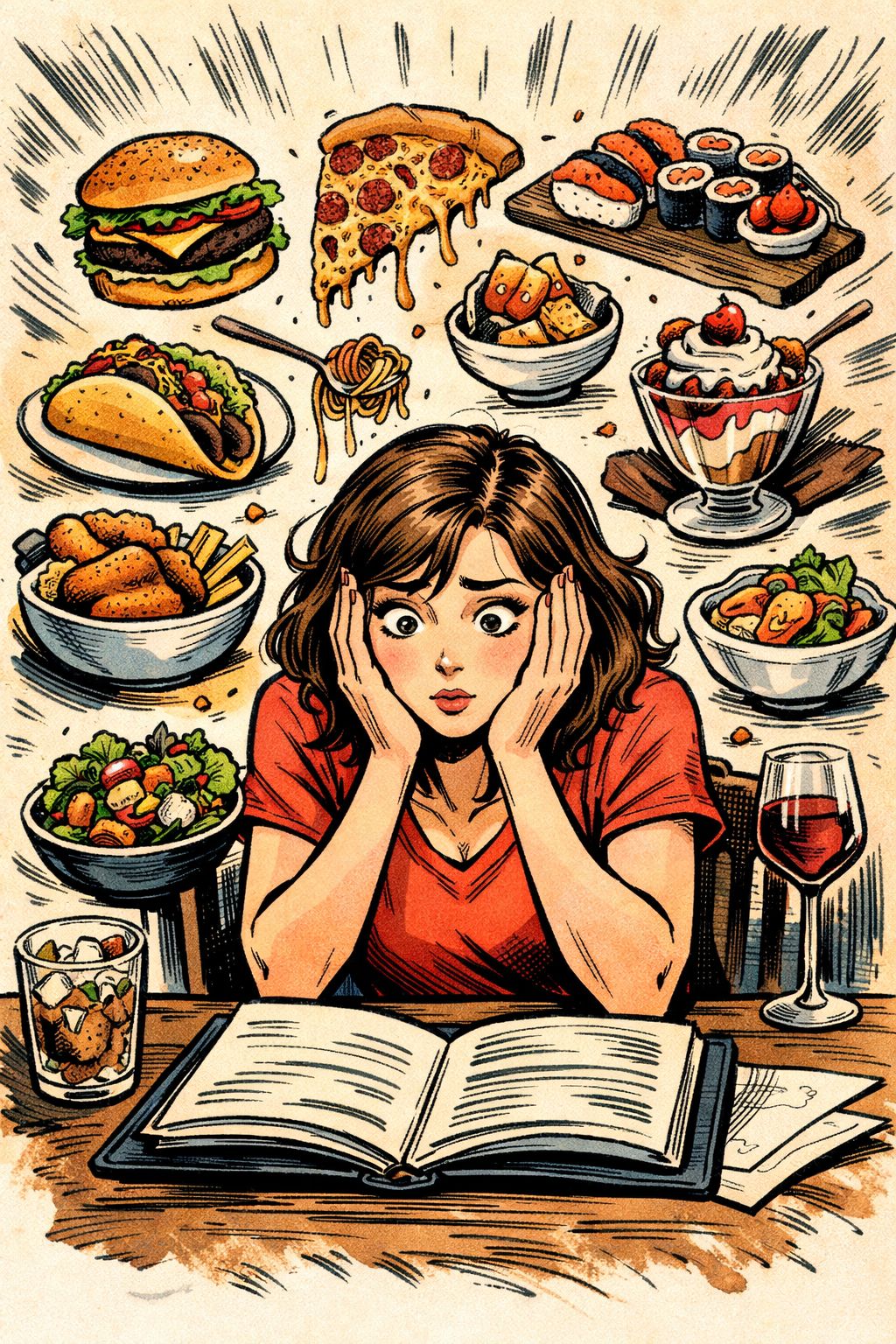
We’ve been sold a lie: that more choices equal more freedom and happiness. The truth is messier. Psychologists have spent decades proving that an overflowing menu of options can leave you less satisfied, more anxious, and more likely to regret whatever you eventually pick. This isn’t a personal failing or a sign you’re indecisive by nature. It’s a well-documented cognitive pattern called choice overload, and it’s quietly shaping decisions in your finances, your relationships, and your everyday errands.
What Choice Overload Really Means
Choice overload is a phenomenon where having too many options becomes overwhelming and actually hinders decision-making, directly contradicting the conventional wisdom that more options always help us choose better. It sounds backwards at first. Shouldn’t having more choices mean a better chance of finding exactly what you want?
Here’s the catch: freedom of choice is genuinely important to autonomy and well-being, but once the number of options crosses a certain threshold, that same freedom starts working against you. Your brain has to process, compare, and weigh each option, and that mental workload adds up fast. Instead of feeling empowered, you start feeling buried.
This isn’t just a vague feeling either. It’s been measured in controlled studies across dozens of contexts, from grocery store jam displays to retirement investment menus. The pattern holds up again and again: past a certain point, more options stop helping and start hurting. For more insights, explore the concept of decision anxiety.
So what exactly happens when choice overload kicks in? A few consistent patterns show up, often leading to decision anxiety where individuals struggle to make up their minds.
- Decision-making slows down because considering many options taxes your cognitive systems.
- Satisfaction with the final choice drops, even when the choice itself is objectively good.
- Confidence in the decision weakens, leaving you second-guessing yourself.
- The chance of regretting the decision afterward goes up significantly.
The Paradox of Choice Explained
This effect has earned its own nickname in psychology circles: the paradox of choice. The more choices available to you, the less satisfied you tend to be with whatever you eventually decide. It feels counterintuitive because our instinct says variety is good. But variety, past a certain volume, becomes noise.
Consider vacation planning. People who chose from a large portfolio of destinations ended up less satisfied and more regretful than people given a smaller, curated list. The larger list didn’t help them find a better vacation. It just made them wonder, endlessly, if they’d missed something better.
Expectations play a sneaky role here too. The more options you have to choose from, the more confident you become that you’ll find exactly what you’re looking for. That confidence quietly raises your expectations, and higher expectations are much easier to disappoint.
Analysis Paralysis vs Decision Paralysis: Know the Difference
People often use “analysis paralysis” and “decision paralysis” interchangeably, but they’re triggered by different things and need different fixes. Knowing which one has its grip on you saves a lot of wasted energy.
What Triggers Analysis Paralysis
Analysis paralysis is fueled by the need to know more. It shows up as overthinking, endless research, and getting so caught up in gathering information that you never actually move forward. You’ve read twelve reviews, asked three friends, and opened fifteen browser tabs, and somehow you’re no closer to deciding.
The giveaway sign is that feeling of being stuck after hours of digging for information, not because the options are overwhelming, but because you’re convinced there’s one more fact that will finally make the answer obvious. This often leads to decision anxiety, where making up your mind becomes increasingly difficult.
What Triggers Decision Paralysis
Decision paralysis, on the other hand, sets in when you already have too many options in front of you and the stress of choosing between them becomes overwhelming. It’s triggered less by missing information and more by every option feeling equally good, equally bad, or equally confusing. This phenomenon is closely related to decision anxiety, where the fear of making the wrong choice can lead to inaction.
How to Tell Which One You’re Experiencing
Ask yourself this: are you stuck because you feel like you don’t know enough yet, or are you stuck because you know plenty but nothing stands out? The first points to analysis paralysis. The second points to decision paralysis. Frustration and a frozen, overwhelmed feeling despite having all the facts is the clearest sign you’ve crossed into decision paralysis territory.
The Jam Study: Proof That Less Is More
One of the most cited demonstrations of choice overload involves, of all things, jam. Researchers set up a tasting booth with six flavors and another with twenty-four. The booth with fewer flavors drew less initial interest, but 30 percent of visitors who sampled from the six-flavor booth went on to actually buy jam. Compare that to the twenty-four-flavor booth, where only 3 percent of visitors made a purchase.
More options attracted more browsers, but fewer options converted those browsers into buyers. The sheer size of the selection made committing to any single jar feel harder, not easier, even though the stakes of choosing the “wrong” jam were about as low as decisions get.
The Emotional Toll of Having Too Many Choices
Beyond the mental fatigue and slower decisions, choice overload carries a real emotional weight. It’s not just that too many options make you tired. They make you anxious, uncertain, and quietly unhappy with choices you’d otherwise feel fine about.
This emotional cost often sneaks up on people because it doesn’t look like classic stress. It looks like scrolling through the same ten restaurant options for the fifteenth time, or feeling a strange flatness after finally buying something you’d researched for weeks. The anxiety isn’t loud, but it’s persistent, and it chips away at the satisfaction that’s supposed to come from having “the freedom to choose.”
Why Choice Overload Causes Stress and Anxiety
Choice overload can cause stress and anxiety even when people are actively seeking out variety, which seems contradictory until you look at the data. Online shoppers who were specifically looking for a range of options still showed significant anxiety when faced with too many choices, and those experiencing the highest shopping anxiety were the least likely to complete a purchase at all. The anxiety that accompanies choice overload can be paralyzing, often resulting in stagnation rather than action. Many people respond to this discomfort by defaulting to the easiest option on the table or skipping the decision altogether, simply because avoiding the choice feels less stressful than making it.
Post-Choice Regret and Lower Satisfaction
Even after a decision gets made, the emotional toll doesn’t necessarily end. Choice overload has a nasty habit of following you past the moment of decision and into the aftermath, where it shows up as regret.
The paradox of choice captures this well: the more choices available, the less satisfied people tend to be with whatever they picked. This was demonstrated clearly in vacation planning research, where people choosing from a large portfolio of destinations ended up less satisfied and more regretful than those given a smaller set of options. More choices didn’t lead to better vacations. It led to more second-guessing.
Interestingly, regret doesn’t behave the same way at every level of choice. Research found that when shoppers were offered more than 22 options, those who ultimately chose not to buy anything felt less regret than those who did make a purchase. Once the option count dropped below that threshold, the pattern flipped, and making a choice became the less regretful path. Considering a large volume of information all at once leaves people confused and less confident in their final decision, which naturally makes regret more likely once the choice is locked in. A few patterns show up consistently in the research on post-choice regret:
- Larger option sets correlate with lower satisfaction, even when the chosen item is objectively good.
- Above roughly 22 options, people who skip the decision entirely report less regret than those who commit to a choice.
- Confusion from processing too much information at once reduces confidence in the final decision.
- Regret tends to center on “what if” thinking about the options that weren’t chosen, rather than flaws in the option that was.
Maximizers vs Satisficers: Which One Are You
Not everyone experiences this regret cycle equally, and personality has a lot to do with it. Researchers split decision-makers into two broad camps: maximizers and satisficers. Maximizers feel compelled to search until they find the absolute best option, comparing every choice across as many attributes as possible before committing. Satisficers, by contrast, look for something that meets their basic requirements and feel content with “good enough” rather than chasing “the best.”
How Choice Overload Hurts Businesses and Consumers
This isn’t just an academic curiosity. Choice overload has a measurable effect on consumer shopping behavior, and that effect cuts both ways, hurting shoppers’ satisfaction while quietly costing businesses real revenue. For more insight into consumer behavior, explore decision anxiety and how it impacts decision-making processes.
When too many choices lead to regret, that regret doesn’t stay contained to the shopper’s own experience. Dissatisfied customers tend to buy less in the future, return items more often, and share their frustration with others, which chips away at a business’s reputation over time.
The 22-Option Tipping Point
Research has identified a surprisingly specific tipping point in consumer behavior: once a product category offered more than 22 options, shoppers became significantly more likely to walk away without buying anything at all. That number isn’t arbitrary. It marks the point where the cognitive cost of comparing options outweighs the benefit of having more variety to choose from.
Regret Patterns When You Choose vs When You Don’t
What happens on either side of that 22-option line is just as telling as the tipping point itself. Below it, making a choice tends to feel better than walking away empty-handed. Cross above it, and the pattern flips, with non-buyers reporting less regret than buyers.
This creates a genuine dilemma for businesses trying to serve customers well. Offer too few options and some shoppers won’t find what they need. Offer too many and shoppers abandon the decision entirely, out of sheer overwhelm rather than lack of interest. A few consumer patterns worth noting:
- Shopping anxiety rises sharply once option counts climb into the dozens, particularly for products with many differing attributes.
- Past the 22-option threshold, shoppers are measurably more likely to leave without purchasing anything.
- Regret after a purchase tends to be higher when the original option set was large, even if the item itself performs well.
- Businesses offering curated, smaller selections often see higher conversion rates than those offering sprawling catalogs.
The lesson for any business, and for any shopper paying attention to their own habits, is that bigger isn’t automatically better. Sometimes the smartest move is trimming the options down rather than piling more on.
Choice Overload in Modern Dating
Dating apps promised something that sounds great on paper: access to more potential partners than any previous generation could have imagined. In reality, that abundance has created its own peculiar flavor of choice overload, one that shows up as hesitation, over-selectivity, and a strange reluctance to commit even when a good match is sitting right in front of someone.
Why Unlimited Options Create a Rejection Mindset
Access to a virtually unlimited number of potential partners ironically makes people more likely to stay single rather than less. Researchers Tila Pronk and Jaap Denissen coined a term for this pattern: the “rejection mindset.” When faced with an endless stream of profiles, people become more selective and less willing to settle on any single match, not because their standards genuinely rose, but because the sheer volume of alternatives makes every option feel replaceable. This pattern can be linked to the psychology of self-sabotage, where individuals unknowingly undermine their own chances of finding a suitable partner.
Pronk and Denissen’s research tracked this effect directly, finding that participants became progressively more likely to reject potential partners as the number of available options increased throughout a session. It wasn’t a one-time fluke either. The pattern held steady and compounded the longer the swiping continued.
The scale of this effect is worth sitting with for a moment. Likelihood of accepting a potential partner dropped by 27 percent between the first option presented and the last. That’s not a small dip. It means the exact same person, with the exact same profile, becomes measurably less appealing purely based on when they show up in the sequence of choices.
A few patterns emerge consistently in dating-related choice overload research:
- Rejection rates climb steadily the more options a person scrolls through in a single session.
- Acceptance likelihood for an identical profile drops by roughly 27 percent from first position to last.
- Unlimited options create a “someone better is one swipe away” mentality that undermines commitment.
- The rejection mindset persists even when users report wanting a serious relationship rather than casual dating.
How More Matches Lower Your Chances of Commitment
The irony here cuts deep. Dating apps exist to help people find partners faster, yet the abundance of choice they provide can actively work against that goal. The more matches available, the harder it becomes to settle into any single connection, because the next profile is always just a thumb-swipe away, quietly whispering that something better might be waiting.
When Expertise Flips the Script on Choice Overload
Here’s where the research takes an interesting turn. Choice overload isn’t a universal law that applies equally to everyone in every situation. When consumers are genuine experts in a domain, the effect actually reverses.
People who are certain about exactly what they’re looking for tend to struggle more with fewer options, not more. A wine connoisseur handed a list of only five bottles might feel more frustrated than one handed fifty, simply because the shorter list doesn’t contain enough variety to match their specific, well-defined preferences.
This flips the usual advice on its head depending on who you’re talking to. Not knowing exactly what you want fuels choice overload. If you lack knowledge about the category you’re choosing from, a huge assortment becomes overwhelming because you have no internal framework for narrowing it down. But if you walk in already knowing precisely what you need, that same huge assortment becomes a resource rather than a burden, because you can filter through it quickly using criteria the novice simply doesn’t have.
What the Research Still Doesn’t Know
Choice overload research has identified plenty of moderators, from attribute alignment with cultural norms to time pressure, but scientists still haven’t fully mapped out exactly which combinations of these factors matter most in any given situation. The effect shows up reliably in controlled lab studies and in large-scale consumer data, but predicting precisely when it will strike in a specific real-world moment remains an inexact science. That uncertainty is actually useful to keep in mind. It means your own reaction to a big decision isn’t a fixed trait. It shifts based on context, expertise, and even how tired your brain happens to be that day.
Frequently Asked Questions
These quick answers tackle the questions that come up most often once people start recognizing choice overload in their own lives.
What is choice overload in simple terms?
Choice overload is what happens when you’re given so many options that deciding becomes harder instead of easier. Instead of feeling free to pick exactly what you want, you end up stressed, less satisfied with whatever you choose, and sometimes too overwhelmed to choose anything at all.
It shows up everywhere from grocery shelves to dating apps to retirement plans, and it affects nearly everyone to some degree, though personality and expertise can shift how strongly it hits.
How many options are too many before overload kicks in?
There’s no single universal number, since it depends on how complex the options are and how much expertise the person already has. That said, research has identified a notable tipping point around 22 options, past which shoppers became significantly more likely to walk away without choosing anything.
Simpler decisions, like picking a sock color, can handle far more than 22 options without triggering overload. Complex decisions with many variables, like choosing a camcorder or a mutual fund, hit overload with far fewer choices on the table.
Is analysis paralysis a mental health issue?
Analysis paralysis itself isn’t classified as a mental health disorder, but it can overlap with anxiety and contribute to ongoing stress if it becomes a chronic pattern. It’s best understood as a decision-making habit rather than a diagnosis.
That said, people who identify strongly as “maximizers,” always searching for the single best option, do show higher rates of depression and lower overall happiness in research studies. If overthinking decisions is consistently affecting your mood or daily functioning, it’s worth discussing with a professional rather than just chalking it up to indecisiveness.
Can choice overload affect how I invest my money?
Yes, and the effect is well documented in financial research. Investors offered too many fund options are less likely to invest at all, and when they do invest, they often spread their money evenly across many funds as a way to manage the anxiety of choosing, rather than basing allocation on actual performance or strategy.
This matters because retirement outcomes depend heavily on consistent participation and smart allocation over decades. A cluttered menu of investment options can quietly sabotage both.
|
Fund Menu Size |
Low-Knowledge Investor Participation |
High-Knowledge Investor Participation |
|---|---|---|
|
Small number of funds |
80% |
65% |
|
Large number of funds |
65% |
88% |
What’s the fastest way to stop overthinking a decision?
Set a deadline for yourself and stick to it, even if it feels arbitrary. Open-ended research time is exactly what fuels analysis paralysis, so putting a hard stop on the process forces your brain to work with what it already knows.
From there, narrow your criteria down to the top three things that actually matter for this specific decision, and ignore the rest. Most overthinking comes from weighing factors that aren’t actually relevant to what you need.