
Article-At-A-Glance:
- Your digital identity is not just a profile — it is a psychological construct shaped by theory, technology, and social pressure working together in real time.
- The gap between your real self and your online persona has measurable effects on mental health, self-worth, and authentic connection.
- Platforms like Instagram and TikTok are engineered to exploit approval-seeking behavior, turning normal self-expression into a performance loop.
- Understanding frameworks like Goffman’s Dramaturgical Model can change how you see your own online behavior — and give you back control.
- Building a digital identity that actually reflects who you are is a learnable skill, and the psychological payoff is significant.
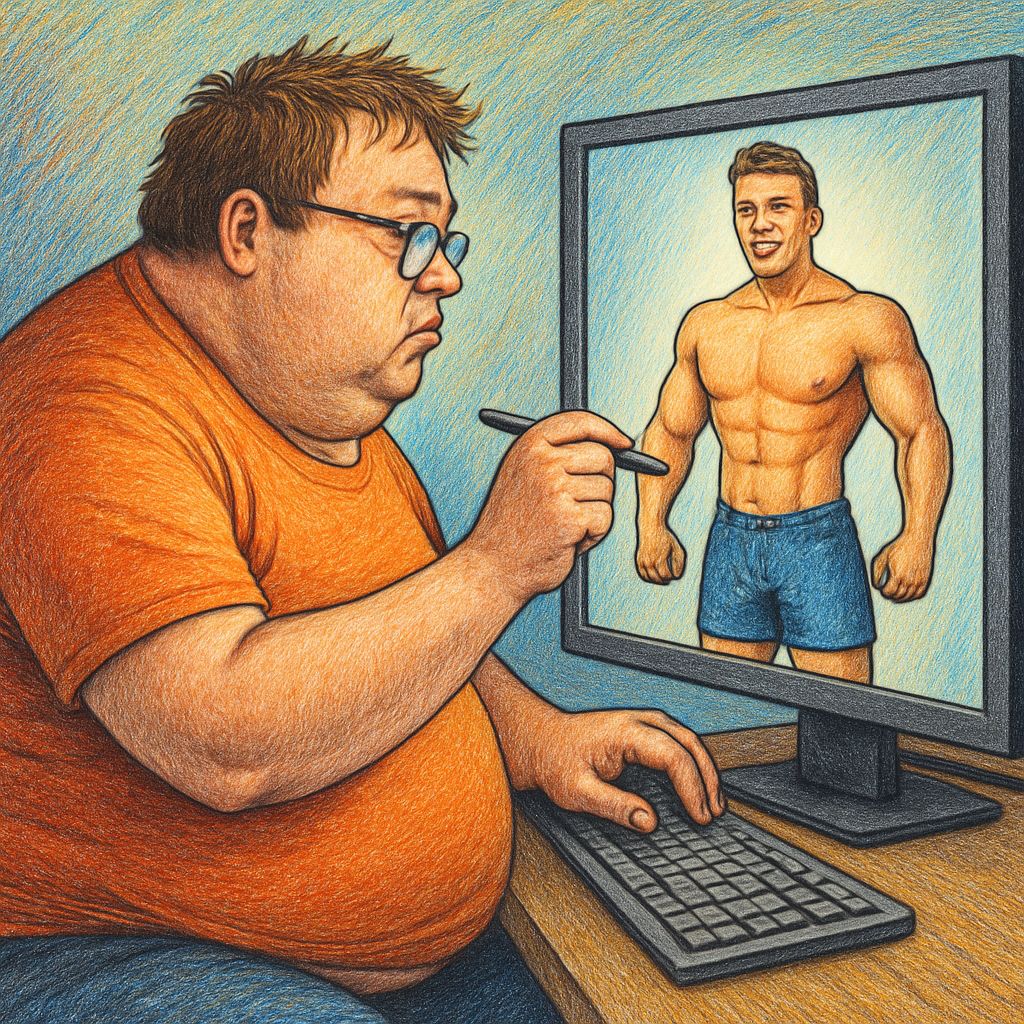
Who you are online is not a neutral reflection of who you are offline — it is a carefully constructed performance, and most of us are doing it unconsciously.
The psychology of digital identity explores why we present ourselves the way we do in online spaces, what it costs us mentally and emotionally, and how the tools we use every day are designed to shape our sense of self. For anyone trying to make sense of their relationship with social media, platforms like The Chaos Cabinet offer grounded, thoughtful perspectives on navigating digital culture with more self-awareness.
A Brief History of Self-Presentation in Digital Spaces
Digital identity did not begin with Instagram. It began the moment people realized they could control how they appeared to others online — and that realization changed everything.
From MySpace to Meta: How Digital Identity Evolved
In the early days of the internet, identity online was largely anonymous. Chat rooms, forums, and early blogging platforms let people experiment with personas detached from their real-world selves. This anonymity was both liberating and destabilizing — you could be anyone, which meant the question of who you actually were became harder to answer.
MySpace introduced something new: a personalized, visual, semi-permanent profile tied to a real social network. Suddenly, self-presentation had stakes. Then Facebook standardized the format, LinkedIn professionalized it, and Instagram turned it into an art form built entirely around image. Each platform shift added new psychological pressure by narrowing the acceptable range of self-expression while simultaneously expanding the audience watching.
Today, with Meta, TikTok, and emerging AI-driven platforms, the tools for digital self-construction are more sophisticated than ever. Filters alter faces in real time. Algorithms decide which version of you gets amplified. And the boundary between who you perform online and who you actually are has never been thinner — or more consequential.
Why Social Media Turned Self-Expression Into Performance
The shift from self-expression to performance happened gradually, then all at once. Early social media encouraged sharing. Metrics changed that. Once platforms introduced public like counts, follower numbers, and share statistics, every post became measurable — and measurement changed behavior. This transformation is explored in depth in the article Digital Identity: How We Construct and Perform Ourselves Online.
- Quantified approval created a feedback loop that rewarded certain types of content over others.
- Users began optimizing posts for engagement rather than authenticity.
- The audience — real or imagined — became a constant psychological presence during content creation.
- Over time, the performance became habitual, often running below conscious awareness.
This is not a flaw in how people use social media. It is a predictable psychological response to the environment these platforms deliberately created. Understanding that distinction is the first step toward reclaiming some agency over how you show up online.
The Psychology Behind How We Build Our Online Identity
Two psychological frameworks explain online identity behavior better than almost anything else: Erik Erikson’s theory of identity development and Erving Goffman’s dramaturgical model. Neither was developed with social media in mind, yet both map onto digital behavior with striking precision.
Erikson’s Identity Theory Applied to Social Media Behavior
Erikson argued that identity is not fixed — it is formed through a lifelong process of exploration and commitment, shaped heavily by social feedback. Adolescents in particular are in an active identity formation stage, which is why their relationship with social media tends to be so intense and emotionally loaded.
Online environments accelerate and complicate this process. Social media gives young people a wide stage for identity experimentation, but it also delivers immediate, public, and sometimes brutal feedback on every attempt. Research consistently links heavy social media use during adolescence to heightened identity confusion, particularly when online personas diverge significantly from offline behavior. But this dynamic is not limited to teenagers — adults cycling through career pivots, relationship changes, or personal reinvention often use digital platforms in psychologically similar ways.
Goffman’s Dramaturgical Model: Life as a Social Media Stage
Erving Goffman proposed in his 1959 work The Presentation of Self in Everyday Life that all social interaction is essentially theatrical — we perform different versions of ourselves depending on our audience, managing impressions the way an actor manages a role. Social media is the most literal realization of this theory ever created.
Goffman distinguished between front stage behavior (what we perform for others) and backstage behavior (how we act when no one is watching). On Instagram, your curated grid is front stage. The 47 photos you took before choosing the one you posted? That is backstage. The psychological strain of constantly managing this gap — of maintaining a polished front while knowing what the backstage actually looks like — is one of the most underappreciated sources of digital fatigue.
The Gap Between Our Real Self and Our Digital Persona
Psychologists refer to the difference between how we see ourselves and how we present ourselves as self-discrepancy. Online, this gap tends to widen. We present an idealized version — thinner, happier, more successful, more interesting — and then live with the quiet cognitive dissonance of knowing the gap exists.
Research published in peer-reviewed psychology journals has consistently found that larger self-discrepancy between real and ideal self-presentation online correlates with higher rates of anxiety, lower self-esteem, and reduced life satisfaction. The problem is not self-improvement or aspiration. The problem is performing a version of yourself so far from your actual experience that the performance itself becomes exhausting and psychologically destabilizing.
How Avatars and Profiles Reveal Your Inner Psychology
What you choose to display about yourself online is never random. Every element — from your profile photo to the accounts you follow publicly — functions as a psychological signal, both to others and to yourself.
What Your Profile Picture Says About You
Your profile picture is doing more psychological work than you probably realize. Studies in social psychology show that people form lasting first impressions within milliseconds of seeing a face — and online, your profile photo is often the only face they see. The image you choose communicates warmth, competence, dominance, and trustworthiness before you have typed a single word. For a deeper understanding, you might explore the psychology of validation and how it influences perceptions.
Research from the University of York found that specific facial cues in profile photos reliably predict how others rate personality traits like extraversion and conscientiousness. But here is the more interesting psychological layer: the photo you choose also reflects how you want to be perceived, which is often different from how you actually see yourself. Whether you use a professional headshot, a candid travel photo, an avatar, or a group shot where you are clearly the most photogenic person present — each choice is a deliberate, if subconscious, act of identity management.
The Psychology of Curated Content and Selective Sharing
Curation is the core act of digital identity construction. Every post you publish and every post you choose not to publish shapes the narrative others build about you. Psychologists call this selective self-presentation — the process of strategically emphasizing certain attributes while suppressing others to control social perception.
The problem with relentless curation is that it creates a highlight reel that nobody — including you — can actually live up to. When your feed only shows peak experiences, professional wins, and aesthetically pleasing moments, you begin measuring your ordinary Tuesday against everyone else’s greatest hits. That comparison is not just unfair. It is psychologically corrosive.
The Curation Trap: The more carefully you curate your digital identity to earn approval, the further that identity drifts from your authentic self — and the harder it becomes to reconnect with who you actually are offline. Authenticity researchers call this the self-presentation paradox: the effort to appear relatable at scale makes genuine connection less likely, not more.
This does not mean all curation is harmful. Thoughtful, values-aligned self-presentation can reinforce a positive self-concept. The distinction lies in why you are curating — for external validation or for genuine self-expression. That motivation makes all the difference in the psychological outcome.
The Mental Health Cost of Performing Online
Maintaining a digital performance is not free. There is a real psychological toll associated with the constant management of online identity, and it shows up in measurable ways: elevated anxiety, chronic comparison, disrupted self-image, and a persistent background sense that the version of you online is somehow more real — and more likeable — than the version that exists offline.
The mental health impacts of social media use are well-documented across multiple studies. What is less often discussed is the specific mechanism driving those impacts. It is not simply screen time that causes harm. It is the performance labor — the ongoing cognitive and emotional effort required to construct, maintain, and defend a curated digital persona in a public, metrics-driven environment.
Social Comparison Theory and the Like Button
Leon Festinger’s Social Comparison Theory, developed in 1954, proposed that humans have a fundamental drive to evaluate themselves by comparing their abilities and opinions to others. Social media weaponizes this instinct at scale. The like button did not just create a way to measure approval — it created a universal currency for social ranking that updates in real time, 24 hours a day. Every scroll is a comparison event. Every post is a test. And the algorithm ensures you are always seeing the content most likely to trigger an emotional response — which means the highest-performing, most aspirational content rises to the top of your feed, not the most representative.
FOMO and Its Effect on Self-Worth
Fear of Missing Out — FOMO — is not just an internet buzzword. It is a psychologically defined experience of anxiety triggered by the perception that others are having more rewarding experiences than you are. Social media is a FOMO delivery engine. It presents a continuous, curated stream of other people’s social lives, achievements, and experiences, specifically filtered to show peaks rather than valleys. Research has linked FOMO directly to lower mood, reduced life satisfaction, and compulsive social media checking behavior — a cycle where the behavior meant to relieve the anxiety actually intensifies it.
When Your Digital Identity Conflicts With Your Real One
Identity conflict happens when the person you perform online becomes difficult to reconcile with the person you experience yourself to be in daily life. This is more common than most people admit. Someone might project confidence and success on LinkedIn while privately struggling with career uncertainty. A wellness influencer might promote balance while privately dealing with burnout. These are not simply cases of hypocrisy — they are examples of how digital performance demands can outpace psychological reality.
When the gap between digital and real identity becomes too wide, the psychological consequences include increased feelings of inauthenticity, social withdrawal, and what researchers describe as identity fragmentation — a reduced sense of coherent selfhood. Closing that gap is not about radical honesty in every post. It is about ensuring that your core values show up consistently across both your digital and offline life, so neither version feels like a stranger to the other.
How Likes, Followers, and Comments Rewire Your Brain
The psychological effects of social media metrics go beyond hurt feelings or inflated egos. At the neurological level, the feedback systems built into every major platform are designed to interact directly with your brain’s reward circuitry — and over time, repeated exposure changes how that circuitry responds. Understanding these changes can be crucial, as they relate to broader concepts like the psychology of validation.
Dopamine, Validation, and the Feedback Loop of Approval
Dopamine is a neurotransmitter associated with anticipation and reward-seeking behavior. It spikes not when you receive a reward, but when you anticipate one — which is exactly why checking your phone after posting something feels so compelling. The uncertainty of not knowing how many likes a post will receive creates a variable reward schedule, the same psychological mechanism that makes slot machines so difficult to walk away from.
Neuroscientists at UCLA demonstrated that for adolescents, receiving likes on social media activates the same brain regions involved in reward processing as winning money or eating chocolate. The more likes a photo received, the more likely teens were to like it themselves, regardless of content. This is not a teenage problem exclusively — it is a human brain problem, and adults are not immune. The result is a feedback loop where social media behavior becomes increasingly driven by the pursuit of neurochemical reward rather than genuine connection or self-expression.
Why Negative Feedback Online Hits Harder Than in Real Life
Criticism in person is buffered by context — tone of voice, body language, the relationship history between two people. Online, that buffering disappears entirely. A dismissive comment, a conspicuous absence of likes, or a sudden drop in followers delivers social rejection in its most stripped-down, unambiguous form. The brain processes social rejection using some of the same neural pathways activated by physical pain, which is why a single negative comment can disproportionately dominate your thinking long after dozens of positive ones have faded.
There is also a permanence problem. In face-to-face interactions, an awkward moment passes. Online, negative feedback can be screenshot, shared, and referenced indefinitely. This permanence raises the psychological stakes of every online interaction and contributes to hypervigilance around self-presentation — which, over time, further deepens the gap between authentic self and performed identity.
How to Build a Digital Identity That Actually Reflects You
Rebuilding a more authentic digital identity does not require deleting your accounts or performing some kind of radical digital detox. It requires a more intentional approach to the choices you are already making every time you post, comment, or curate — starting with an honest look at what your current digital presence actually says about you.
1. Audit Your Current Digital Presence Honestly
Go through your profiles on every platform you use actively and ask one direct question about each element: does this reflect who I actually am, or who I want others to think I am? Look at your bio, your pinned posts, your most recent ten uploads, and the accounts you follow publicly. You are not looking for perfection — you are looking for significant gaps between the digital persona you have constructed and the values, interests, and experiences that actually define your daily life. Those gaps are where the psychological cost of your digital identity is accumulating.
2. Separate Your Self-Worth From Your Engagement Metrics
Engagement numbers measure algorithmic performance, not human value. A post that gets three likes is not evidence that you are boring or unworthy — it is evidence that three people saw it and tapped a button. The conflation of social media metrics with personal worth is one of the most psychologically damaging habits of the digital age, and it happens so gradually that most people do not notice it occurring. Start treating metrics as data about platform behavior, not verdicts about your identity.
One practical approach: decide in advance what success means for a post before you publish it. If your goal is genuine connection, a single meaningful comment outweighs a hundred passive likes. Defining your own metrics shifts the psychological locus of control back to you and reduces the neurological pull of the validation loop.
3. Use Digital Literacy to Recognize Social Pressure Online
Digital literacy in a psychological context means understanding the mechanics behind why you feel the way you do when you are online. When you feel inadequate scrolling through someone’s travel photos, that is not an accurate self-assessment — it is a predictable neurological response to curated content delivered by an algorithm optimized for emotional engagement. Naming that process while it is happening dramatically reduces its power. You are not falling short of a real standard. You are responding to a manufactured one.
4. Set Intentional Boundaries Around Online Self-Presentation
Boundaries in digital identity are not just about screen time limits. They are about defining what you are and are not willing to perform publicly, and holding that line consistently. This might mean deciding which areas of your life stay entirely offline, choosing not to post during emotionally vulnerable periods, or committing to a ratio of authentic posts versus polished ones. The specific boundaries matter less than the fact that they are yours — chosen deliberately rather than defaulted into through platform pressure.
Authentic Digital Identity Is a Skill Worth Building
The psychological demands of digital life are real, but they are not insurmountable. Every framework discussed here — from Goffman’s dramaturgical model to Social Comparison Theory to the neuroscience of dopamine feedback loops — points toward the same conclusion: awareness is the entry point to agency. When you understand why you behave the way you do online, you gain the ability to choose differently.
Building an authentic digital identity does not mean posting every unfiltered thought or abandoning the idea of self-presentation entirely. It means closing the gap between who you perform yourself to be and who you actually are — until the distance between those two versions is small enough that maintaining your online presence no longer costs you your sense of self. That gap is closeable. And closing it is some of the most important psychological work available to anyone navigating life in the digital age.
Frequently Asked Questions
These are the questions people ask most often when they start examining their relationship with digital identity — and the answers that cut straight to what actually matters.
What is digital identity in psychology?
- Digital identity refers to the totality of how a person presents and represents themselves across online platforms and digital environments.
- It includes profile information, posted content, interaction patterns, avatars, usernames, and even the accounts a person chooses to follow publicly.
- Unlike physical identity, digital identity is highly malleable and can be modified in real time with minimal friction.
- Psychologically, it functions as both a mirror and a mask — reflecting aspects of the self while simultaneously concealing others.
In psychological terms, digital identity sits at the intersection of self-concept (how you see yourself), ideal self (how you want to be), and social identity (how you want others to see you). The tension between these three dimensions is where most digital identity-related psychological stress originates.
Researchers distinguish between authentic digital identity — where online presentation closely aligns with offline self-perception — and strategic digital identity, where the online persona is deliberately constructed to achieve social, professional, or relational goals. Neither is inherently problematic. The psychological risk arises when strategic presentation becomes so dominant that the authentic self loses coherence.
Understanding your own digital identity starts with recognizing which version you are operating from in any given online context — and whether the gap between your performed self and your experienced self is one you have consciously chosen or one that has quietly accumulated without your awareness.
How does social media affect self-perception?
- Social media creates a constant stream of social comparison opportunities, most of which are skewed toward idealized, high-performing content.
- Algorithmic curation ensures that emotionally activating content — which tends to be aspirational or provocative — dominates most users’ feeds.
- Public metrics like likes and follower counts introduce quantified social ranking into everyday interaction, which most people’s psychology was not built to handle at scale.
- Repeated exposure to filtered, curated peer content has been linked to distorted body image, inflated perceptions of others’ happiness, and underestimation of how common ordinary struggles are.
The mechanism behind most of these effects is Festinger’s Social Comparison Theory in overdrive. Humans are wired to evaluate themselves relative to others — it is a deeply adaptive instinct in small social groups. Social media expands that comparison pool to millions while simultaneously filtering it to show only peak performances, creating a comparison environment that is statistically impossible to exist in without feeling inadequate much of the time.
There is also a subtler effect worth naming: social media changes not just how you see yourself relative to others, but how you see yourself in isolation. When you spend significant time constructing and maintaining a curated persona, that persona begins to feel like the standard you should be living up to in real life too. Your own highlight reel becomes your internal benchmark — and your ordinary daily experience consistently falls short of it.
The most protective factor identified in research on social media and self-perception is media literacy — specifically, the ability to consciously recognize that what you are seeing is curated, edited, and algorithmically selected. People who actively remind themselves of this while consuming content show significantly smaller negative effects on self-perception than those who consume passively.
What is the difference between digital identity and real identity?
The simplest answer is that your real identity is the full, unedited version of your experience, personality, values, and behavior across all contexts — including the ones no one sees. Your digital identity is a selective, constructed representation of that self, shaped by platform architecture, audience awareness, and the specific social norms of whatever online space you inhabit.
|
Dimension |
Real Identity |
Digital Identity |
|---|---|---|
|
Consistency |
Relatively stable across contexts |
Can vary significantly across platforms |
|
Visibility |
Includes private thoughts and behavior |
Only what is deliberately shared |
|
Feedback |
Received through relationships over time |
Immediate, quantified, and public |
|
Control |
Limited — context shapes behavior |
High — content can be edited or deleted |
|
Permanence |
Memories fade, behavior is contextual |
Posts, comments, and data persist |
|
Audience |
Known, bounded social networks |
Potentially global and anonymous |
The critical psychological point is that these two identities are not separate — they influence each other continuously. A persona you perform online long enough begins to shape your offline self-concept. Conversely, significant offline changes — a major loss, a career shift, a values clarification — often create pressure to update or reconcile your digital presence. They are not parallel tracks. They are the same psychological system operating across different environments.
The most psychologically healthy relationship between digital and real identity is not perfect alignment — some degree of context-specific self-presentation is both normal and adaptive. The target is value alignment: ensuring that even when your digital presentation is polished or strategic, it still reflects the same core values, commitments, and sense of self that define who you are when no one is watching.
When that alignment breaks down — when the digital version of you holds values, positions, or a lifestyle that contradicts your actual experience — the psychological cost compounds over time in the form of cognitive dissonance, identity confusion, and a growing sense of inauthenticity that can be difficult to trace back to its source without deliberate self-examination.
How do likes and followers affect mental health?
Likes and followers affect mental health primarily through two mechanisms: the dopamine-driven reward loop they create, and the social comparison baseline they establish. Every notification delivers a small neurochemical reward that reinforces the behavior that produced it — which means platforms are not just measuring your social success, they are actively shaping your behavior toward whatever generates the most engagement, regardless of whether that behavior serves your psychological wellbeing.
The follower count dimension adds a chronic comparison layer. When your social standing is permanently visible as a number on your profile, it becomes a live benchmark that others can evaluate at a glance — and that you can check at any moment. Research consistently finds that people who place high importance on follower counts and engagement metrics report higher social anxiety, greater fear of negative evaluation, and lower baseline mood than those who engage with platforms without tracking metrics closely. The antidote is not necessarily leaving the platforms — it is deliberately reducing the psychological weight you assign to the numbers.
Can your online persona influence your offline behavior?
Yes — and the research on this is more robust than most people expect. The relationship between digital and offline identity runs in both directions, but the influence of online persona on offline behavior is particularly well-documented through a phenomenon psychologists call behavioral carry-over. When you perform a particular version of yourself consistently online, that performance begins to shape your self-concept, which then influences how you behave in face-to-face contexts.
One of the most studied examples of this is the Proteus Effect, named by Stanford researcher Nick Yee. His research found that people who used taller, more attractive avatars in virtual environments negotiated more confidently and performed better in subsequent real-world tasks than those assigned shorter or less attractive avatars — even after the virtual experience had ended. The digital performance had physically altered their behavior. The same principle applies, at a more diffuse level, to social media personas: present yourself as confident and capable online long enough, and that presentation can begin to shape how you actually show up in the world.
The reverse is also true and worth acknowledging. If your online persona is built on performance anxiety, people-pleasing, and approval-seeking, those psychological patterns do not stay quarantined to your screen time. They bleed into how you communicate in relationships, how you handle criticism at work, and how you evaluate your own worth in moments that have nothing to do with social media at all. Your digital habits are psychological habits — and psychological habits have a reach that extends well beyond the platform where they were formed. Learn more about the psychology of validation and its impact on self-worth.