
- Psychological maturity is built on four measurable dimensions — self-awareness, autonomy, flexibility, and ego resilience — known collectively as the SAFE model.
- Emotional maturity is not about feeling less — it’s about developing a greater capacity to integrate, regulate, and respond to emotions without being ruled by them.
- Most people stay emotionally stuck not by choice, but because their environments actively reward reactive behavior over regulated responses.
- Maturity develops in stages, and understanding where you are in that process is the first step to accelerating your growth.
- The goals you chase reveal your maturity level — keep reading to find out what your ambitions say about your psychological development.
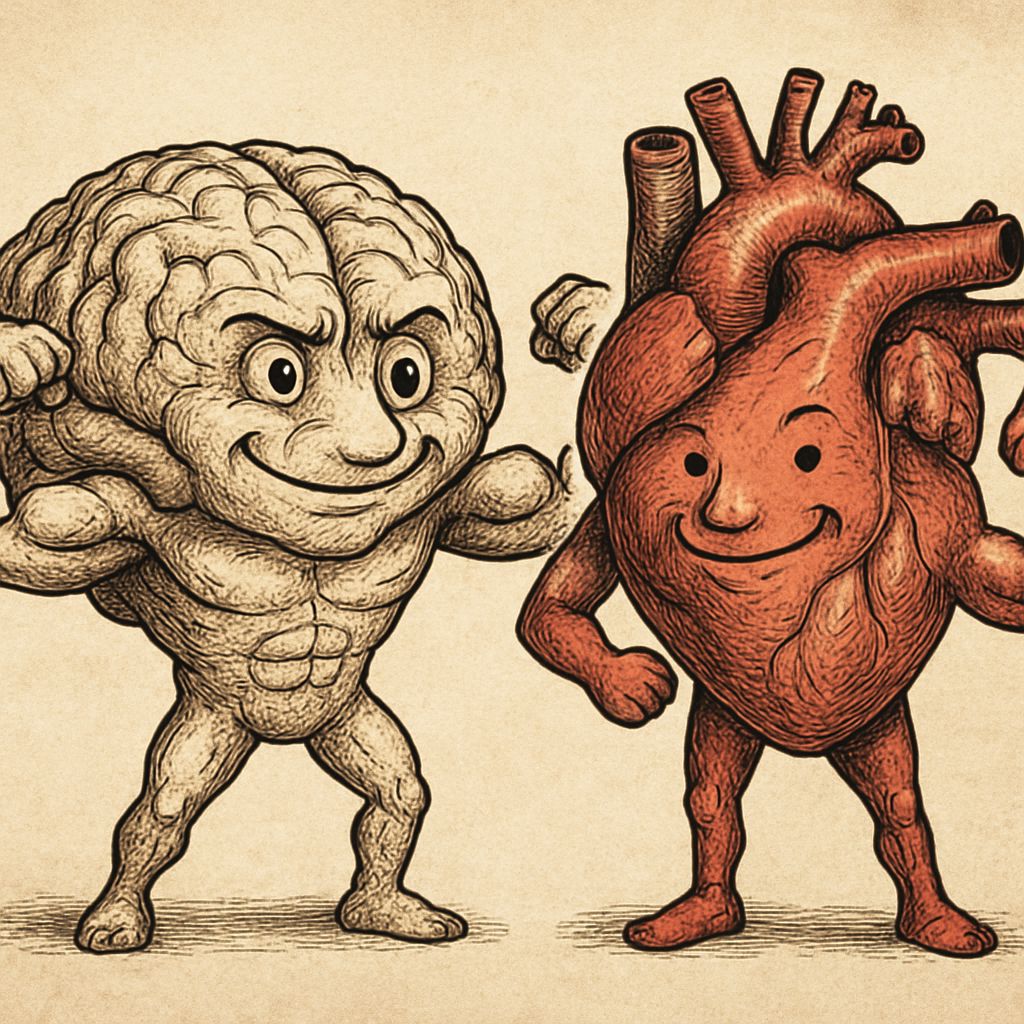
Most people are chasing the wrong things — and their emotional reactions are the proof.
In a world obsessed with external wins — salary, status, followers — psychological and emotional maturity has become the rarest and most underrated form of personal power. It doesn’t show up in your bank account or your wardrobe. It shows up in how you handle conflict, how you respond to failure, and whether you can sit with discomfort without burning everything down.
Maturity Is the New Status Symbol
Think about the most grounded person you know. They don’t react to every provocation. They take responsibility without being asked. They can disagree without making it personal. That’s not a personality type — that’s a skill set, and it’s one that can be developed.
Psychological and emotional maturity aren’t fixed traits you either have or don’t. Research increasingly shows these are learnable, measurable capacities that grow with intentional effort. The people who invest in this kind of growth don’t just have better relationships — they perform better under pressure, recover faster from setbacks, and build lives that actually align with what they say they value. For instance, understanding different conflict resolution styles can significantly enhance relationship dynamics and personal growth.
What Psychological Maturity Actually Means
Psychological maturity is defined as “the ability and willingness to take responsibility, and a desire for success.” But that definition only scratches the surface. At its core, it describes how fully developed and functional a person’s inner world is — how well they know themselves, regulate their behavior, adapt to change, and bounce back from difficulty.
It’s not about age. Researchers have long moved away from the idea that maturity is simply something that comes with time. A 50-year-old can be profoundly immature. A 25-year-old can demonstrate remarkable psychological depth. What matters is the complexity and functionality of how you process experience — not how many years you’ve accumulated.
The SAFE Model: Four Core Dimensions
A 2024 study published in Alpha Psychiatry by Eryılmaz and Uzun introduced a validated framework for measuring psychological maturity called the SAFE model. This isn’t abstract theory — it’s a reliable, peer-reviewed structure that identifies exactly what psychological maturity looks like in practice. The four dimensions are Self-Awareness, Autonomy, Flexibility, and Ego Resilience.
Self-Awareness: The Foundation of Growth
Self-awareness is the ability to accurately observe your own thoughts, feelings, motivations, and behaviors. Without it, every other dimension of maturity collapses. You can’t regulate what you can’t see, and you can’t change patterns you haven’t identified. Psychologically mature individuals don’t just react — they notice their reactions and interrogate them.
Autonomy: Owning Your Choices
Autonomy in the context of psychological maturity means making decisions from an internal compass rather than external pressure. This connects directly to self-determination theory, which identifies autonomy as one of the core psychological needs humans must satisfy to thrive.
Immature autonomy looks like rebellion — doing the opposite of what others want just to prove independence. True autonomy looks like considered choice — acting from values, not reactions. The distinction is significant. One is still being controlled by others (just inversely), while the other represents genuine self-direction.
Psychologically mature people don’t need external permission to move forward, and they don’t need external validation to feel confident in their decisions. That’s the difference between someone who leads their life and someone who just reacts to it.
Flexibility: Seeing Beyond Your Own Lens
Psychological flexibility is the capacity to adapt your thinking and behavior to meet changing circumstances — without losing your sense of self in the process. Rigid thinkers interpret new information through old filters. Flexible thinkers update their models of the world as new evidence arrives. In relationships, flexibility shows up as the ability to genuinely consider another person’s perspective, not just tolerate it. For those interested in enhancing their relational skills, exploring different conflict resolution strategies can be beneficial.
Ego Resilience: Bouncing Back Without Breaking
Ego resilience is described in research as an individual’s ability to respond to changing contexts — and it’s considered one of the most critical markers of psychological maturity. A resilient ego doesn’t mean an inflated one. It means your sense of self can absorb pressure, failure, criticism, and uncertainty without fragmenting.
People with low ego resilience tend to become defensive, avoidant, or aggressive when challenged. Those with high ego resilience stay regulated under pressure, recover from setbacks faster, and are far less likely to exhibit aggressive behaviors — a finding directly supported by the research literature on psychological maturity.
Emotional Maturity Is Not What Most People Think
Here’s the misconception that holds most people back: emotional maturity is not about feeling less. It’s not about being stoic, detached, or in control at all times. The Emotional Maturity Index — a structural model describing how the affective system is organized — makes this explicit. Emotional maturity is defined by increased integration capacity, not reduced emotional intensity.
In other words, mature people feel deeply. They just don’t get lost in it.
Emotional Intensity vs. Emotional Regulation
Emotional regulation is the ability to modulate how you experience and express emotions in response to situations. It’s not suppression — suppression is actually a sign of immaturity. True regulation means the emotion informs your response rather than hijacking it. A mature person can feel anger without acting destructively. They can feel fear without being paralyzed. The emotion moves through them; it doesn’t move them.
Reactive Stabilization vs. Differentiated Regulation
The Emotional Maturity Index draws a sharp contrast between two fundamentally different ways people manage their emotional states. Understanding where you fall on this spectrum is clarifying:
- Reactive stabilization — Emotions are managed through avoidance, distraction, or explosion. The goal is simply to stop feeling uncomfortable as fast as possible.
- Differentiated regulation — Emotions are identified, processed, and integrated. The goal is understanding what the emotion is signaling and responding in a way that’s aligned with your values.
- Integrative capacity — The most advanced level, where emotional experience actively informs identity, decision-making, and identifying meaning rather than disrupting them.
Most people operate primarily in reactive stabilization. That’s not a moral failing — it’s often the result of environments and reinforcement patterns that were never designed to cultivate anything deeper. But once you see the difference, staying at that level becomes a choice.
Emotional regulation isn’t an isolated skill either. According to the Emotional Maturity Index framework, regulation organizes perceptual processing across identity, thinking, and how you construct meaning from experience. In short — how emotionally mature you are shapes almost every aspect of how you experience your life.
Why Most People Stay Emotionally Stuck
Emotional stagnation isn’t a character flaw — it’s usually a structural problem. The environments most people grow up in, work in, and socialize in are not designed to develop psychological maturity. They’re designed to produce output, maintain hierarchy, and reward compliance or performance. Inner development rarely makes the agenda.
What makes this particularly tricky is that emotional immaturity is often invisible to the person experiencing it. Reactive patterns feel normal because they’ve always been there. Defense mechanisms feel like personality. Avoidance feels like preference. Until something — a relationship breakdown, a career derailment, a moment of painful honesty — forces the question: why do I keep ending up here? In such moments, understanding conflict resolution styles can be crucial in navigating personal growth.
Environments That Reward Reactivity
Not every environment punishes emotional immaturity. In fact, many actively reward it. Workplaces that confuse urgency with productivity, families that normalize emotional volatility, and social groups that mistake cynicism for intelligence all create conditions where reactivity gets reinforced rather than replaced.
- High-pressure workplaces that reward whoever responds fastest, loudest, or most aggressively — regardless of the quality of thinking behind the reaction.
- Family systems where emotional expression was either punished or modeled poorly, leaving adults without the tools to process complex feelings.
- Social media environments that algorithmically amplify outrage, polarization, and reactive commentary over nuanced, considered responses.
- Relationships where emotional manipulation, guilt, or volatility became the primary currency of connection.
When these are the waters you swim in long enough, reactivity stops feeling like a problem and starts feeling like survival. And in some cases, it was survival. The issue is when those adaptive patterns follow you into contexts where they no longer serve you.
Recognizing the environment that shaped your emotional patterns is not about assigning blame. It’s about gaining enough distance from those patterns to actually evaluate them — which is, itself, an act of psychological maturity.
How Reinforcement Patterns Keep You Immature
Every time a reactive response gets rewarded — you blow up and someone backs down, you avoid and the discomfort temporarily disappears, you deflect and no one pushes back — that pattern gets reinforced. The brain learns: this works. Do it again. Over time, these responses become automatic, operating well below conscious awareness.
- Avoidance provides immediate relief from anxiety but prevents the emotional processing that would resolve it long-term.
- Explosive reactions can temporarily restore a sense of control but erode trust and deepen relational distance over time.
- Emotional suppression maintains surface-level peace but accumulates internal pressure that eventually surfaces — often disproportionately.
- Deflection and blame protect the ego short-term but block the self-awareness needed for genuine growth.
Breaking these patterns requires more than willpower. It requires understanding the reinforcement loop — what triggers the behavior, what reward it produces, and what it’s costing you in the long run. That analysis is the beginning of real change.
The research on psychological maturity is clear on this point: as maturity levels increase, aggressive behaviors and negative emotional experiences decrease — not because people stop feeling, but because they develop more sophisticated tools for working with what they feel.
How Psychological Maturity Develops Over Time
Psychological maturity doesn’t arrive fully formed. It unfolds in stages, and understanding those stages gives you a map for where you are and where you’re headed. The most influential framework for understanding this developmental arc comes from psychologist Robert Kegan.
Kegan’s Subject-Object Theory Explained Simply
Kegan’s subject-object theory describes psychological development as a progression through five distinct stages — each one characterized by an expanding capacity to step back from your own experience and examine it with greater objectivity. What you are subject to (controlled by, unable to see) at one stage becomes object (something you can observe and reflect on) at the next. In the earliest stages, people are entirely subject to their impulses and needs. As maturity develops, they gain increasing ability to examine those impulses rather than simply act on them.
Moving From Impulsive to Integrated
Kegan’s five stages move from the incorporative mind of infancy, through the impulsive mind of early childhood, to the instrumental mind — where most adolescents and many adults operate — in which relationships and decisions are primarily transactional. Beyond that lies the socialized mind, where identity is deeply shaped by group belonging and external validation. The most mature stage — the self-authoring mind — is where genuine psychological independence emerges. At this level, a person constructs their own values, evaluates external expectations critically, and takes true ownership of their inner life. Research into psychological maturity aligns closely with this final stage.
Why Maturity Is Not Linear
One of the most important — and least discussed — aspects of psychological development is that it doesn’t move in a straight line. Stress, trauma, major life transitions, and exhaustion can all temporarily pull a person back toward earlier patterns. This is not regression in a permanent sense; it’s the nervous system doing what it knows. But it does mean that maturity requires maintenance, not just achievement. Understanding the psychology of validation can be a key part of this ongoing process.
You don’t graduate from immaturity once and move on. A person who has built genuine ego resilience can still become reactive under extreme stress. Someone with strong self-awareness can still hit blind spots in emotionally charged situations. Growth is real and meaningful — but it coexists with ongoing vulnerability.
What distinguishes the psychologically mature person is not that they never slip — it’s how quickly they recognize it, how honestly they account for it, and how deliberately they return to their values afterward. That recovery loop is itself one of the clearest signs of maturity in action.
- Maturity is situational — most people are more developed in some areas of life than others.
- Setbacks are part of the process — not evidence that growth hasn’t happened.
- Self-compassion accelerates development — harsh self-judgment typically reinforces the shame cycles that fuel immature behavior.
- Consistency over time — not perfection in any single moment — is the real measure of psychological growth.
Signs You Are Psychologically and Emotionally Mature
Psychological and emotional maturity shows up in specific, observable behaviors — not in how composed you look on the outside. Mature individuals take responsibility without being prompted. They can hold a strong opinion without needing everyone to agree with it. They pursue goals driven by self-acceptance, genuine connection, and meaningful contribution rather than external markers like status, financial success, or physical appearance. Research identifies this goal orientation as a direct indicator of psychological development — people chasing intrinsic goals tend to score higher on maturity measures, while those driven primarily by external rewards show signs of arrested psychological growth. Mature people also maintain close, honest relationships — not perfect ones — and demonstrate what researchers describe as personality integration, a coherent, stable sense of self that doesn’t require constant external reinforcement to stay intact.
Practical Steps to Build Your Own Maturity
Knowing what psychological maturity looks like is useful. Knowing how to build it is what actually changes your life. The good news is that the research gives us concrete dimensions to work with — and each one responds to deliberate, consistent practice. You don’t need to overhaul your personality. You need to build specific capacities, one at a time.
The SAFE model provides the clearest roadmap: develop your self-awareness, strengthen your autonomy, expand your flexibility, and build your ego resilience. These aren’t abstract ideals — they’re trainable skills with real behavioral indicators. Here’s how to start.
1. Build Genuine Self-Awareness Daily
Self-awareness is not built through occasional introspection — it’s built through regular, structured reflection. The practice is simple but not easy: at the end of each day, identify one moment where your emotional response felt disproportionate to the situation. Ask what triggered it, what it reminded you of, and what need was going unmet. Over time, patterns will surface that reveal the automatic programs running underneath your conscious behavior. Journaling, therapy, and honest feedback from people who know you well are the most reliable tools for accelerating this process. The goal isn’t to analyze yourself into paralysis — it’s to expand the gap between stimulus and response, which is where all meaningful choice lives.
2. Practice Flexibility in How You See Situations
Flexibility isn’t about abandoning your perspective — it’s about being willing to hold it loosely enough to let new information in. The most practical way to build this capacity is through deliberate perspective-taking. When you find yourself in conflict or disagreement, pause before responding and ask: what would this situation look like from their position, with their history and their pressures? This isn’t about excusing behavior — it’s about expanding your interpretive range. The more frames you can apply to a situation, the less trapped you are by any single one.
3. Strengthen Your Ego Resilience
Ego resilience is built through repeated exposure to discomfort — handled well. That means voluntarily putting yourself in situations where failure, criticism, or uncertainty are possible, and practicing staying regulated through them. Seek out honest feedback rather than avoiding it. Take on challenges where success isn’t guaranteed. When things go wrong — and they will — focus your energy on what the experience taught you rather than what it means about your worth. Each time you navigate difficulty without either collapsing or deflecting, you’re laying down the neurological and psychological infrastructure of genuine resilience.
4. Pursue Intrinsic Goals Over External Validation
Research is unambiguous on this point: goals oriented toward self-acceptance, emotional intimacy, and meaningful contribution to others are direct indicators of psychological maturity. Goals driven primarily by financial success, social status, or physical appearance — when those are the core motivators rather than byproducts — suggest psychological development that hasn’t yet reached its full potential. Auditing your goals isn’t about shame; it’s about alignment. Ask yourself what you’re actually chasing and why.
- Replace approval-seeking with value-alignment — make decisions based on what genuinely matters to you, not what will generate the best social response.
- Measure progress internally — track how your actions align with your values, not how they land with your audience.
- Invest in relationships over reputation — genuine intimacy and honest connection are consistently linked to higher psychological maturity than social status or public image.
- Contribute beyond yourself — goals that include meaningful impact on others pull psychological development forward in ways that purely personal achievement goals do not.
None of this means ambition is immature. High-achieving, externally successful people can be deeply psychologically developed. The difference is whether those external markers are the source of your sense of self — or simply the byproduct of living in alignment with your actual values.
The shift from external to intrinsic motivation isn’t a single decision — it’s a gradual reorientation that happens as self-awareness deepens. The more clearly you see yourself, the less you need external mirrors to confirm your worth. That’s not arrogance — that’s the quiet confidence of someone who has done the real work.
Start small. Pick one area of your life where you’re chasing something primarily for the external reward. Ask what you’d be doing differently in that area if no one were watching and no one were keeping score. The answer to that question often contains the most accurate version of what you actually want — and the clearest signal of the direction your growth needs to go.
Maturity Is the Real Flex — Start Wearing It
Psychological and emotional maturity won’t trend on social media. It won’t get you immediate likes or obvious recognition. But it will quietly transform every area of your life — how you lead, how you love, how you recover, and how you show up when things get hard. The research is clear, the framework is available, and the capacity is already inside you. The only question is whether you’re willing to do the work that most people are too distracted — or too comfortable — to attempt. That’s the real flex. And it looks good on everyone.
Frequently Asked Questions
Below are answers to some of the most common questions people have about psychological and emotional maturity.
What is the difference between emotional maturity and emotional intelligence?
Emotional intelligence (EQ) is the ability to perceive, understand, and manage emotions — both your own and others’. It’s largely a set of cognitive and social skills. Emotional maturity, by contrast, is a broader developmental state that describes how fully integrated and regulated your emotional system is over time. You can have high EQ as a learned competency while still operating from emotionally immature patterns in high-stress situations.
Think of emotional intelligence as a toolkit and emotional maturity as the foundation the toolkit rests on. A person with high emotional maturity has typically internalized emotional intelligence capacities so deeply that they operate automatically — not just when consciously applied. Maturity is the deeper infrastructure; EQ is one set of tools that runs on it.
Can psychological maturity be measured?
Yes. The Psychological Maturity Scale, validated and published in the 2024 study by Eryılmaz and Uzun in Alpha Psychiatry, provides a reliable, peer-reviewed instrument for measuring psychological maturity across the four SAFE dimensions — Self-Awareness, Autonomy, Flexibility, and Ego Resilience. The scale was developed and validated specifically to be used in professional and developmental settings, and it demonstrates strong reliability and construct validity across cross-cultural samples.
Beyond formal assessment tools, psychological maturity also reveals itself clearly in behavioral patterns — how someone handles conflict, setbacks, responsibility, and relationships under pressure. The formal scales are useful for research and professional contexts, but honest self-observation and feedback from trusted others can provide meaningful informal measurement for anyone pursuing personal growth.
At what age do people typically develop psychological maturity?
Psychological maturity is not tied to a specific age — and this is one of the most important points the research makes. While cognitive and emotional development does follow a general arc through adolescence and into early adulthood, psychological maturity can stall at any stage and progress at any point in life. Researchers have specifically studied young adults because this period captures critical stages of cognitive, emotional, and social development — but the absence of maturity is not exclusive to youth, and its presence is not guaranteed by age.
Can you become more emotionally mature later in life?
Absolutely — and this might be the most important answer in this entire article. Psychological and emotional maturity are not fixed traits. They are developmental capacities that respond to intentional effort, regardless of age. Therapy, structured self-reflection, honest relationships, meaningful challenges, and deliberate practice of the SAFE dimensions all contribute to measurable growth in adults at any life stage. For more insights, you can explore spotting emotional immaturity and how it can be addressed.
In fact, some of the most significant psychological development happens in midlife and beyond, often triggered by major life events — loss, transition, relational breakdown, or a confrontation with mortality — that force a deeper level of self-examination than earlier, more comfortable life stages required. Crisis, when navigated with awareness rather than avoidance, is one of the most powerful accelerants of genuine psychological maturity.
What are the biggest signs of emotional immaturity?
Emotional immaturity shows up in patterns, not single incidents. Everyone has a bad day. The signs worth paying attention to are the ones that repeat — especially across different contexts and relationships.
Chronic blame and deflection is one of the clearest indicators. When things go wrong, the immature response is to locate the cause entirely outside yourself — in other people, bad luck, or unfair circumstances. While external factors are always real, the inability to identify any personal contribution to a problem is a hallmark of underdeveloped self-awareness.
Disproportionate emotional reactions — where the intensity of a response far exceeds what the situation warrants — point to a poorly regulated emotional system. These are often called triggers, and while triggers are universal, being completely controlled by them without awareness or recovery is a sign that integration work is needed.
Difficulty with delayed gratification maps directly onto Kegan’s earlier developmental stages, where decisions are made based on immediate need satisfaction rather than longer-term values. This shows up in financial behavior, relationships, career choices, and health — anywhere that short-term comfort consistently overrides long-term wellbeing. For more insights, consider reading about emotional immaturity in high-conflict personalities.
The need for constant external validation — feeling destabilized when not receiving approval, praise, or agreement — indicates that the sense of self is still largely constructed from the outside in, rather than from a secure internal foundation. Mature individuals can receive criticism, sit with disapproval, and maintain their equilibrium because their identity doesn’t depend on others’ responses to them.