
Article At A Glance:
- Compulsive buying disorder (also called oniomania) is a recognized behavioral pattern where the urge to shop feels uncontrollable — and CBT is one of the most effective tools for breaking that cycle.
- The connection between your thoughts, feelings, and spending behaviors is the core focus of CBT — and understanding that link is where real recovery begins.
- Triggers like stress, boredom, and social media scroll sessions are often the hidden drivers behind compulsive purchases — and CBT teaches you to identify and interrupt them before they take over.
- Recovery from compulsive buying isn’t linear — setbacks happen, but CBT gives you a framework to understand them without shame and move forward anyway.
- There is a specific CBT technique called “urge surfing” that can stop a spending urge in its tracks — keep reading to find out exactly how it works.
- The personal parts of this article were written from the perspective of a close friend that was interviewed.
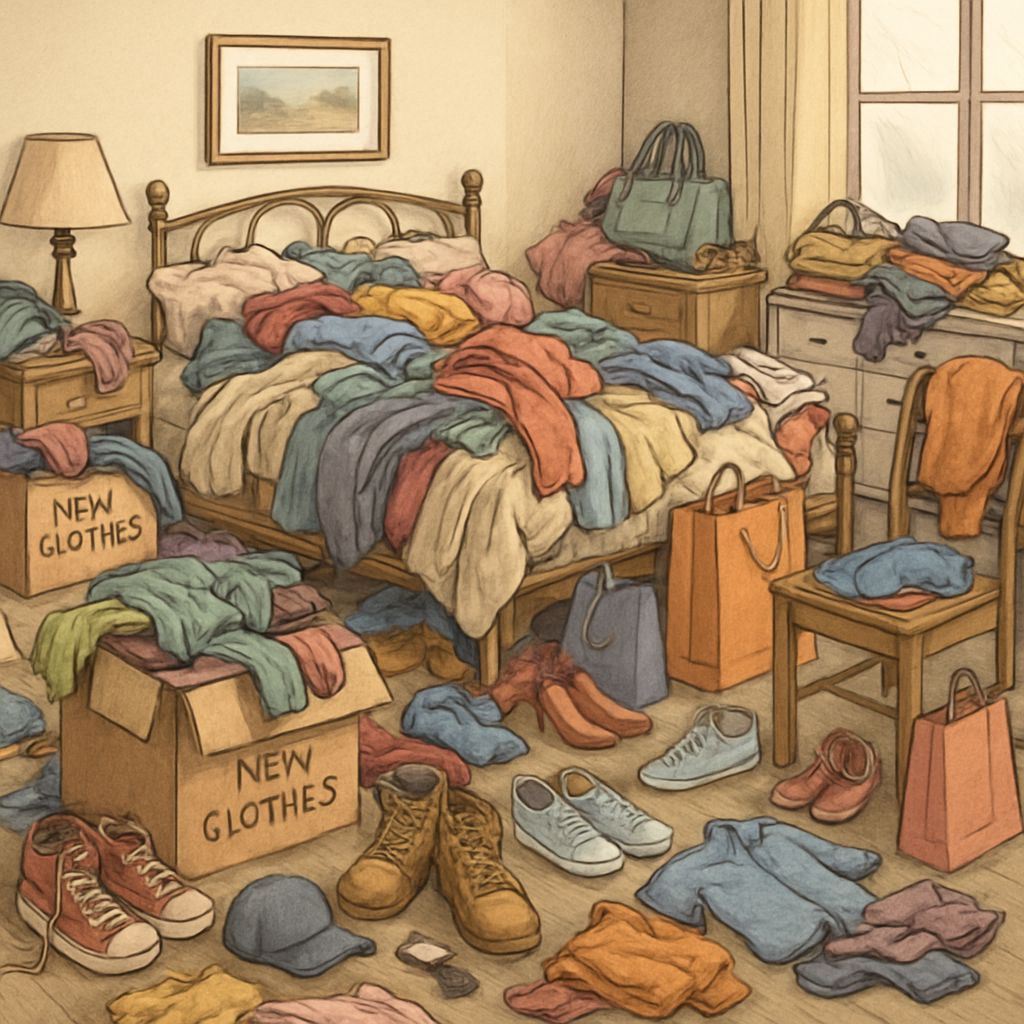
Compulsive Buying Almost Destroyed My Life
There’s a version of this story that sounds almost funny — the pile of unopened boxes, the hidden credit card statements, the elaborate lies I told myself to justify another purchase. But living inside it wasn’t funny at all. It was exhausting, isolating, and deeply shameful. I want to share it because I know I’m not the only one who has been there.
What Is Compulsive Buying Disorder?
Compulsive buying disorder — sometimes called oniomania or shopping addiction — is characterized by an uncontrollable urge to shop and spend, even when doing so causes serious negative consequences. It’s not about enjoying shopping. It’s about being unable to stop despite knowing the harm it’s causing. The BBC spoke with 15 people who identified as having a shopping addiction, and many described feelings of guilt, shame, and a sense that spending had become a “monster” in their lives. One person even developed an eating disorder as a result of the emotional spiral the addiction created.
The Difference Between Impulse Buying and Compulsive Buying
Most people impulse buy. You grab something at the checkout you didn’t plan on, or you add something to your cart during a late-night scroll. That’s normal. Compulsive buying is different — it’s a recurring, driven behavior that feels necessary rather than optional. The urge doesn’t come from wanting the item. It comes from needing the emotional relief that buying temporarily provides. When that relief wears off, guilt and anxiety rush back in, often triggering the next purchase cycle. For those struggling with this issue, CBT for impulse buying can be an effective treatment option.
How Common Is Shopping Addiction?
Experts debate exactly how to classify compulsive buying disorder. Some categorize it as a behavioral addiction, while others link it to mood disorders or obsessive-compulsive spectrum conditions. What’s clear is that it’s more common than most people realize, and that the number of people seeking help for it has been growing. Zaheen Ahmed, director of therapy at The UKAT Group, which runs addiction treatment centers across the UK, has noted an increase in people presenting with shopping addiction in recent years.
The Role of Social Media in Compulsive Spending
Social media has made compulsive buying significantly harder to manage. One-click purchasing, targeted ads, influencer hauls, and the constant visual feed of things to want create an environment that is almost engineered to trigger spending urges — especially for people who are already vulnerable to them.
For me, scrolling was one of my biggest triggers. I didn’t even realize it at first. I thought I was just browsing. CBT helped me see that browsing while anxious or bored wasn’t neutral — it was actively feeding the cycle.
How I Knew I Had a Problem
I didn’t walk into a therapist’s office and announce I had a shopping addiction. I went in for anxiety. It was only when a therapist introduced the concept of oniomania — the compulsive urge to buy — that something clicked into place. Until that moment, I had genuinely believed I just lacked willpower.
The Moment Everything Changed
The turning point wasn’t dramatic. It was a Tuesday. I was sitting in my car in a parking garage, having just bought something I didn’t need with money I didn’t have, crying in a way that felt too big for the situation. I knew something was wrong. Not with the purchase — with me. That moment of clarity was the first honest thing I’d felt about my spending in a long time.
The Financial and Emotional Toll It Took
By the time I sought help, the damage was significant. Multiple credit cards were maxed out. I had stopped talking honestly with my partner about money. I felt a constant low-grade shame that I managed by — you guessed it — shopping. The emotional cycle was self-reinforcing, and I had no idea how to step off it.
Many people in similar situations describe the same pattern: shopping to feel better, then feeling worse, then shopping again. The item was never really the point. The temporary relief was. For those looking to understand the underlying reasons, exploring avoidance psychology might offer valuable insights.
What Is Cognitive Behavioral Therapy (CBT)?
Cognitive behavioral therapy is a structured, evidence-based form of psychotherapy that focuses on the relationship between thoughts, feelings, and behaviors. The core idea is that our thoughts influence how we feel, and how we feel drives what we do. By identifying and changing distorted or unhelpful thought patterns, CBT helps people shift the behaviors that follow from them.
Unlike some forms of therapy that focus heavily on the past, CBT is largely present-focused and skills-based. You learn specific techniques you can use in real situations — including the moment you feel the urge to open your shopping app at 11pm. For insights into how these techniques can help build mental resilience, explore cognitive behavioral therapy tools.
How CBT Connects Thoughts, Feelings, and Behaviors
The CBT model works like a triangle. At each point sits one of three things: a thought, a feeling, and a behavior. Change one, and you affect the others. For compulsive buying, the triangle usually looks something like this — a stressful thought (“I can’t handle this day”) produces an anxious feeling, which drives a behavior (opening a shopping app) that provides temporary relief. CBT doesn’t just tell you to stop the behavior. It teaches you to interrupt the thought before the feeling escalates and the behavior kicks in.
What made this model so powerful for me was that it removed the idea that I was simply weak or irresponsible. My spending wasn’t a character flaw — it was a learned response to emotional discomfort. That reframe alone was transformative. It meant I could actually do something about it, because thoughts and behaviors can be changed in a way that willpower alone never could.
Why CBT Works for Compulsive Buying
CBT is particularly effective for compulsive buying because it directly targets the thought patterns that justify and sustain the behavior. Thoughts like “I deserve this,” “I’ll only buy one thing,” or “this sale won’t last” are not random — they are predictable cognitive distortions that the brain uses to rationalize a purchase the emotional system has already committed to. CBT teaches you to recognize these thoughts as patterns, not facts.
The Beck Institute, one of the world’s leading CBT organizations, specifically identifies impulse buying as an area where CBT strategies can help people slow down the process, understand what is driving it, and build deliberate habits around spending. The goal, as they put it, is not deprivation — it is spending that actually aligns with your values. For further insights, explore the science behind resilience and how CBT tools can support behavioral change.
The CBT Techniques That Helped Me Stop Compulsive Buying
My therapist did not hand me a list of rules. Instead, she gave me a set of tools — practical, repeatable techniques I could use in real moments when the urge hit. These are the five that changed everything for me.
1. Identifying My Spending Triggers
The first step in CBT for compulsive buying is paying attention to when the urge to shop actually shows up. Not the purchase — the urge. My therapist asked me to start tracking the moments before I felt the pull to spend. What was I doing? How was I feeling? What had just happened? Within two weeks, a clear pattern emerged: I shopped most when I was anxious, bored, or had just had a difficult social interaction. This pattern is similar to those found in avoidance psychology, where certain behaviors are triggered by emotional states.
Common spending triggers that CBT helps you identify include:
- Stress or overwhelm at work or home
- Boredom or emotional emptiness
- Scrolling social media, especially influencer content
- Feelings of low self-worth or the need for a confidence boost
- Loneliness or social anxiety following an interaction
- Celebrating or rewarding yourself after something difficult
Once I could see my triggers clearly, I stopped being ambushed by them. I could feel a stressful afternoon arriving and know — before I reached for my phone — that I was about to enter high-risk territory.
2. Challenging the Thoughts That Justified My Purchases
This technique is called cognitive restructuring, and it is the backbone of CBT. Every compulsive purchase I made was preceded by a thought that made it feel reasonable — even necessary. “I’ve had a terrible week, I deserve something.” “This is on sale, it would be wasteful not to buy it.” “I’ll return it if I don’t use it.” CBT teaches you to hold those thoughts up to the light and ask: is this actually true? Is this thought helping me, or is it hijacking me? I started writing these thoughts down and responding to them in writing — which sounds simple, but is surprisingly powerful. Seeing the thought on paper made it far easier to challenge than when it was just a voice in my head pushing me toward checkout. For more insights on this, check out this blog on CBT for impulse buying.
3. Using If-Then Planning to Break the Cycle
If-then planning — sometimes called implementation intentions — is a CBT-adjacent strategy that works by preparing your response to a trigger in advance. Instead of trying to make a good decision in the heat of the moment, you make it ahead of time. My plan was specific: If I feel the urge to shop online, then I will close the app, set a 30-minute timer, and text a friend before I do anything else. That 30 minutes became a buffer zone between the urge and the action — and most of the time, the urge passed before the timer ran out.
4. Urge Surfing Instead of Acting on Impulse
Urge surfing is one of the most practical and immediately useful tools CBT offers for compulsive behavior. The idea, grounded in mindfulness-based CBT, is that urges are not permanent states — they rise, peak, and fall, just like a wave. You do not have to act on a wave. You can ride it. When a spending urge hits, instead of fighting it or giving in to it, you observe it. You notice where you feel it in your body. You breathe through it. You watch it peak — and then you watch it go. The Beck Institute recommends this approach explicitly, describing it as “riding out the urge instead of acting on it immediately.” For me, urge surfing was the first technique that made me feel like my brain wasn’t completely in charge of my wallet anymore.
5. Aligning My Spending With My Values
One of the most meaningful shifts CBT brought about wasn’t a technique exactly — it was a question my therapist kept returning to: What do you actually want your life to look like? We built a clear picture of my real values: financial security, meaningful experiences, honest relationships. Then, every time a spending urge arose, I had something to measure it against. Not a rule. Not a restriction. A value. Did this purchase move me toward the life I actually wanted, or away from it?
That shift from rule-based thinking to values-based thinking was profound. Rules feel like cages. Values feel like direction. I wasn’t depriving myself — I was choosing something better.
What Recovery Actually Looks Like
Recovery from compulsive buying is not a straight line, and anyone who tells you otherwise is selling something. There were weeks where the CBT tools felt effortless and weeks where I sat in my car after a bad day and had to fight hard against every instinct I had. What changed over time wasn’t the absence of urges — it was my relationship with them.
Here is what recovery actually started to look like for me, month by month:
- Month one: Mostly awareness. I started seeing the triggers I had never noticed before. The actual behavior didn’t change much yet, but I was watching it instead of being inside it.
- Month two: The if-then plans started working. I caught myself before purchasing maybe half the time. The other half still happened, but with more awareness and less autopilot.
- Month three: Urge surfing became more natural. I stopped dreading the urges because I had somewhere to put them.
- Month four onward: The gap between trigger and behavior got longer. I was making more intentional decisions, fewer reactive ones. My bank account started to reflect this.
Recovery is not about becoming someone who never wants to shop. It’s about building enough space between the want and the action that you get to choose what happens next. That space is everything, as highlighted in the insights from cognitive behavioral therapy tools.
The Setbacks I Did Not Expect
About three months into working with my therapist, I had what I can only describe as a relapse week. A difficult situation at work collided with a holiday sale, and I made several purchases I immediately regretted. I was devastated — not just by the spending, but by what I interpreted as proof that nothing was working. However, understanding the science behind resilience helped me regain perspective and continue my journey of healing.
My therapist reframed it in a way I have never forgotten. She said setbacks are not evidence that you have failed — they are data. What happened that week? What trigger did I not see coming? What thought slipped past my defenses? We went through it methodically, without judgment, and I came out of that session with more insight than I had going in. The setback became one of the most useful moments of my recovery.
The shame spiral that typically follows a compulsive purchase is itself a trigger for the next one. CBT specifically targets this — helping you respond to slip-ups with curiosity rather than self-punishment. That single shift, learning to be a non-judgmental observer of my own behavior rather than a harsh critic, changed the entire texture of my recovery.
How My Thinking Changed Over Time
The biggest cognitive shift wasn’t about spending at all — it was about what I believed I deserved. Buried underneath every compulsive purchase was a story I was telling myself: that I needed something external to feel okay. CBT slowly dismantled that story, not by arguing with it, but by showing me, repeatedly and with evidence, that the relief shopping provided was temporary and the cost was permanent. Over time, the thought “I deserve this” started to feel less like permission and more like a warning sign. For more insights, you can explore cognitive behavioral therapy tools and how they can aid in changing thought patterns.
Twelve months into CBT, I noticed something I hadn’t expected: I genuinely enjoyed shopping less. Not because I had suppressed the urge, but because the unconscious charge it carried had faded. Buying something no longer felt like emotional rescue. It felt like a transaction. That might sound like a loss, but it was the opposite — it meant I had found other, real ways to regulate my emotions, and the shopping had quietly lost its grip.
How to Get Help for Compulsive Buying
If any part of this story sounds familiar, the most important thing to know is that compulsive buying is treatable — and you do not have to reach rock bottom before you seek help. A therapist trained in CBT can help you map your own trigger-thought-behavior cycle and build a personalized set of tools to interrupt it. Look specifically for therapists who list behavioral addictions, impulse control, or CBT as areas of expertise. Platforms that match you with specialized therapists make this process significantly easier, and getting that first appointment is genuinely the hardest part.
Moving Forward Is Possible
Compulsive buying disorder is not a moral failing. It is a learned behavioral pattern — one driven by real emotional needs that were never properly met. The shame that surrounds it keeps people silent and stuck far longer than necessary. CBT works not because it punishes the behavior, but because it gets underneath it, addressing the thoughts and feelings that drive it at the source.
If you are currently hiding packages, avoiding your bank account, or lying to people you love about money — please know that those behaviors do not define you. They are symptoms of something that has a name, a cause, and a clear, evidence-based path forward. The version of you that shops compulsively is not who you are. It is who you became when you ran out of other tools. CBT gives you the tools back.
Frequently Asked Questions
Here are answers to the questions people most commonly ask when they first start exploring CBT for compulsive buying.
Is compulsive buying disorder a recognized mental health condition?
Compulsive buying disorder is not yet listed as a standalone diagnosis in the DSM-5, which is why experts continue to debate its classification. Some categorize it as a behavioral addiction, while others place it on the obsessive-compulsive spectrum or link it to impulse control disorders and mood disorders. The lack of a single diagnostic label does not mean the condition isn’t real — clinicians widely recognize it, and there is substantial research supporting CBT as an effective treatment approach for it.
What this means practically is that if you seek help, a therapist may document your symptoms under a related category — such as an impulse control disorder or anxiety-related condition — while still treating the compulsive buying behavior directly. The label matters less than getting the right support.
Can CBT really stop compulsive buying, or is it just temporary?
CBT produces lasting change because it targets the underlying thought patterns and emotional responses that drive compulsive behavior — not just the behavior itself. The key factors that determine whether results last include:
- Consistency in practicing the techniques between sessions, not just during them
- Working with a therapist who has experience with behavioral addictions or impulse control
- Addressing co-occurring conditions like anxiety or depression that may be fueling the spending
- Building a genuine values-based framework to replace the emotional role that shopping played
- Treating setbacks as learning data rather than evidence of failure
The honest answer is that CBT is not a one-time fix. It is a skill set — and like any skill, it requires practice. The people who experience the most durable recovery are those who internalize the CBT model so thoroughly that it becomes their default way of responding to emotional discomfort, not just a strategy they use in therapy sessions.
That said, the changes CBT produces are not superficial. When you have genuinely restructured the thoughts that were driving your behavior, those new thinking patterns become increasingly automatic over time. The urges may never disappear entirely, but your relationship to them changes fundamentally — and that change tends to hold. For more insights, explore resilience insights from CBT tools.
How long does CBT treatment for compulsive buying typically take?
CBT is generally a shorter-term therapy compared to other modalities. For compulsive buying, many people begin to see meaningful changes within eight to twelve weeks of consistent sessions, though the full course of treatment varies depending on the severity of the behavior and whether there are co-occurring mental health conditions involved.
Some people continue with CBT for six months to a year to fully consolidate their skills and work through deeper patterns — particularly if the compulsive buying developed as a response to trauma, chronic anxiety, or long-standing low self-worth. Others find that a shorter, more focused engagement gets them the tools they need, with occasional follow-up sessions for support during high-risk periods like the holiday shopping season.
The pace is also influenced by how actively you engage with the techniques outside of sessions. CBT is a collaborative, between-session practice — the more consistently you apply the tools to real situations in your daily life, the faster the rewiring tends to happen.
What is urge surfing and how does it help with spending urges?
Urge surfing is a mindfulness-based CBT technique that works by changing your relationship to a craving rather than trying to suppress or fight it. The core insight is that urges are not permanent — they rise in intensity, peak, and then naturally subside, typically within 20 to 30 minutes. When you surf an urge, you observe it without acting on it: you notice where it shows up in your body, name the feeling, breathe through the peak, and watch it recede. The Beck Institute specifically recommends this approach for impulse buying, describing it as learning to ride the wave of an urge rather than being pulled under by it. With practice, urge surfing builds genuine confidence that you can tolerate the discomfort of not buying — which is the foundation of behavioral change.
How do I know if my shopping habits have crossed into addiction?
The clearest signal is not how much you spend — it is what the spending costs you beyond money. Compulsive buying typically crosses into addiction territory when it continues despite clear negative consequences: debt that keeps growing, relationships strained by secrecy or conflict about money, the need to hide purchases, or a persistent sense of shame and guilt that the next purchase is meant to temporarily relieve.
Some specific signs to take seriously include: buying things you do not need and sometimes never use, feeling a rush of anticipation during the purchase that quickly turns to regret, making promises to yourself to stop that you cannot keep, and using shopping as your primary strategy for managing difficult emotions like stress, loneliness, or anxiety.
If you recognize yourself in those patterns, that recognition is not a reason for shame — it is information. The gap between “I shop too much” and “I have a compulsive buying problem” is the gap between a habit and a cycle you cannot exit on your own. CBT was built for exactly that gap, and reaching out to a qualified therapist is the most direct path through it.