
Article-At-A-Glance
- Your brain actively constructs reality rather than passively recording it — filling in gaps using prediction, memory, and expectation.
- Every human eye has a physical blind spot where no visual information is received, yet you never notice it because your brain invents what should be there.
- This same gap-filling process applies to hearing, memory, and even your sense of self — which means your brain can mislead you without any warning signs.
- MRI research shows the brain begins completing sentences before a speaker finishes — a process that can cause real misunderstandings in conversation.
- There are practical strategies you can use to catch your brain in the act of filling blanks — and reduce the errors that come with it.
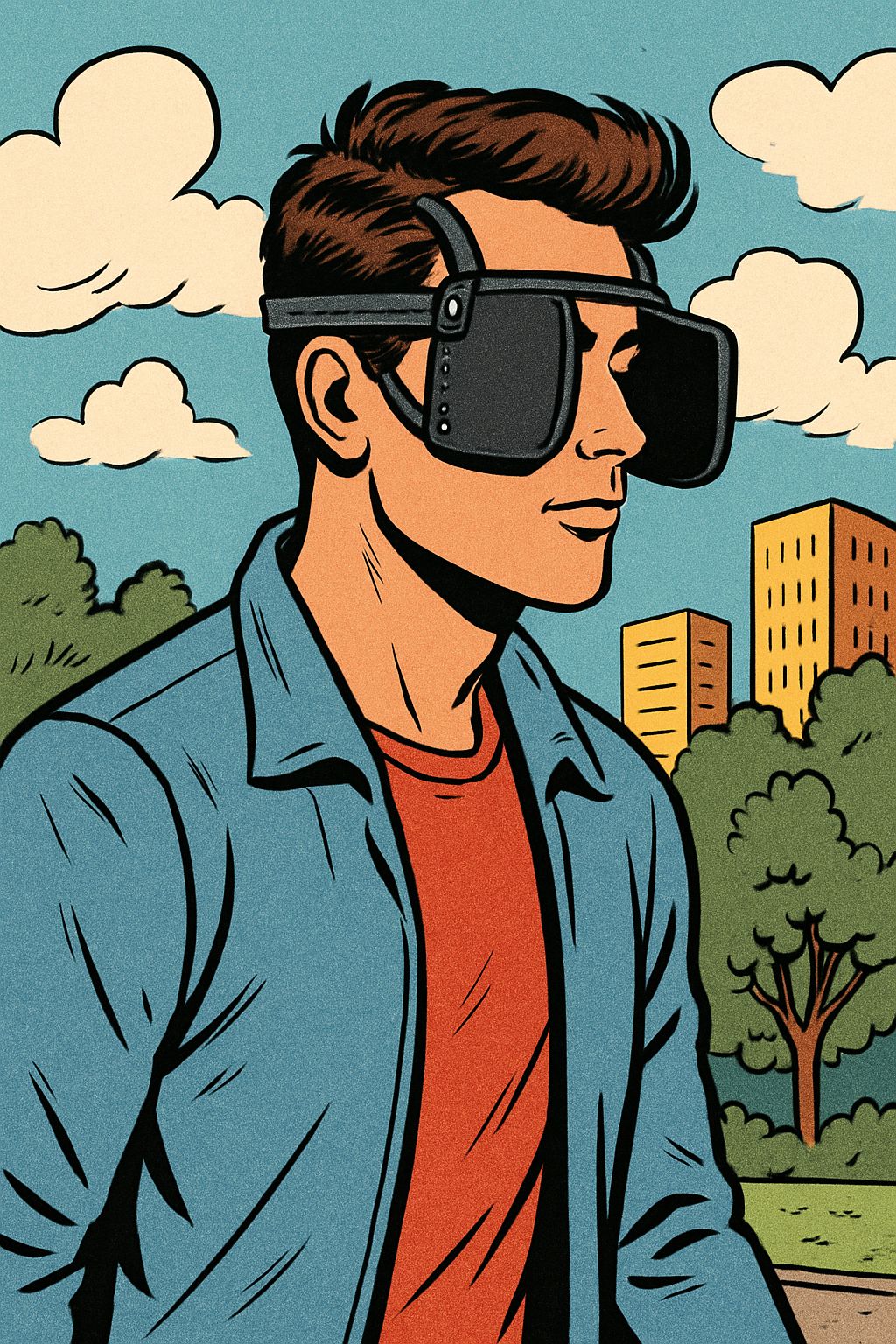
Your brain has never once shown you the real world — and it has been getting away with it your entire life.
What you see, hear, and remember is not a direct recording of reality. It is a construction. Your brain takes in fragmented, incomplete sensory data and fills the rest in using prediction, prior experience, and educated guessing. Most of the time, this works brilliantly. Occasionally, it fails in ways that matter — distorting what you heard in a conversation, warping a memory, or convincing you of something that never happened. Understanding how this process works is one of the most practically useful things you can do for your thinking, decision-making, and relationships.
Your Brain Doesn’t Really Record — It’s a Prediction Machine
Most people assume perception works like a camera: light enters the eye, sound enters the ear, and the brain faithfully records what is there. That model is almost entirely wrong. The brain is better understood as a prediction engine — one that is constantly generating hypotheses about what is happening in the world and updating them as new sensory information arrives.
The Brain Builds Reality From Incomplete Information
At any given moment, your senses are only capturing a fraction of the available information in your environment. Your peripheral vision is blurry, your hearing filters out background noise, and your attention can only focus on a small slice of what surrounds you. Rather than waiting for complete data, your brain immediately begins constructing a working model of reality using whatever it has — filling the gaps with what it statistically expects to be true based on past experience.
Research published in Nature Communications using MRI scanning has shown that the brain generates its own assumptions and expectations even when nothing is present in the visual field. In one striking finding, approximately 90% of what appears in your visual field at any moment is being generated or completed by the brain itself — with only a portion coming directly from raw sensory input. Some of that infill is drawn from memory, some from cross-referencing other senses simultaneously. You can also explore the science behind the psychology of expectations vs. reality for more insights.
This is not a flaw in the system. It is the system. The brain evolved to make fast, efficient decisions in a world where hesitation could be fatal. Waiting for complete information before acting was not a survival strategy. Predicting and acting was.
Why This Process Feels Seamless and Automatic
The reason you never notice your brain filling in the blanks is that the process happens entirely below conscious awareness. By the time any perception reaches your conscious mind, it has already been processed, assembled, and gap-filled by neural systems working faster than thought. What you experience as “seeing” or “hearing” is actually the finished product — the brain’s best guess — delivered to you as if it were raw, unfiltered reality.
The Cost of a Brain That Constantly Predicts
Speed and efficiency come at a price. When your brain predicts incorrectly — when its hypothesis about what is there does not match what is actually there — you perceive the wrong thing. And because the construction feels identical to genuine perception, you have no internal alarm telling you something went wrong. You simply believe what your brain served you.
This cost shows up across every domain of human experience: in what you think you saw, what you think someone said, what you believe you remember, and even in the story you tell yourself about who you are. Each of these is a place where the brain’s prediction machinery quietly operates — and quietly errs.
Key insight: “We do not see the world as it is. We see it as we are.” The brain uses its own history, biases, and expectations as the raw material for constructing your version of reality.
The Blind Spot You Never Notice
There is a straightforward, physical demonstration of the brain filling in blanks that every human being carries with them at all times — and almost no one is aware of it.
Every Human Eye Has a Physical Gap in Vision
Where the optic nerve connects to the retina at the back of your eye, there are zero photoreceptors. No rods. No cones. No visual information is captured at that point whatsoever. This region is called the optic disc, and it creates a genuine hole in your visual field — a blind spot in each eye where vision simply does not exist. In terms of visual angle, this blind spot is roughly the size of 17 full moons placed side by side in the sky.
How the Brain Invents What It Cannot See
You do not experience a black hole or a grey patch in your vision. You experience a seamless, continuous world — because your brain fills in that missing region using surrounding color, texture, and pattern information. It essentially paints over the gap so convincingly that no conscious effort or awareness is required on your part. The filled-in region is an invention. It is not there. Your brain put it there.
What makes this particularly compelling is that it is not unique to vision. The same gap-filling mechanism operates in hearing, in memory, and in social perception. The blind spot is simply the most measurable and demonstrable instance of a process that is happening everywhere in your cognition, all the time. This phenomenon is similar to how your brain treats everyday stress as a real threat.
Why Your Brain Hears Words Before They Are Spoken
Conversation moves fast. In natural speech, words arrive at roughly 120 to 180 words per minute, with speakers frequently overlapping, mumbling, and trailing off. If your brain waited for each word to fully arrive before processing it, you would fall hopelessly behind in every conversation you ever had. So it does not wait.
Your brain predicts. Based on context, tone, the first syllable of a word, and everything said before it in the sentence, your brain is generating probabilistic forecasts of what the next word — and even the next sentence — will be. By the time sound waves finish forming a word in the air, your brain has frequently already decided what it heard.
The 200-Millisecond Rule in Human Conversation
Studies of conversational timing have found that the average gap between one person finishing speaking and another person beginning their response is approximately 200 milliseconds — a fifth of a second. This is far too short for the brain to have processed the final words, formulated a response, and initiated speech from scratch. The only way this timing is possible is if the brain was already predicting the end of the sentence and preparing a response before the speaker finished. You are, in a very real sense, responding to what your brain predicted someone said — not always to what they actually said.
MRI Evidence of the Brain Completing Sentences Early
Research published in The Journal of Neuroscience has demonstrated that brain activity associated with language processing fires in anticipation of incoming words during natural speech comprehension. MRI imaging shows predictive neural activation occurring before the completing word has been heard — confirming that the brain is not simply decoding speech but actively generating it alongside the speaker. This predictive process is why speech that contains noise or distortion can still be fully understood: the brain reprocesses ambiguous sounds through its predictive filter and delivers what it statistically expects the message to be.
When Predictive Hearing Gets It Wrong
Predictive hearing fails most visibly when context misleads the brain’s forecast. If you expect someone to say something critical, your brain may complete their sentence with a critical ending — even when the actual words were neutral. This is why arguments often escalate over things that were never actually said. One person heard what their brain predicted, not what their partner spoke. The prediction felt identical to genuine perception, so there was no reason to question it.
Illusions of Control: When Your Brain Fakes Agency
There is an uncomfortable finding that has emerged repeatedly in neuroscience research: your brain often makes decisions before you are consciously aware of deciding anything. Studies using EEG have detected neural activity associated with a physical movement up to several hundred milliseconds before a person reports feeling the conscious intention to move. Your sense of having decided — of being the author of your own actions — may itself be a story your brain constructs after the fact.
This does not mean free will is an illusion in any simple sense, but it does mean that the feeling of conscious control is partly a gap-filling exercise. Your brain executes a process, then fills in the narrative of deliberate choice to make the experience coherent. The implication is significant: many of the decisions you believe you made thoughtfully may have originated in neural processes that ran entirely without your input — with your conscious mind arriving just in time to take credit.
How False Memories Form Without You Realizing
Memory feels like a recording. It is not. Every time you recall a past event, you are not pressing play on a stored file — you are actively reconstructing the event from fragments, and your brain fills in the gaps between those fragments using logic, expectation, and present-day knowledge. This means that each time you remember something, you are also subtly rewriting it.
The research on this is unambiguous and has been replicated consistently across decades of cognitive psychology. Psychologist Elizabeth Loftus demonstrated through landmark studies that entirely false memories — detailed, emotionally convincing recollections of events that never occurred — can be implanted through suggestion alone. Participants in her studies came to sincerely remember being lost in a shopping mall as children, or witnessing events they were never present for, simply because the suggestion was introduced plausibly and the brain filled in the rest.
What makes false memories particularly difficult to detect is that they feel identical to accurate ones. There is no internal quality difference between a true memory and a constructed one. Confidence in a memory is not a reliable indicator of its accuracy — a fact with significant consequences in legal testimony, medical histories, and personal relationships.
The Brain Reconstructs Memories, Not Replays Them
Each act of remembering involves reassembling a memory from distributed neural traces across multiple brain regions — the hippocampus for the sequence of events, the amygdala for emotional weight, the visual cortex for imagery, and so on. These fragments are pulled together each time you recall something, and the reassembly is imperfect by design. Gaps between the fragments are filled using schemas — mental frameworks built from general knowledge and experience — which means your memories are always partly historical record and partly plausible reconstruction.
Common Triggers That Distort Recollection
Several factors are known to increase the likelihood of memory gaps being filled inaccurately. Leading questions are among the most powerful distorters — research has shown that changing a single word in a question asked after an event (such as asking how fast cars were going when they “smashed” versus when they “contacted”) can change what details people report remembering. Stress, time elapsed since the event, and social pressure from others who remember differently all compound the distortion.
Repeated recall also introduces error. Each time you tell a story about a past event, you are consolidating the most recent version — including any inaccuracies introduced in previous tellings. The more often you recall something, the more refined and confident the memory becomes, and paradoxically, the more distant from the original event it may be.
Real-World Consequences of Memory Gaps Being Filled
The consequences extend well beyond personal inconvenience. Eyewitness testimony — historically treated as among the most compelling forms of evidence in legal proceedings — is now understood to be deeply unreliable for exactly these reasons. The Innocence Project, which uses DNA evidence to exonerate wrongly convicted individuals, has found that faulty eyewitness testimony was a contributing factor in a significant majority of wrongful convictions it has reviewed.
In everyday life, the stakes are lower but the mechanism is identical. Misremembered conversations create relationship conflict. Inaccurately recalled instructions lead to workplace errors. And the confident certainty that accompanies a filled-in memory means these errors often go unchallenged until evidence from the external world forces a correction.
The Self-Image Trap: How the Brain Fills in Blanks About You
The brain does not only fill in gaps about the external world — it fills in gaps about you. Your sense of who you are, what you are capable of, and how others perceive you is itself a construction. Your brain takes limited and often ambiguous feedback from the world and assembles it into a coherent self-narrative, filling in the uncertain parts with predictions drawn from your history. This process can work in your favor or quietly trap you in an outdated version of yourself.
Optimistic vs. Pessimistic Brain Predictions About Yourself
Research in cognitive neuroscience has identified what is sometimes called the optimism bias — the tendency for most people’s brains to fill in uncertain information about their own futures with more positive predictions than the evidence strictly supports. This bias appears to be linked to activity in the frontal cortex and serves a motivational function, keeping people engaged with goals and relationships. However, not everyone’s brain defaults to optimistic infill. For individuals who have experienced repeated negative outcomes, the predictive machinery can shift — filling in uncertain self-relevant information with negative expectations instead, a pattern closely associated with depression and anxiety.
Why Past Experiences Become Future Expectations
Your brain uses your personal history as its primary dataset for predicting what will happen next — including what will happen to you. This is efficient when your past experiences are representative of your future circumstances, but it creates serious problems when they are not. Someone who grew up in an environment where trust was consistently violated will have a brain that predicts betrayal in new relationships, filling in ambiguous social signals with threat-based interpretations. The prediction is drawn from real data — it just comes from a context that no longer applies. To understand more about how trust is developed and lost, you can explore the psychology of trust.
This is one reason why simply knowing something intellectually does not automatically change how the brain responds to it. The predictive system runs below conscious thought and updates slowly, through repeated new experience rather than through insight alone. Understanding this mechanism, however, is the first step toward deliberately creating the new experiences that can recalibrate it. To learn more about how your brain processes stress, read about why your brain treats everyday stress like a real threat.
- Confirmation bias: Your brain preferentially notices information that confirms its existing predictions about yourself and filters out contradictory evidence.
- Emotional reasoning: When your brain fills in blanks using emotional state rather than evidence, feelings become “facts” — I feel like a failure, therefore I am one.
- Schema lock: Long-held self-concepts become the default template for gap-filling, making it harder to integrate genuinely new information about who you are.
- Attribution error: The brain fills in explanations for your own behavior and others’ behavior using predictable but often inaccurate shortcuts about cause and intent.
Recognizing these patterns does not eliminate them — but it creates the cognitive distance needed to question the story your brain is telling you before you act on it as though it were fact.
How to Catch Your Brain Filling in the Blanks
The challenge with a prediction machine is that it does not come with a warning light. The filled-in version of reality feels exactly like the real thing, which means catching the brain in the act requires deliberate strategies rather than passive awareness. The good news is that these strategies are learnable and, with practice, become faster and more automatic.
The core skill is what cognitive psychologists call metacognition — thinking about your own thinking. When you notice a strong sense of certainty about something you perceived, remembered, or concluded, that certainty itself is worth examining. Certainty is often a signal that your brain’s prediction machinery ran confidently — which means it may have filled in more than it received.
These four approaches are practical entry points into catching gap-filling in real time:
Practical framework for reducing perceptual error:
Situation
Brain’s Default Gap-Fill
Corrective Strategy
Misheard conversation
Completes sentence using expectation
Repeat back what you heard before responding
Recalled memory
Fills gaps with plausible reconstruction
Write it down immediately; compare with others present
Judging someone’s intent
Assigns motive based on past patterns
Ask directly rather than assuming
Self-assessment under stress
Defaults to negative prediction
List specific evidence before drawing conclusion
Each of these strategies works by inserting a deliberate pause between what the brain automatically delivers and the moment you act on it — creating space to verify rather than simply accept.
1. Pause Before You Assume You Understood Something Fully
In conversation, the single most effective habit is to repeat back what you heard before responding — not as a formal exercise, but as a natural check. A simple “So what I’m hearing is…” before you reply confirms whether your brain’s predictive completion matched what was actually said. This one habit alone can dramatically reduce the number of arguments and misunderstandings that arise not from genuine disagreement but from two people’s brains having filled in slightly different versions of the same exchange. To understand more about how our brain processes information, explore the science behind expectations vs. reality.
2. Seek Out Information That Contradicts Your First Impression
Your brain’s prediction system is heavily biased toward confirming what it already believes. Once a hypothesis is formed — about what you saw, what someone meant, or what is likely to happen — the brain tends to seek out and weight information that supports that hypothesis while filtering out contradictory evidence. This is confirmation bias operating at the perceptual level, not just the intellectual one.
The corrective strategy is to make contradiction-seeking a deliberate habit. After forming an initial impression, actively ask: what would this look like if I were wrong? Look specifically for evidence that does not fit your first read of the situation. This is not about being contrarian — it is about giving your brain access to information it would otherwise quietly discard before it ever reached your conscious awareness.
In practical terms, this might mean reading the reply to an email you assumed was hostile before deciding how to respond, asking a colleague whether they interpreted a meeting the same way you did, or revisiting a decision after sleeping on it. Each of these creates an opportunity for new data to update the brain’s prediction rather than simply reinforce it.
3. Write Down Memories Soon After Events Occur
Because memory is reconstructive rather than reproductive, the gap between an event and your recall of it is where distortion enters. The longer that gap, the more your brain fills in using inference and schema rather than actual stored detail. Writing down what happened — in specific, concrete terms — as soon as possible after an event creates an external record that resists the brain’s tendency to revise with each subsequent recall.
This is not about journaling for emotional processing, though that has its own value. It is about creating a factual anchor. Details like exact words used, the sequence of events, who was present, and what was decided are precisely the kinds of specifics that erode fastest from memory and get replaced by plausible-sounding reconstructions. A written note made within hours of an event is far more reliable than a memory recalled days or weeks later — even when that later memory feels vivid and certain. For more insights, explore the psychology of trust and how memories can be influenced.
The practice is especially valuable in high-stakes situations: after difficult conversations, following important meetings, or any time you sense a situation may later become disputed. Treat your written notes as a check on your brain’s gap filling tendency rather than a supplement to memory — because memory, left alone, will quietly rewrite itself.
4. Ask Others What They Perceived in the Same Situation
Because each person’s brain fills in gaps using their own unique history, expectations, and emotional state, two people who experience the same event will often construct meaningfully different versions of it. Comparing perceptions with others who were present is one of the most direct ways to expose where your brain’s gap-filling diverged from reality — or from the shared version of events that decision-making needs to be based on. It also normalizes the humbling reality that perception is always personal and always partial, which makes it easier to update your version without feeling threatened by the correction.
Your Brain’s Gaps Are Normal — But Worth Watching
The brain’s gap-filling machinery is not a bug. It is the mechanism that allows you to navigate a complex, fast-moving world without being paralyzed by incomplete information at every turn. It is the reason you can hold a conversation, recognize a face in poor lighting, or catch a ball — all tasks that require the brain to predict and act faster than deliberate thought allows. The goal is not to eliminate this process but to develop enough awareness of it that you are not blindly governed by it. The moments that matter most — important decisions, critical conversations, deeply held beliefs about yourself — are exactly the moments that deserve a second look before you trust your brain’s first draft of reality as the final version.
Frequently Asked Questions
The brain fills in blanks as a fundamental feature of how perception, memory, and cognition are structured — not as an occasional error mode. Below are the most common questions people have once they understand this process is happening continuously.
Understanding that your brain constructs rather than records reality tends to raise immediate practical questions. How much of what you perceive is real? When does this process become genuinely dangerous? And perhaps most importantly — can you do anything about it? The answers are more nuanced than a simple yes or no, and they have real implications for how you communicate, make decisions, and understand your own mind.
The questions below address the most important aspects of the brain’s gap-filling process — covering the biological basis, the real-world risks, and the specific mechanisms behind phenomena like the visual blind spot and false memory formation.
FAQ Topic
Core Concept
Practical Implication
Why the brain fills in blanks
Predictive processing for speed and efficiency
Perception is always an interpretation, not a recording
When it becomes dangerous
High-stakes situations where errors compound
Eyewitness accounts, medical recall, conflict escalation
Blind spots and prediction
Physical gap in retina filled by visual cortex
Demonstrates gap-filling is structural, not optional
False memory formation
Reconstruction uses schema to fill gaps between fragments
Confidence in a memory does not equal accuracy
Training against perceptual errors
Metacognition and deliberate verification habits
Awareness plus practice reduces error rate over time
Each of these topics connects back to the same underlying mechanism — a brain that prioritizes speed and coherence over perfect accuracy, and that does its best work when you understand its tendencies well enough to complement them with deliberate checks.
Why does the brain fill in missing information automatically?
The brain fills in missing information automatically because waiting for complete data before responding would be functionally impossible in real time. The neural systems responsible for perception, language, and memory operate under severe time constraints — and the evolutionary pressures that shaped them favored speed over precision. Predictive gap-filling is the brain’s solution to receiving fragmented, noisy, incomplete sensory input and needing to produce coherent, actionable experience from it within milliseconds. The process is automatic because making it conscious and deliberate would defeat its purpose entirely. To understand more about how the brain handles stress, read about why your brain treats everyday stress like a real threat.
Can filling in the blanks ever be dangerous?
Yes — and the danger scales with the stakes of the situation. In low-stakes everyday perception, the brain’s gap-filling errors are usually self-correcting: you misread a word, re-read it, and move on. In high-stakes situations, the same errors can have serious consequences before any correction is possible.
In legal contexts, eyewitness misidentification driven by predictive memory reconstruction has contributed to wrongful convictions. In medical settings, patients who misremember symptoms or medication instructions create real clinical risk. In interpersonal conflict, two people acting on their brain’s completed versions of the same conversation — versions that diverged at the point of gap-filling — can escalate disagreement based on things that were never actually said.
In workplace safety environments, the brain’s tendency to fill in what it expects to see rather than what is actually present has been linked to the overlooking of hazards and the misreading of warning signals. When the cost of a perceptual error is high, the gap-filling mechanism’s greatest strength — its speed — becomes its greatest liability.
What is the connection between blind spots and brain prediction?
The visual blind spot — the region of your retina where the optic nerve connects and no photoreceptors exist — is the most structurally clear demonstration of predictive gap-filling in the brain. Because no visual signal is received from that region, the brain has no choice but to generate what it expects should be there based on surrounding information. The result is a seamless visual field with no perceivable gap. The blind spot matters conceptually because it proves that gap-filling is not an occasional compensatory behavior — it is wired into the architecture of perception itself. If the brain fills in a physically missing region of vision without any conscious awareness, it is doing the same thing across all other domains of experience.
How do false memories form if we did not intend to remember things wrongly?
False memories form because memory is a reconstructive process, not a storage and retrieval one. When you remember an event, your brain reassembles it from distributed neural traces — some encoding the sequence, some the emotional tone, some the sensory details. The gaps between these fragments are filled using schemas: general knowledge frameworks built from experience that supply plausible details. This reconstruction happens automatically and without conscious intent, which is why the resulting memory feels genuine.
The distortion is compounded by external factors — leading questions, social influence from others who remember differently, and the simple passage of time — all of which introduce new information that the brain incorporates into the reconstruction without flagging it as an addition. Each subsequent recall consolidates the most recent version, including any introduced inaccuracies, making the false memory progressively more stable and harder to distinguish from accurate recall. Intention has nothing to do with it; the mechanism runs regardless.
Is it possible to train your brain to be less prone to perceptual errors?
You cannot switch off the brain’s predictive gap-filling — nor would you want to — but you can meaningfully reduce the error rate in situations that matter by developing metacognitive habits that create space between automatic perception and conscious acceptance of it.
The most evidence-supported approaches involve practices that slow the gap between stimulus and response: mindfulness training has been shown to increase awareness of automatic cognitive processes; structured reflection habits like written journaling create external records that resist memory’s reconstructive drift; and active perspective-taking — deliberately considering how another person might have perceived the same event — reduces the degree to which your brain’s idiosyncratic predictions go unchallenged. For more on how your brain responds to stress, explore why your brain treats everyday stress like a real threat.
Training is most effective when applied consistently in low-stakes situations so that the metacognitive habit becomes sufficiently automatic to activate in high-stakes ones. Like most cognitive skills, it develops through repeated practice rather than through understanding alone — which means knowing about gap-filling is the starting point, not the destination.