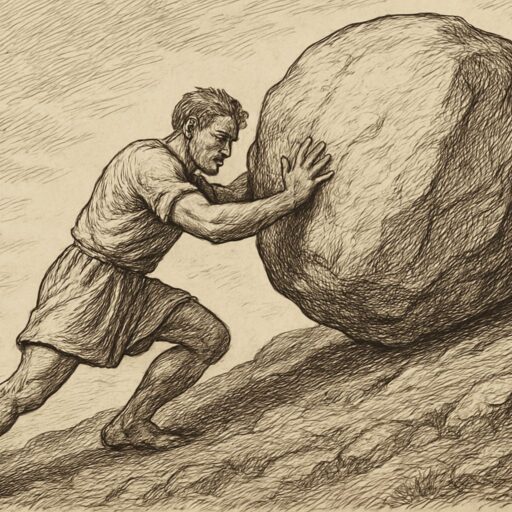
Article At A Glance
- Self-sabotage through rewards is one of the most overlooked barriers to lasting personal growth — and most people never see it coming.
- The brain’s reward system can work against you, creating a cycle where “treating yourself” actually undoes your progress.
- A psychological phenomenon called moral licensing makes you feel entitled to break your own rules after doing something good — and it feels completely justified in the moment.
- There is one specific type of reward that actually reinforces habits instead of destroying them — and it’s not what most people expect.
- Building identity-based habits instead of reward-dependent ones is the most reliable way to break the cycle for good.
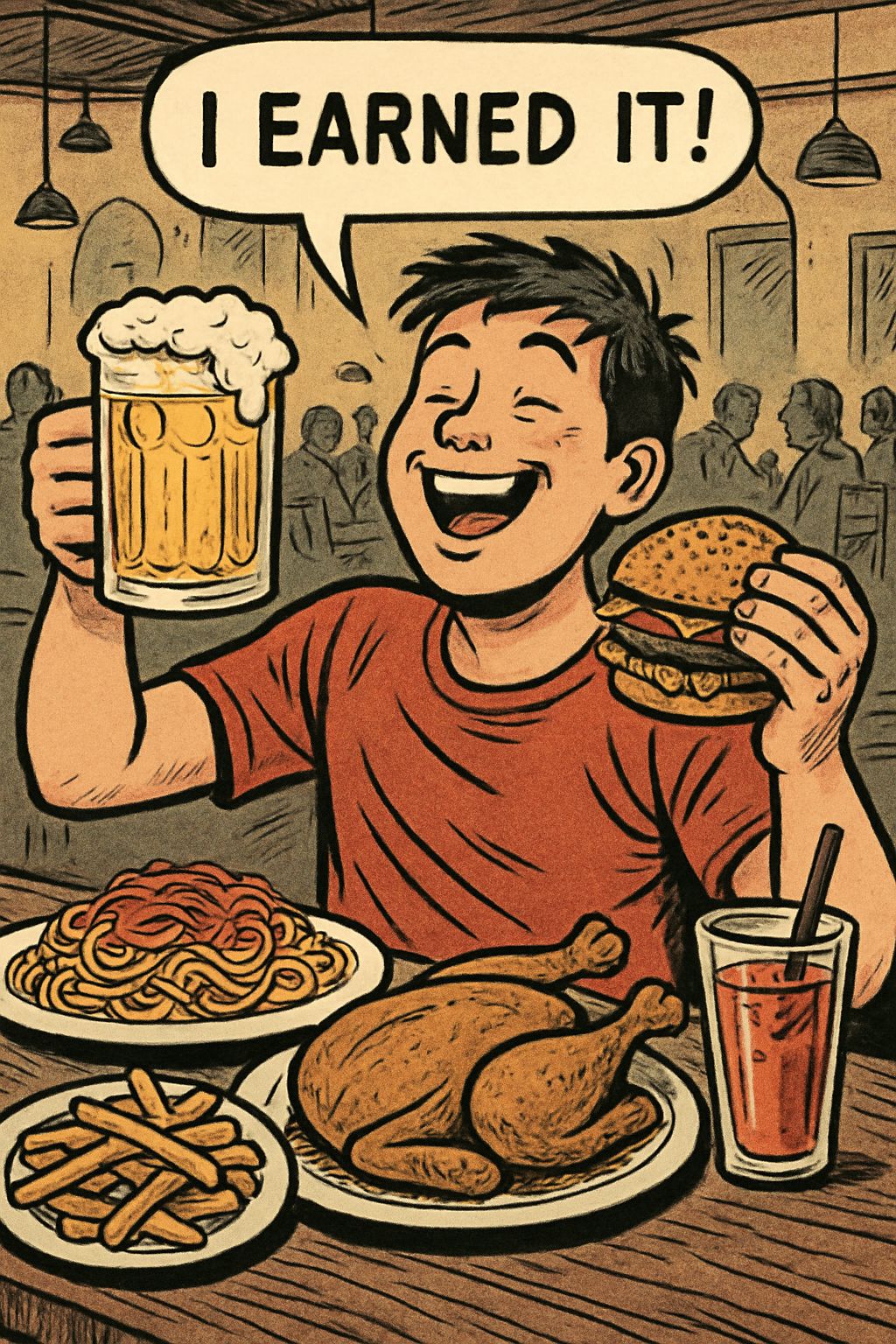
Most people trying to build better habits are accidentally working against themselves — and the reward system they’re so proud of is exactly why.
We’ve been taught since childhood that good behavior deserves a prize. Finish your vegetables, get dessert. Hit your sales target, book the vacation. Run five days this week, eat whatever you want on the weekend. It sounds fair. It sounds motivating. But decades of behavioral research — and a remarkably consistent pattern in everyday life — tell a very different story. Rewarding yourself for good habits doesn’t just fail to work. In many cases, it actively dismantles the progress you’ve made.
Understanding why this happens is the first step toward breaking the cycle. Resources point to self-awareness as the foundation of any real behavioral change — and nowhere is that more needed than in how we relate to our own reward systems.
The Reward Trap Most People Never Notice
The trap doesn’t look like a trap. It looks like balance. It looks like self-compassion. You worked hard, you stayed disciplined, and now you get something nice. The problem is that this mental accounting — this sense of trading good behavior for a reward — quietly repositions your habit as a cost rather than a value. And the moment a habit feels like a cost, you’ve already started undermining it.
Research on intrinsic versus extrinsic motivation has shown this pattern repeatedly. When people are rewarded for an activity they already find meaningful, their interest in that activity drops after the reward is removed. This is known as the overjustification effect — the reward replaces the internal reason for doing something, and without it, the behavior loses its pull entirely. To understand more about how our childhood experiences affect our behavior, consider exploring related psychological concepts.
Why Rewards Undermine the Habits You’re Trying to Build
There’s no single reason rewards backfire — it’s a combination of psychological mechanisms that stack on top of each other. Each one alone would be manageable. Together, they make reward-based habit building one of the least reliable strategies available.
1. Goal-Based Rewards Create a Stopping Point
When you attach a reward to reaching a goal, you’re mentally marking that goal as the finish line. Hit the milestone, collect the prize, and — unconsciously — your brain registers the task as complete. This is why so many people lose momentum immediately after achieving something significant. The reward signals: you’re done.
- Runners who reward themselves after a race often skip training in the weeks that follow
- People who hit a savings target frequently pause their disciplined spending habits
- Dieters who celebrate weight loss with a “cheat week” statistically regain weight faster
The habit was never the point — the reward was. And once the reward arrives, the habit has no remaining function in the brain’s economy of effort.
2. Rewards Force Decisions That Drain Your Willpower
Every time you set up a reward system, you’ve also created an ongoing negotiation with yourself. Did I do enough to deserve this? Was today a good enough day? The power of true habits is that they eliminate this negotiation entirely — they run on autopilot. Rewards pull habits back into the decision-making zone, which is exactly where habits go to die. Decision fatigue is real, and every mental transaction you add to your day chips away at the self-control resources you need most.
3. Rewards Make You Associate Good Habits With Suffering
If you reward yourself after going to the gym, you’re implicitly framing the gym as the unpleasant thing you had to endure to earn something good. Over time, that framing sticks. The habit becomes associated with effort, restriction, and deprivation — and the reward becomes associated with relief. You’re not building a love of the habit. You’re building a countdown to when it’s over.
The “I Deserve This” Mindset Is Quietly Sabotaging You
There’s a version of self-sabotage that doesn’t feel like sabotage at all. It feels like self-care. It feels like balance. It shows up as the glass of wine after a stressful but productive day, the skipped workout after a week of clean eating, the impulse purchase after a month of careful budgeting. The language around it is always reasonable: I’ve been so good. I deserve a break. Just this once.
This is moral licensing — a well-documented psychological phenomenon where doing something virtuous gives you perceived permission to do something that contradicts it. It’s not a character flaw. It’s a predictable feature of how the human brain keeps score. The danger is that it operates beneath conscious awareness, making it nearly impossible to catch in the moment.
How Deprivation Leads to Permission
Moral licensing gets stronger the more you frame your habits as sacrifice. When eating well feels like deprivation, “just one treat” feels like justice. When saving money feels like punishment, a spontaneous splurge feels like reclaiming your life. The deprivation narrative fuels the permission narrative — and together they create a pendulum that swings you back to exactly where you started, every time.
The reframe that breaks this cycle isn’t about more discipline. It’s about changing the story entirely. The goal isn’t to suffer through good habits until you’ve earned a break. The goal is to build habits so aligned with who you are that the idea of “rewarding yourself” by abandoning them stops making any sense.
Why Moral Licensing Feels Completely Justified in the Moment
The most insidious part of moral licensing is how airtight the internal logic feels. You genuinely did something good. You genuinely did work hard. The reward genuinely does feel proportionate. Your brain isn’t lying to you — it’s just using a flawed accounting system that treats virtuous actions and self-undermining actions as if they exist on the same ledger, canceling each other out. Understanding this mechanism intellectually is what makes it possible to pause before the “deserved” reward undoes weeks of progress.
The Perverse Reward Problem
There’s a particular kind of self-defeat that sits at the intersection of achievement and celebration — where the reward you choose directly contradicts the goal you just worked so hard to reach. It’s not random. It’s not weakness. It’s a pattern so consistent across human behavior that researchers have a name for it: the perverse reward problem. And once you see it, you’ll recognize it everywhere.
The mechanism is straightforward. You reach a goal. The goal required discipline, restriction, or sustained effort. The reward your brain gravitates toward is the exact opposite of that discipline — because relief from constraint is deeply pleasurable, and your brain has been quietly craving it the entire time you were being “good.”
Celebrating Weight Loss With Cake Is More Common Than You Think
Studies on weight loss behavior have found that people who successfully lose weight are significantly more likely to reward themselves with high-calorie foods than people who haven’t been dieting at all. The logic feels reasonable in the moment — you’ve proven you have control, so a little indulgence won’t hurt. But that indulgence rarely stays little, and the habit of celebrating restriction with excess is one of the primary drivers of the well-documented yo-yo dieting cycle.
The same pattern appears far outside the realm of food. People who complete a month of sobriety celebrate with a drink. People who finish a financial detox reward themselves with an unplanned purchase. People who hit a fitness milestone take an extended break from training that stretches longer than intended. Each scenario follows the same logic: the hard work earns the opposite of the hard work.
What makes this particularly difficult to interrupt is that the reward doesn’t feel self-destructive — it feels proportionate. You ran the marathon. You earned the rest week. The brain’s accounting is emotionally convincing even when it’s logically counterproductive. Recognizing this pattern is not about eliminating celebration. It’s about understanding why your instinctive reward choices so often pull in the exact wrong direction.
Why We Instinctively Reach for the Opposite of Our Goal
The pull toward oppositional rewards comes down to how the brain processes sustained effort. Every act of discipline activates a low-level stress response — not dramatically, but consistently. Over time, the brain begins to associate the disciplined behavior with that mild tension, and it begins to crave release. The reward that promises the most relief isn’t something adjacent to your goal. It’s the removal of the constraint entirely. That’s why rest feels better than active recovery, junk food feels better than a “healthy treat,” and spending feels better than a modest reward after a savings milestone. For more insight into how our brain reacts to stress, you can explore why your brain treats everyday stress like a real threat.
Interrupting this instinct requires building a completely different relationship with the habits themselves — one where the habit is no longer experienced as the constraint you’re escaping, but as the expression of who you actually are. That shift doesn’t happen through more willpower. It happens through identity.
The One Type of Reward That Actually Works
Not all rewards are equally destructive. There is one category that not only avoids the problems outlined above but actively accelerates habit formation — and it hinges on a single principle: the reward must pull you deeper into the habit, not away from it.
Rewards That Pull You Deeper Into the Habit
A habit-reinforcing reward is one that makes the habit itself more enjoyable, more immersive, or more connected to your identity. Rather than offering relief from the habit, it increases your investment in it. This type of reward works because it doesn’t trigger moral licensing, doesn’t signal a stopping point, and doesn’t reframe the habit as a cost. Instead, it layers positive association directly onto the behavior you’re trying to sustain.
The practical test for whether a reward qualifies is simple: does this reward make me more likely to repeat the habit, or less? If the answer is more, you’ve found a habit-reinforcing reward. If the answer is less — or even neutral — you’re back in the danger zone of conventional reward thinking.
This isn’t a minor distinction. The direction of the reward relative to the habit is everything. A reward that points back toward the habit creates a virtuous cycle. A reward that points away from it creates the familiar pendulum swing — progress, indulgence, regression, restart.
The Reward Direction Test
Ask yourself one question before choosing any reward: Does this pull me closer to the habit or further from it?
Closer = habit-reinforcing reward ✓
Further = perverse reward ✗A new pair of running shoes after a month of consistent training pulls you closer. A week off from training pulls you further. New cookbooks or quality kitchen tools after clean eating pulls you closer. A “cheat week” pulls you further. The reward direction determines whether you’re building momentum or bleeding it.
Real Examples of Habit-Reinforcing Rewards
Habit-reinforcing rewards look different for every goal, but the structure is always the same — they deepen your engagement with the behavior rather than offering escape from it. A reader building a daily reading habit might reward consistency with a new book from an author they’ve been excited about. Someone developing a fitness routine might invest in upgraded equipment, a new training program, or a session with a coach. A person working on their mental health might reward consistent journaling with a beautifully designed notebook or a retreat focused on personal growth.
The common thread is that each reward signals: this habit is worth investing in. That signal compounds. Each habit-reinforcing reward makes the next repetition slightly more appealing, slightly more tied to your sense of self. Over time, the habit stops feeling like a discipline you maintain and starts feeling like a practice you protect.
How to Build Habits Without Relying on Rewards
The most durable habits in any person’s life aren’t maintained by reward systems — they’re maintained by identity. The person who never misses a workout doesn’t think “if I go today, I get something.” They think “I’m someone who trains.” The distinction is subtle, but the behavioral difference is enormous. Identity based habits don’t require the ongoing negotiation that reward systems demand. They run on a completely different fuel source.
Treat the Habit as the Identity, Not the Means to an End
Shifting from a reward model to an identity model starts with language. Instead of “I’m trying to eat healthier,” the frame becomes “I’m someone who takes care of their body.” Instead of “I’m working on saving money,” it becomes “I’m someone who is financially intentional.” These aren’t affirmations — they’re identity claims that your daily actions either confirm or contradict. When a habit is tied to identity, skipping it doesn’t feel like a day off. It feels like a small betrayal of self.
This shift takes time and repetition. Each time you perform the habit, you cast a vote for that identity. Each time you skip it, you cast a vote against it. The goal isn’t perfection — it’s accumulating enough consistent votes that the identity becomes undeniable, even to the most self-critical inner voice. At that point, the habit is no longer something you do to earn a reward. It’s something you do because of who you are.
Replace Reward Systems With Consistency Structures
Instead of asking “what do I get if I do this?” the more powerful question is “what structure makes it nearly impossible for me not to do this?” Consistency structures remove the reward negotiation entirely. They work by shrinking the habit to its smallest viable form, anchoring it to existing behaviors, and making the environment do the motivational heavy lifting. A person building a meditation habit doesn’t reward themselves for meditating — they place their meditation cushion next to their coffee maker so the habit triggers automatically every morning before the day has a chance to interrupt.
Practical consistency structures that actually work include:
- Habit stacking — attaching the new habit directly after an existing automatic behavior (after I pour my coffee, I journal for five minutes)
- Reducing friction to zero — laying out workout clothes the night before, prepping meals on Sunday, keeping books on the pillow instead of the shelf
- Implementation intentions — specifying exactly when and where the habit will happen, which research shows dramatically increases follow-through
- Tracking streaks without attaching rewards to them — the streak itself becomes the motivation, not what you get at the end of it
- Social accountability — telling someone else about the habit, or doing it with someone, shifts the cost of skipping from internal to external
None of these structures require a reward at the end. They work because they make the habit the path of least resistance — and humans, like water, reliably flow downhill. To understand why this approach is effective, it’s helpful to explore how emotional regulation improves every area of life.
Stop Rewarding Progress With Setbacks
The single most practical takeaway from everything above is this: before you choose a reward, ask yourself honestly whether it points toward your goal or away from it. That one question, asked consistently, will reveal how many of your “well-deserved” rewards are actually quiet acts of self-sabotage dressed up as self-compassion. The goal isn’t to eliminate celebration — it’s to celebrate in ways that build momentum rather than burn it.
Real progress deserves real acknowledgment. But the acknowledgment that serves you most isn’t the kind that lets you off the hook. It’s the kind that deepens your commitment, reinforces your identity, and makes the next step feel more natural than the last. When you stop using your victories as permission to retreat, the forward motion becomes continuous — and that continuity is where genuine transformation actually lives. For further insights, explore why confidence comes from action and not affirmations.
Frequently Asked Questions
Below are the most common questions people have when they start examining their relationship with habits, rewards, and the subtle ways both can work against their goals.
Why do people reward themselves with unhealthy things after reaching a goal?
People instinctively reward discipline with its opposite because the brain experiences sustained effort as low-level stress and craves relief from it. When a goal required restriction — whether in food, spending, or time — the most emotionally satisfying reward is the removal of that restriction entirely. This is compounded by moral licensing, where achieving something good creates a felt sense of permission to indulge in something counterproductive. The reward doesn’t feel self-destructive in the moment because the brain’s internal accounting treats the good behavior as a credit that “covers” the cost of the indulgence. Understanding this mechanism is the first step toward choosing rewards that don’t undo what you’ve built.
Does rewarding yourself for good habits actually work?
Conventional reward systems — where an external prize is offered after completing a habit — are largely ineffective for building lasting behavior and can actively undermine it. The overjustification effect, documented across scores of studies, shows that rewarding an activity causes people to lose intrinsic interest in it over time. Once the reward is removed, the habit loses its motivational foundation. The exception is habit-reinforcing rewards — those that pull you deeper into the habit rather than offering escape from it. These work because they don’t trigger the psychological mechanisms that make conventional rewards so counterproductive.
What is moral licensing and how does it affect habits?
Moral licensing is a psychological phenomenon where doing something virtuous creates a felt sense of permission to do something that contradicts it. It operates largely beneath conscious awareness, which is what makes it so difficult to catch and interrupt. In habit formation, moral licensing shows up as the “I’ve been so good, I deserve a break” internal narrative — and it reliably produces behavior that erases recent progress. The antidote is not more willpower but a reframe: habits tied to identity rather than obligation are far less vulnerable to moral licensing because skipping them feels like a loss of self, not just a missed task.
What are examples of rewards that reinforce good habits?
Habit-reinforcing rewards share one defining feature: they increase your investment in the habit rather than offering relief from it. For fitness habits, this might mean new training gear, an upgraded program, or a session with a coach after a month of consistency. For reading habits, a new book by a long-anticipated author. For financial discipline, a high-quality tool or resource that supports the next level of your financial goals. For mental health practices like journaling or therapy, a retreat, a beautifully designed journal, or a workshop on personal development. The test is always the same — does this reward make the habit feel more worth doing, or does it signal that the hard part is finally over?
How do you build lasting habits without using a reward system?
Lasting habits are built on identity, not incentives. The shift begins with reframing the habit from something you do to earn a reward into something that expresses who you are. This isn’t a motivational exercise — it’s a cognitive restructuring that changes the entire context in which the habit exists. When a habit is tied to identity, every repetition reinforces a self-concept rather than moving you toward an external prize. That self-concept becomes self-sustaining in a way that no reward system can replicate.
Supporting that identity shift with consistency structures — habit stacking, friction reduction, implementation intentions, and social accountability — removes the need for ongoing motivational energy. The environment does the work instead of your willpower. And because willpower is a finite daily resource while environmental design is persistent, structure reliably outperforms motivation over time.
The final piece is patience with the process itself. Identity-based habits built on consistency structures don’t produce dramatic overnight results — they produce something far more valuable: a version of yourself who no longer needs to be rewarded for doing what aligns with your own values. That internal alignment is not a destination you reach. It’s a direction you choose, repeatedly, until it becomes the only direction that makes sense. Present Influence offers frameworks and conversations designed to help you make that shift — and sustain it.