
Article At A Glance
- Self-sabotage happens when old coping mechanisms, fear of failure, or low self-worth quietly override your conscious goals.
- Procrastination, picking fights, and harsh self-talk are some of the most common forms self-sabotage takes.
- Your unconscious mind often sabotages success to protect you from a deeper fear, like being exposed as a fraud or facing rejection.
- Childhood patterns and past relationships shape many of the self-defeating habits you repeat today without realizing it.
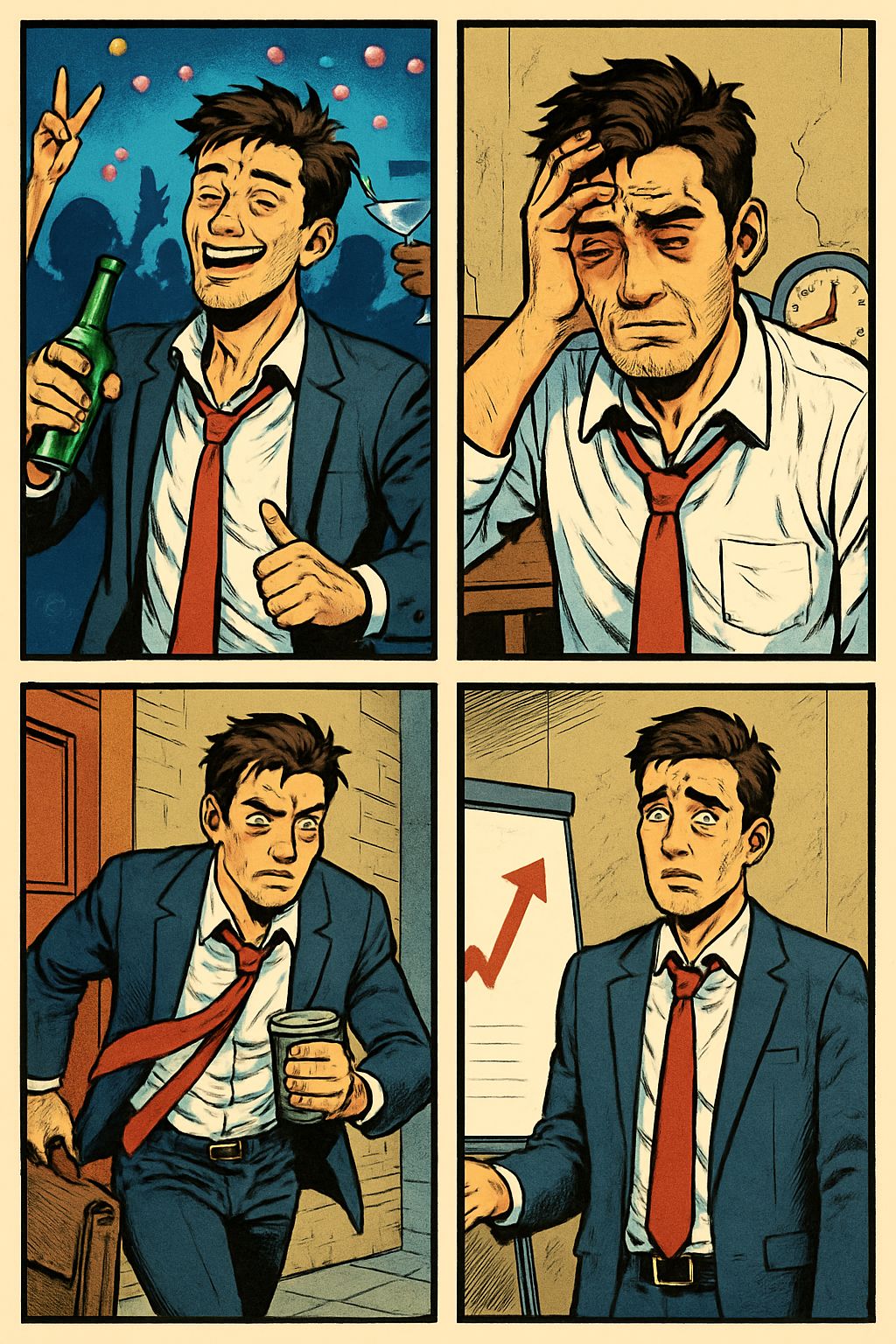
You know the feeling: you’re inches from a goal you’ve wanted for years, and suddenly you’re the one throwing up roadblocks.
Self-sabotage is any behavior or thought pattern that works against your own stated goals. It’s the habit of wanting something badly, then doing the one thing almost guaranteed to keep you from getting it. Psychologists describe it as a conflict between what you consciously want and what your unconscious mind believes will keep you safe.
What Self-Sabotage Actually Looks Like
Self-sabotage rarely announces itself. It usually shows up disguised as “just being busy,” “needing a break,” or “not being in the mood.” But underneath those excuses, there’s a pattern working against your own best interests.
Some of the most common and recognizable forms include:
Procrastination and Mindless Distraction
Procrastination often gets written off as laziness, but it’s rarely that simple. It can come from feeling overwhelmed by a task, struggling to manage your time, or quietly doubting whether you have the skills to succeed. Mindless scrolling, bingeing shows, or getting lost in your phone are frequently just socially acceptable ways to avoid sitting with that discomfort.
Self-Medicating With Food, Alcohol, or Drugs
When stress piles up, reaching for a drink, a pint of ice cream, or something stronger can feel like relief. The problem is that these habits don’t solve the underlying issue—they just delay it, often while creating a brand-new problem on top of the original one.
Picking Fights Over Small Things
Ever notice how an argument over dishes in the sink is never really about the dishes? Being quick to argue, using passive aggression, or stirring up drama can be a way of releasing tension or even recreating a familiar sense of chaos, especially if conflict feels more comfortable than calm.
Walking Away Before You Really Try
Quitting early protects you from the risk of trying your hardest and still coming up short. If you walk away first, you never have to find out whether your best effort would have been good enough—and for some people, that uncertainty feels scarier than failure itself.
Blaming Others Instead of Looking Inward
It’s always easier to point at someone else when a plan falls apart. Blaming a boss, a partner, or bad luck lets you sidestep an uncomfortable question: what role did you play in the outcome? This habit protects your ego in the short term, but it also blocks the kind of honest self-reflection that leads to real change.
Harsh Self-Criticism and Putting Yourself Down
Negative self-talk might sound like motivation, but it usually functions as self-sabotage in disguise. Constantly telling yourself you’re not smart enough, talented enough, or deserving enough chips away at the confidence you need to actually follow through on your goals.
The Battle Between Your Conscious and Unconscious Mind
At its core, self-sabotage is a tug-of-war between two parts of your mind. Your conscious mind sets goals, makes plans, and wants to move forward. Your unconscious mind, on the other hand, is often working overtime trying to keep you safe from pain, rejection, or disappointment—even if that means blocking the very success you’re chasing.
Why Your Brain Fights Against Your Own Goals
Your brain is wired for survival, not happiness. When your unconscious mind perceives a goal as risky—whether that risk is emotional, social, or physical—it will often choose the safer, more familiar option, even if that option keeps you stuck. This is why you can want something with your whole heart and still find yourself sabotaging it at every turn. Understanding the psychology of catastrophizing can help you recognize these patterns and work towards overcoming them.
How Your Unconscious Mind Tries to Protect You
Picture a student who skips studying for a big exam. If they fail, they can tell themselves, “I failed because I didn’t study,” instead of the far scarier thought, “I failed because I’m not capable.” That small mental trick protects the ego from a deeper, more painful belief. In this way, self-sabotage often isn’t the enemy—it’s a misguided bodyguard trying to shield you from a blow you’re not ready to take.
6 Hidden Reasons You Sabotage Yourself
Self-sabotage rarely has just one cause. Instead, it tends to grow out of a tangle of fears, old habits, and unmet needs that quietly steer your choices. Once you can name the specific reason behind your pattern, it becomes much easier to interrupt it.
1. You Don’t Feel Worthy of Success
If part of you believes you don’t deserve good things, your brain will work hard to make that belief come true. Psychologists point to cognitive dissonance as the culprit here: people crave consistency between their self-image and their reality. If your self-image is “I’m not good enough,” then unexpected success feels jarring, almost wrong—so you unconsciously pull the plug to restore the version of yourself you recognize.
2. You Need to Stay in Control
Uncertainty is uncomfortable, and for many people, controlling their own failure feels safer than risking an outcome they can’t predict. Procrastinating until the last possible minute, for example, can actually be a way of controlling the timeline of a task, even if it increases the odds of a messy result. Choosing your own failure, in a strange way, feels less vulnerable than waiting to see if the world will fail you first.
3. You Feel Like a Fraud (Impostor Syndrome)
The higher you climb—through a promotion, a degree, a new relationship—the further it can feel like you have to fall. If you secretly believe you’re faking your way through life, each new success raises the stakes of being “found out.” Procrastination and avoidance become a way to dodge that exposure, because if you never fully show up, no one can see you fail.
4. You Want a Scapegoat to Blame
It stings less to blame a situation than to face a belief you hold about yourself. Telling yourself “She left because I was never around” is far easier to swallow than “I’m not worthy of love.” In this way, self-sabotage can function as a built-in excuse factory, handing you a tidy explanation that protects you from a much heavier truth.
This scapegoating pattern often becomes so automatic that you don’t even notice you’re doing it. The habit forms early, and by adulthood it runs almost entirely on autopilot, quietly reinforcing itself every time something goes wrong.
5. Familiar Pain Feels Safer Than Unknown Happiness
Humans are creatures of habit, and that includes emotional habits—even painful ones. If you grew up being overlooked, criticized, or mistreated, there’s a strange comfort in recreating those dynamics as an adult, simply because they’re familiar. Contentment, by contrast, can feel foreign and even suspicious if you’ve never experienced it consistently.
This is part of why people repeat the same painful relationship patterns over and over, even when they can clearly see the pattern from the outside. As one psychologist puts it, these patterns “mean something to us, and they’re hard to give up,” because they were laid down in some of our earliest relationships.
6. You’re Bored and Crave Chaos
Sometimes self-sabotage isn’t about fear at all—it’s about stimulation. Picking a fight or stirring up drama can give you an emotional jolt that feels oddly satisfying, especially if your nervous system is used to instability. The chaos becomes its own kind of comfort zone, something to push against when life feels too calm or too slow.
If you find yourself manufacturing problems out of nowhere, it’s worth asking whether you’re actually seeking a feeling rather than a specific outcome. Naming that need honestly—”I’m bored” or “I miss the adrenaline”—can help you find healthier ways to meet it.
“We’re attached to these patterns. They mean something to us, and they’re hard to give up.” — on why childhood relationship patterns repeat into adulthood
Fear of Failure Is the Real Root Cause
Strip away the layers, and most self-sabotage comes back to one thing: fear of failure, not fear of success. The common idea that people sabotage themselves because they’re scared of succeeding misses the bigger picture. Most of the time, people are terrified of trying their absolute hardest and still falling short. Understanding the psychology of keeping score in relationships can provide insights into how these fears manifest in personal dynamics.
If you never give something your full effort, you always have a built-in excuse. You can tell yourself you could have succeeded if you’d really tried—which feels much safer than discovering your best effort wasn’t enough. That logic applies just as easily to a dream job, a relationship, or parenting: if the stakes of failing feel too high, part of you may quietly work to make sure you never fully try.
Why Procrastination Is an Emotional Problem, Not a Willpower Problem
Most people treat procrastination like a willpower issue, something that can be solved with a stricter schedule or more discipline. In reality, it’s almost always an emotional regulation issue. Difficult tasks bring up uncomfortable feelings—anxiety, self-doubt, boredom—and procrastination is simply a way of avoiding that discomfort.
The cycle usually looks something like this:
- A task triggers a negative emotion, like anxiety or self-doubt
- You reach for a distraction—your phone, snacks, a different task—to escape that feeling
- The distraction works in the short term, numbing the discomfort
- The original task still looms, and now there’s added guilt or pressure on top of it
- The cycle repeats, often getting worse each time
This is exactly why willpower-based solutions tend to fail. You’re not fighting a lack of discipline; you’re fighting an emotional avoidance pattern that’s been reinforced every time it’s successfully numbed discomfort in the past.
Breaking the cycle starts with noticing it in real time, rather than trying to muscle through it with sheer determination.
How Childhood Patterns Shape Self-Sabotage Today
Many self-sabotaging habits didn’t start in adulthood at all—they were built years earlier, often as survival strategies. A child who learned that staying quiet avoided conflict, or that acting out got attention, carries that strategy forward, even decades after it stopped being useful.
These patterns are often invisible because they feel so normal. You’re not consciously thinking, “I’m about to repeat a childhood coping mechanism.” Instead, it just feels like “this is who I am” or “this is just how I react,” which makes the pattern much harder to catch.
Recognizing the origin of a habit doesn’t automatically erase it, but it does strip away some of its power. Once you can say, “this reaction made sense when I was eight, but it doesn’t serve me now,” you create a small but important gap between the trigger and your response.
Example: A child whose parent only paid attention when angry may grow into an adult who unconsciously provokes anger in others—showing up late to work, picking fights with a partner—because on some level, that anger still feels like connection.
Coping Skills That Once Protected You
Every self-sabotaging habit started as a solution to a real problem. Staying quiet protected you from an unpredictable parent’s temper. Over-functioning kept chaos at bay in a disorganized household. Avoiding risk kept you from embarrassment in a family that mocked mistakes. These strategies worked, at least well enough, which is exactly why your brain filed them away as reliable tools.
The challenge is that most people never update that filing system. The coping skill that once kept an eight-year-old safe is still running the show for a thirty-eight-year-old, even though the original threat is long gone. Spotting this mismatch—recognizing that the “danger” your brain is reacting to no longer exists—is one of the most powerful shifts you can make toward lasting change.
Self-Sabotage in Your Relationships
Relationships tend to be where self-sabotage shows up loudest, because they involve the exact things that trigger our deepest fears: vulnerability, rejection, and trust. It’s no coincidence that so many people can build a thriving career while their love life falls apart in the same predictable ways, over and over again. For some, childhood experiences might still be influencing how they navigate adult relationships.
Repeating Patterns From Your Earliest Relationships
Your first experiences with love and connection happened long before you could consciously analyze them. If you didn’t feel heard or supported when you expressed needs as a child, you likely never developed the skill of advocating for yourself in close relationships. That gap doesn’t disappear with age—it just gets carried into every romantic partnership, friendship, and family dynamic that follows.
Staying silent to avoid an adult’s anger or rejection might have been the smartest move available to you at seven years old. But that same silence, replayed at thirty-five with a partner who genuinely wants to hear what you need, can create distance and resentment instead of the safety it once provided.
Pulling Away When Things Get Too Good
Ironically, some of the most self-destructive relationship behavior shows up right when things are going well. A relationship that feels stable and loving can trigger suspicion rather than comfort if you’re not used to consistency. Starting an unnecessary argument, going cold, or suddenly questioning the relationship’s future often has less to do with your partner and more to do with an old, unconscious belief that good things don’t last.
Creating Conflict to Feel in Control
Picking fights over small things—who forgot to take out the trash, a sarcastic comment, a late text reply—can be a way of manufacturing a sense of control inside a relationship. If you grew up in an unpredictable household, conflict might feel more familiar, and therefore more manageable, than calm. Recognizing this pattern as it happens, rather than after the damage is done, is one of the clearest paths toward healthier relationships.
You Deserve the Success You Keep Running From
Breaking free from self-sabotage starts with a simple but difficult shift: believing you’re allowed to have the things you want. That belief doesn’t appear overnight, and for many people, it requires outside support to unlearn years of ingrained patterns. Working with a licensed therapist can help you spot the specific moments where self-sabotage kicks in, so you can build new responses instead of defaulting to old protective habits. Progress rarely looks like a dramatic overnight transformation—it looks like noticing one pattern, interrupting it once, and building from there.
Frequently Asked Questions
What Is the Main Cause of Self-Sabotage?
Self-sabotage is the main cause of self-sabotage—but underneath it, fear of failure tends to be the biggest driver. Most people sabotage their own efforts not because they’re afraid of succeeding, but because they’re afraid of trying their hardest and still falling short.
Other major contributors include low self-worth, a need for control, impostor syndrome, and childhood patterns that trained the brain to see certain risks as dangerous, even when they’re not.
Is Self-Sabotage a Mental Illness?
Self-sabotage itself is not classified as a mental illness. It’s a behavioral pattern that can show up on its own or alongside conditions like anxiety, depression, or ADHD, and chronic procrastination in particular can sometimes signal an underlying mental health issue worth discussing with a professional.
Why Do I Self-Sabotage When Things Are Going Well?
When life feels unusually stable or happy, it can trigger suspicion rather than relief if you’re not used to consistency. Your brain may interpret the unfamiliar calm as a warning sign, prompting you to create drama or distance just to return to a more familiar emotional baseline.
This pattern is especially common in people who grew up in chaotic or unpredictable environments, where peace and safety weren’t the norm.
Can You Stop Self-Sabotaging on Your Own?
Yes, to a degree—many people make real progress simply by identifying their patterns, tracking triggers in a journal, and practicing new responses to old situations. Talking openly about the pattern with someone you trust can also interrupt the cycle before it fully plays out.
That said, deeply rooted patterns, especially those tied to childhood or trauma, often benefit from professional support. A therapist can spot blind spots you might miss on your own, including moments where you unconsciously sabotage the very therapy process meant to help you.
How Do I Know If I’m Self-Sabotaging My Relationship?
Common signs include picking fights over minor issues, pulling away emotionally when things are going smoothly, struggling to communicate your needs, or choosing partners who aren’t a good match despite knowing better. If you notice the same relationship problems repeating across multiple partners, that’s often a strong clue that the pattern is coming from you, not just your choice of partner.
Tracking these patterns honestly, ideally with input from a therapist or a trusted friend, can help you separate genuine incompatibility from self-sabotage dressed up as a relationship problem.