
Article At A Glance
- The five stages of grief — denial, anger, bargaining, depression, and acceptance — are not a straight line. Most people move through them in a completely different order, and that is entirely normal.
- Death acceptance is not about giving up. According to Elisabeth Kübler-Ross, it is an adaptive response — a quiet peace with what cannot be changed.
- Society’s silence around death makes grief harder. When we treat death as taboo, we lose the tools we need to cope with it.
- Every person’s journey toward acceptance is unique — shaped by personality, relationships, spirituality, and circumstance.
- There are concrete things you can do to move toward acceptance, both for yourself and for a dying loved one — and we cover them in detail below.
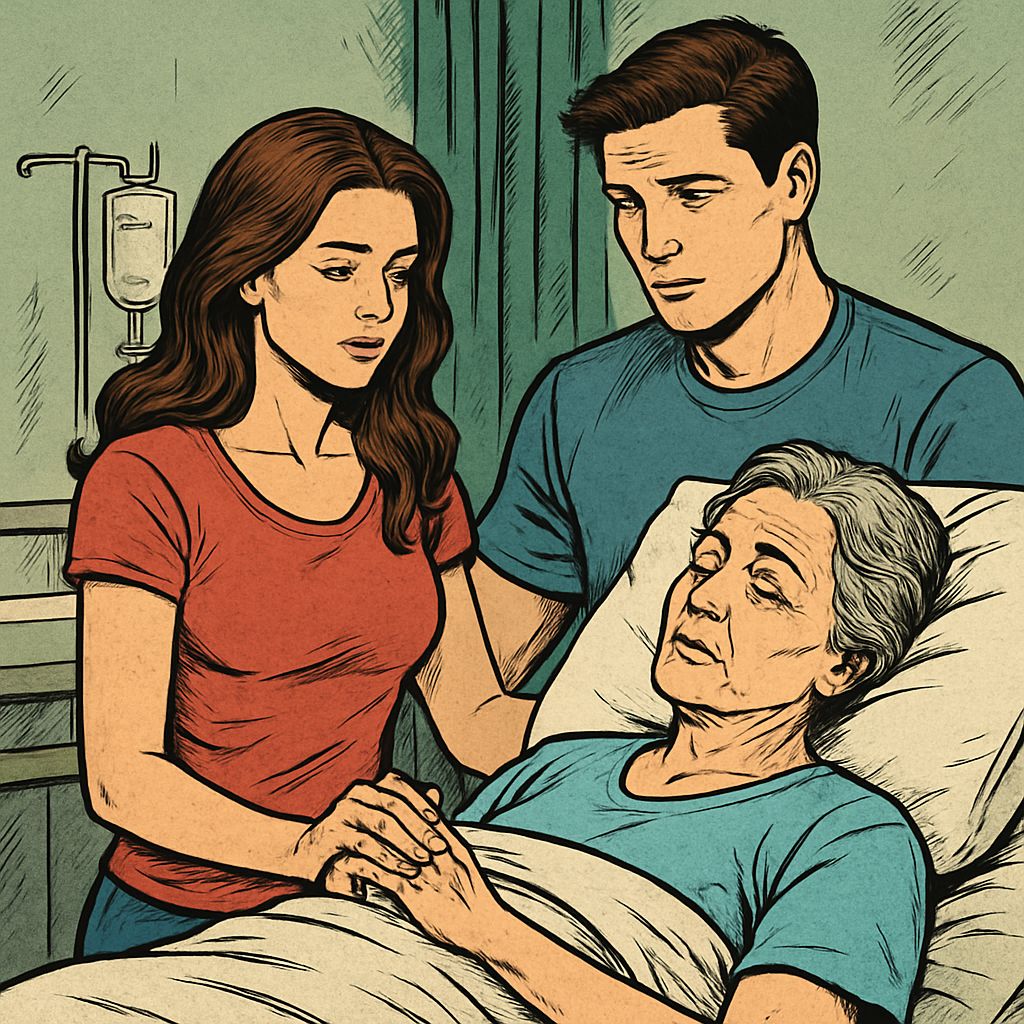
Accepting death is one of the hardest things a human being will ever do whether it’s you or someone else you care about.
And yet, it is something every single one of us will face. Grief is universal. The weight of loss, the disbelief, the anger that comes from nowhere — these are not signs that something is wrong with you. They are signs that you loved something deeply, and that love does not simply switch off when someone is gone.
Death Is Hard to Accept — Period
Most of us grew up in a culture that looks away from death. We use softer words — passed on, lost, no longer with us — because the directness of the word died feels like too much to hold. This instinct to soften, to avoid, to delay — it is deeply human. But it also means that when death arrives, many of us are entirely unprepared for it.
That unpreparedness is not a personal failure. It is the predictable result of a society that has made death into something we are not supposed to talk about at the dinner table, at work, or with our children. And when something is made unspeakable, it becomes much harder to process when it finally arrives — and it always arrives.
Why Society Makes Death Harder to Face
The Lancet Commission on the Value of Death has noted that death and dying have become unfamiliar concepts for many people, making their inevitability difficult to accept. We live longer, we die in hospitals rather than at home, and the rituals that once brought communities together around the dying have faded. The result is that most people encounter death — real, raw, close-up death — with very little preparation and very little support.
This cultural silence creates a kind of grief isolation. When we cannot speak openly about death, we cannot normalize it. And when we cannot normalize it, every loss feels like a shock, even when it should not have been a surprise. Opening up conversations about death — in families, in friendships, in communities — is one of the most meaningful things we can do to reduce that isolation.
The Difference Between Death Denial and Death Acceptance
Death denial is not just refusing to believe someone has died. It is a broader pattern — the avoidance of the topic, the inability to sit with grief, the constant push to move on before you have actually moved through. Death acceptance, by contrast, is not a single moment of resolution. It is a gradual, often nonlinear process of coming to peace with what is real.
Kübler-Ross described acceptance as an adaptive response — not surrender, not defeat, but a quiet acknowledgment of what cannot be changed. It is the place where grief softens enough for life to continue, not the place where grief ends entirely.
The Five Stages of Grief and What They Actually Feel Like
Elisabeth Kübler-Ross introduced the five stages of grief in her 1969 book On Death and Dying, based on her work with terminally ill patients. These stages were never meant to be a rigid checklist. They were meant to be a map — imperfect, flexible, and individual. You may visit some stages multiple times. You may skip one entirely. You may feel two at once. All of that is normal.
Stage 1: Denial — When the Mind Protects Itself
Denial is the mind’s first line of defense against overwhelming pain. In the immediate aftermath of a loss, it is common to feel strangely calm, almost numb — as though the reality hasn’t fully landed yet. This is not weakness or emotional avoidance. It is the nervous system doing exactly what it is designed to do: buying you time to absorb what has happened.
Denial can also show up when a loved one has received a terminal diagnosis. You may find yourself researching alternative treatments, insisting the doctors are wrong, or simply continuing daily routines as though nothing has changed. This phase serves a purpose — but when it extends indefinitely, it can prevent both the dying person and their loved ones from having the conversations and the closeness that this time deserves. Understanding why your brain fills in the blanks can provide insight into how denial operates during such challenging times.
Stage 2: Anger — The Emotion Nobody Warns You About
Anger in grief catches most people off guard. It can be directed at doctors, at family members, at God, at the person who died — even when that makes no rational sense. Why didn’t they take better care of themselves? Why didn’t the doctors catch it sooner? Why them and not someone else? These thoughts are not shameful. They are grief in a different costume, often influenced by how childhood experiences affect our behavior.
Anger is energy, and in the context of loss, it often signals that you are beginning to feel again after the numbness of denial. It deserves to be expressed — safely, honestly, and without judgment. Suppressing it tends to extend the grieving process rather than shorten it.
Stage 3: Bargaining — The “What If” and “If Only” Phase
Bargaining is the stage of grief that lives in the past. It is the relentless replaying of events — what if I had noticed sooner, if only we had tried a different treatment, if only I had said what I needed to say. For people facing their own death, bargaining often takes the form of promises: if I can just have more time, I will do things differently.
This stage is deeply tied to the human need for control. Death reminds us that there are things entirely beyond our control, and bargaining is the mind’s attempt to push back against that truth. Sitting with that powerlessness — rather than fighting it — is one of the most difficult and most necessary parts of moving toward acceptance.
Stage 4: Depression — When the Weight of Loss Sets In
This is not clinical depression in the medical sense, though for some people grief does tip into that. This is the deep, heavy sadness that comes when the full weight of the loss finally settles in. The bargaining has stopped, the anger has quieted, and what remains is just the absence — profound, undeniable, and exhausting.
Many people in this stage withdraw. They may lose interest in things they previously enjoyed, sleep more, eat less, and feel a pervading sense of emptiness. This is not something to be fixed or rushed through. It is grief doing its most important work — integrating the reality of the loss into the fabric of who you are. Understanding how your brain treats everyday stress can provide insight into these feelings.
Stage 5: Acceptance — What Peace With Death Really Looks Like
Acceptance is widely misunderstood. It does not mean you are okay with what happened, or that the grief is gone, or that you have stopped missing the person who died. What it means is that you have found a way to carry the loss without being crushed by it. Life continues — in a different way — but it continues.
For those who are dying, acceptance often brings a kind of clarity. Research on patients in the palliative phase has found that as the end of life draws nearer, many people report increased emotional and mental clarity — as though the body’s natural process of shutting down also quiets the noise enough to allow peace in. Acceptance is not the end of the story. In many ways, it is where the most meaningful part begins.
What a “Good Death” Means
A “good death” is not a painless death or a sudden one. It is a death that happens on terms the dying person has had some say in — surrounded by the people they love, with their fears acknowledged, their pain managed, and their story honored. Research on end-of-life care consistently shows that what patients want most in their final days is not more medical intervention. It is presence, honesty, and peace.
How Acceptance Shapes the End-of-Life Experience
When a dying person reaches a place of acceptance, the entire atmosphere around their care shifts. Conversations become more honest. Decisions become clearer. The energy that was once spent fighting the reality of what is happening can be redirected toward what actually matters — saying what needs to be said, repairing what can be repaired, and savoring what remains.
Studies on palliative care patients have found that acceptance plays a crucial role in peaceful dying. Patients who were able to acknowledge their prognosis openly — rather than resist it — reported higher quality of life in their final weeks. They were more likely to complete meaningful conversations with loved ones, less likely to pursue aggressive treatments that diminished their remaining time, and more likely to describe their final period as one of connection rather than fear.
Why Acceptance Looks Different for Every Person
There is no universal script for how a person comes to terms with death. For one person, acceptance arrives through faith — a deep belief in what comes next. For another, it comes through legacy — the knowledge that something of themselves will continue in the people and work they leave behind. For others still, acceptance is quiet and private, a slow exhale after a long struggle. Professionals emphasize that each person’s journey toward the end of life is unique, and that imposing a single narrative of what acceptance should look like can do real harm to those who are dying.
How to Cope With the Death of Someone You Love
Grief is not a problem to be solved. It is a process to be moved through — slowly, messily, and rarely in the order anyone expects. When someone you love dies, the instinct to find solid ground again is powerful. But the path back to solid ground almost always runs directly through the grief itself, not around it. Understanding how childhood experiences affect our behavior can also play a role in how we process grief.
Be Present With Your Loved One Right Now
When someone you love is dying, one of the most natural human instincts is to pull away — to self-protect against the pain that is coming. We find reasons to be busy, to be practical, to handle logistics rather than sit in the room and feel the enormity of what is happening. That instinct is understandable. But the time you have with a dying loved one is finite, and presence is the one thing you cannot give retroactively.
Death acceptance can begin with life acceptance — showing up for your loved one exactly as they are right now, not as you wish they were or as they used to be. Sit with them. Hold their hand. Let there be silence when silence is what the moment calls for. Those ordinary moments of presence are often what both the dying and the bereaved carry with them as the most meaningful of all.
Let Yourself Feel the Full Range of Emotions
Grief does not arrive as a single, clean emotion. It arrives as a flood — and within that flood, you may find feelings that surprise or even shame you. All of them are valid.
- Relief — especially after a long illness — is a grief response, not a moral failing.
- Guilt for feeling relieved, or for moments of happiness after a loss, is one of the most common and least discussed grief experiences.
- Anger at the person who died — for leaving, for not taking care of themselves, for dying before you were ready — is more common than most people admit.
- Numbness that lasts for weeks or months is the nervous system’s way of rationing what it can handle.
- Unexpected joy — a laugh, a good memory, a moment of lightness — does not mean you have stopped grieving.
The goal is not to feel the “right” emotions. The goal is to feel what is actually there, without forcing it into a shape that looks more acceptable to the outside world. Grief that is suppressed does not disappear — it resurfaces, usually at the least convenient moments and in ways that are harder to manage.
Give yourself permission to grieve imperfectly. Some days the sadness will be overwhelming. Other days you will feel almost normal, and then feel guilty for it. Both of those days are part of the same process. Neither one means you are doing it wrong.
If you find that grief is making it impossible to function — to sleep, to eat, to care for yourself or others — that is worth taking seriously. Prolonged grief disorder is a recognized condition, and there is no shame in reaching out to a grief counselor or therapist who can help you find a way through.
You Do Not Have to Grieve Alone
One of the quiet cruelties of grief is that it can make you feel profoundly isolated, even when you are surrounded by people who love you. Everyone grieves differently, and it is common to feel like no one truly understands the specific shape of your loss. Grief support groups — whether in person or online — can offer something that even the most loving friends and family sometimes cannot: the company of people who genuinely know what this feels like, because they are living it too.
How to Find Your Own Acceptance of Death
Working toward acceptance of your own mortality is not something most of us do naturally. It requires intention, and often it requires practice — small, deliberate acts of engaging with the reality of death rather than turning away from it. The goal is not to become comfortable with death in a detached or clinical way. The goal is to become familiar enough with it that it does not hold the same paralyzing power over you.
Research consistently shows that people who have reflected on their own mortality tend to live with greater intentionality. They prioritize differently. They say the things they mean. They let go of grievances that, in the long run, do not matter. Death acceptance, in this sense, is not about dying — it is about learning how to live more fully in the time you have.
Talk About Death Openly
The single most effective thing you can do to normalize death in your own life is to talk about it — with your family, your close friends, and when the time is right, your children. Not in a morbid or frightening way, but in the same honest, grounded way you would discuss any other significant life event. What do you want your end of life to look like? Who do you want with you? What matters most to you in whatever time you have?
These conversations feel uncomfortable at first. That discomfort is exactly why they are so important. Every time you have one, you chip away a little more at the wall of silence that makes death feel so foreign and frightening. Families who have spoken openly about death before it arrives are far better equipped to support one another when it does.
Practical steps can make these conversations easier to start. Writing an advance directive, creating a will, or simply telling the people you love what you would want — these are acts of care, both for yourself and for everyone who will grieve you. They are also, in their own quiet way, acts of acceptance.
Acknowledge What You Are Losing as You Age or Become Ill
Aging and illness bring a particular kind of grief that is rarely named — the grief of losing capabilities, independence, and the version of yourself that once existed without limitation. When we resist acknowledging those losses, we carry them as a kind of unprocessed weight. Being present with what is actually happening — saying, honestly, this is hard, and I am grieving this — is not pessimism. It is the beginning of acceptance. You can also learn about why your brain treats everyday stress like a real threat here.
This kind of grief deserves the same tenderness you would offer anyone who had lost something significant. If you are aging and finding that your body no longer does what it once did, allow yourself to mourn that. If you are living with a terminal diagnosis, you are allowed to grieve the future you expected to have. That grief is not self-pity. It is love for the life you have lived and the life you had hoped to live — and it deserves to be honored, not suppressed.
Connect With Others Who Understand
There is something quietly powerful about sitting with someone who is not trying to fix your grief or rush you through it — someone who is simply there, because they know exactly how heavy this is. Grief support groups, palliative care communities, and end-of-life doula networks exist precisely for this reason. They offer a space where death is not a forbidden subject, and where your experience — however raw or complicated — is met with recognition rather than discomfort.
If in-person groups feel like too much right now, online communities can offer the same sense of connection with a lower barrier to entry. The goal is simply to not carry this alone. Isolation amplifies grief. Connection, even in small doses, begins to soften it.
Death Acceptance Does Not Mean Giving Up
Perhaps the most important thing to understand about death acceptance is what it is not. It is not resignation. It is not defeat. It is not a declaration that your life — or the life of someone you love — did not matter enough to fight for. Acceptance, as Kübler-Ross described it, is an adaptive response — the place a person arrives at when they have moved through enough of the grief to be able to hold the reality of death without being destroyed by it. It is, in many ways, an act of profound courage. To look at the hardest truth of human existence and say, I see you, and I am still here — that is not giving up. That is the fullest possible expression of being alive.
Frequently Asked Questions
Grief raises questions that most of us have never been given the language to ask. The following are some of the most common ones — answered as honestly as possible, because you deserve honesty more than you deserve comfort right now.
What is the difference between grief and acceptance?
Grief and acceptance are not opposites — they are part of the same continuum. Grief is the full emotional experience of loss: the denial, the anger, the bargaining, the depression, and eventually, the acceptance. Acceptance is not the end of grief so much as the point at which grief no longer prevents you from living. You can be in acceptance and still feel deep sadness. You can have moments of acceptance and then cycle back through anger or bargaining. The two coexist, and that is entirely normal.
Is it normal to be afraid of death?
Yes — completely and unreservedly. Fear of death is one of the most universal human experiences, cutting across cultures, belief systems, and life circumstances. What varies is not whether people feel that fear, but how they relate to it. For some, faith provides a framework that softens the fear. For others, a deep focus on legacy or meaning does the same work. The fear itself is not a problem to be eliminated. Learning to live alongside it, without letting it govern your choices, is the goal.
How long does it take to accept the death of a loved one?
There is no timeline for grief, and anyone who suggests otherwise is not giving you the full picture. Research does not support the idea that grief follows a predictable schedule, and studies on bereavement consistently find that factors like the nature of the relationship, the circumstances of the death, the availability of support, and the individual’s own history all shape the pace of grieving in highly personal ways. What is known is that grief tends to shift — not disappear — over time. The acute pain of early loss gradually becomes something more integrated, something you carry rather than something that carries you. How long that takes is entirely your own.
Can someone reach acceptance before they die?
Yes — and many people do. Research on home-dwelling palliative patients has found that as the end of life draws closer, many individuals experience a process of emotional and existential reconciliation. For some, this looks like a deepening of relationships and a greater sense of clarity about what matters. For others, it is a quiet internal peace that does not need to be explained to anyone. Reaching acceptance before death is not only possible — for those who find it, it often transforms the final chapter of their life into one of the most meaningful.
How can I support a loved one who is dying and struggling to find acceptance?
The most important thing you can offer a dying person who is struggling is your presence — not your solutions, not your reassurances, and not your discomfort with their fear. Sit with them. Let them say what they need to say, even if it is painful to hear. Ask open questions: What are you most afraid of? Is there anything you need to say to someone? Is there anything I can do to make you feel safer right now?
Do not rush them toward acceptance. The pressure to die peacefully — to perform a kind of serene acceptance for the comfort of those around them — can be its own burden. What a struggling person needs is not to be nudged toward a particular emotional destination. They need to feel that wherever they are is acceptable, and that they are not alone there.
Healthcare professionals, particularly those working in palliative care, can also play a vital role here. Open conversations about fears, preferences, and what a meaningful end of life looks like are among the most valuable gifts that end-of-life care teams can offer. If you are supporting someone who is dying, do not hesitate to ask for that kind of support — for them, and for yourself.