
Article-At-A-Glance:
- Your brain cannot actually multitask — it rapidly switches between tasks, and every switch carries a measurable performance penalty called the “switch cost.”
- Chronic task-switching has been linked to elevated cortisol levels, increased error rates, and a phenomenon called attention residue that quietly drains your focus even after you stop switching.
- Multitasking feels productive because it triggers dopamine — but the actual output quality tells a completely different story.
- Research shows that people who frequently multitask perform worse on cognitive tests, retain less information, and take longer to complete individual tasks than single-taskers.
- There is a highest-leverage productivity shift most professionals overlook — and it has nothing to do with a new app or time-blocking system.
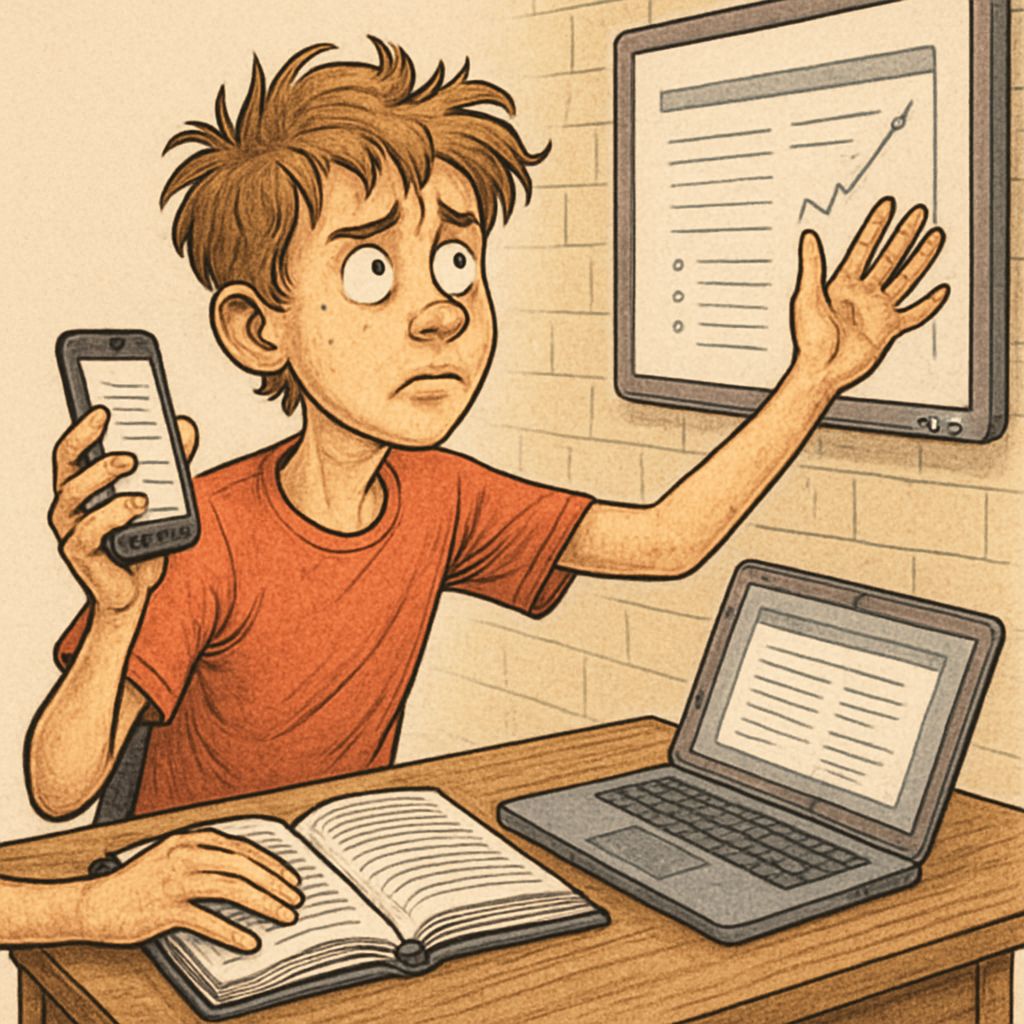
Multitasking isn’t a productivity superpower — it’s one of the most expensive habits you can have as a professional, and most people don’t even realize they’re paying the price.
The belief that doing more things at once equals getting more done is deeply embedded in workplace culture. Professionals wear busyness like a badge of honor, toggling between emails, Slack messages, spreadsheets, and meetings — often simultaneously. Understanding the real cost starts with understanding what your brain is actually doing when you think you’re multitasking.
Your Brain Cannot Actually Multitask
The idea of multitasking implies your brain is running two cognitive processes in parallel — like a computer with dual processors. That’s not what’s happening. When you switch between writing a report and answering a text, your brain isn’t doing both. It’s abandoning one task, reorienting to the other, and then trying to rebuild the mental context it just left behind.
This is rapid task-switching, and it creates the illusion of multitasking. The human prefrontal cortex — responsible for attention, decision-making, and complex reasoning — is simply not wired for simultaneous cognitive demands. What feels like efficient parallel processing is actually a series of costly gear shifts.
What Really Happens When You Switch Between Tasks
Every task switch involves two distinct brain operations: goal shifting (deciding to do something new) and rule activation (pulling up the mental rules for the new task while suppressing the old ones). Both of these take time and mental energy — even when the switch feels instant. Understanding these operations can help you manage why your brain prefers comfort over growth.
The result is a compounding cognitive debt. The more you switch, the more mental resources get consumed just managing the switching — leaving less capacity for the actual work itself. Over a full workday, this adds up to a significant drain that most professionals attribute to vague “tiredness” without ever identifying the real cause.
The Cognitive Price You Pay Every Time
Researchers call this the “switch cost” — a measurable delay in performance that occurs every time you transition between tasks. It shows up consistently in cognitive psychology research and has real-world implications for anyone doing knowledge work.
- Response times slow down after every task switch, even on simple tasks
- Error rates increase as your brain struggles to fully suppress the previous task’s rules
- Comprehension drops when attention is divided during reading or listening
- Mental energy depletes faster, accelerating decision fatigue by mid-afternoon
- Deep work becomes nearly impossible — complex reasoning requires sustained, uninterrupted focus
The switch cost isn’t just a momentary blip. When tasks are complex or unfamiliar, the cognitive recovery time after each switch extends significantly — meaning you can be mentally “behind” on a task for minutes after you’ve technically returned to it.
Why Most People Never Notice the Performance Drop
Here’s the uncomfortable truth: multitasking impairs your ability to recognize that you’re being impaired. Stanford researchers found that heavy media multitaskers — people who regularly juggle multiple streams of information — were actually worse at filtering irrelevant information, switching tasks efficiently, and holding information in working memory. They were also the most confident in their multitasking ability.
This blind spot is exactly what makes the hidden costs so dangerous. You feel busy, stimulated, and productive. Your output quality is declining, your error rate is climbing, and your mental reserves are burning out faster — but the feedback loop is too slow and diffuse to trigger an obvious alarm. By the time the cost becomes visible, it’s usually measured in missed deadlines, rework, and chronic exhaustion.
The Productivity Tax of Task-Switching
Beyond the neuroscience, there’s a brutally practical cost to multitasking: time. Every context switch doesn’t just cost you the seconds of the switch itself — it costs you the recovery time needed to get back to full cognitive engagement with the original task. Understanding this can help combat imposter syndrome by improving focus and productivity.
How Much Time Is Lost With Every Context Switch
The American Psychological Association has noted that even brief mental blocks created by task-switching can cost as much as 40% of productive time. That’s not a rounding error — that’s nearly half your workday evaporating into the friction of switching. For a professional working an eight-hour day, chronic task-switching can effectively reduce meaningful output to the equivalent of less than five hours of real work.
The math gets worse when you factor in interruptions. Each time an external interruption — a notification, a colleague’s question, an incoming email — pulls you away from focused work, the time to fully regain your previous depth of concentration can extend well beyond the interruption itself. You’re not just losing the two minutes you spent reading that email. You’re potentially losing the focused thread of thought you were building for the previous twenty.
Why Complex Tasks Suffer the Most
Not all tasks are equally damaged by multitasking. Routine, low-stakes tasks — like filing documents or refilling a coffee cup — don’t require deep cognitive engagement, so switching away from them carries minimal cost. But complex, high-value tasks are a different story entirely.
Writing, strategic analysis, coding, design, financial modeling — any task that requires holding multiple variables in working memory simultaneously is disproportionately harmed by interruption. These tasks require what researchers call a “warm-up period” to reach productive depth. Every interruption resets that warm-up, meaning professionals doing high-complexity work in fragmented environments are essentially never operating at full capacity.
The Mental Health Toll of Chronic Multitasking
The productivity losses from task-switching are significant on their own — but the mental health consequences of chronic multitasking are where the real long-term damage accumulates. When your brain is constantly being pulled in multiple directions, the stress response doesn’t get a chance to reset. Over time, that sustained activation stops being a temporary state and starts becoming your baseline.
How Multitasking Raises Cortisol and Stress Levels
Every time you switch tasks, your brain registers a form of cognitive conflict — a gap between what it was doing and what it now needs to do. This conflict triggers a mild stress response. In isolation, that’s manageable. But when you’re switching tasks dozens or hundreds of times per day, those stress responses stack. Research has linked heavy multitasking to elevated cortisol levels, the body’s primary stress hormone. High cortisol over extended periods contributes to anxiety, disrupted sleep, impaired immune function, and reduced capacity for emotional regulation — none of which show up on a productivity dashboard, but all of which quietly erode your performance and wellbeing over time.
The Link Between Multitasking and Decision Fatigue
Every task switch requires a micro-decision: stop this, start that, where was I, what comes next. Multiply that by the number of switches in a typical workday and you’ve consumed a significant portion of your daily decision-making capacity before you’ve made a single meaningful strategic choice. This is decision fatigue — and multitasking accelerates its onset faster than almost any other work habit. By early afternoon, professionals who’ve been task-switching all morning are making worse decisions, taking mental shortcuts, and avoiding complex problems — not because they’re lazy, but because their cognitive fuel is already running low.
Attention Residue: Why Your Brain Stays Stuck on the Last Task
Organizational psychologist Sophie Leroy introduced the concept of attention residue to describe what happens cognitively when you switch from one task to another before fully completing the first. Part of your brain stays mentally engaged with the previous task — thinking about it, worrying about it, half-processing it — even while you’re physically working on something new. This residue degrades performance on the current task and is especially powerful when the previous task was unfinished or high-stakes. The practical implication is significant: if you bounce between five tasks in a morning, you’re rarely giving any of them your full cognitive capacity. You’re giving each one the leftovers.
Why Multitasking Feels So Productive
If multitasking is this damaging, why does it feel so good in the moment? This is the central paradox — and understanding it is what separates professionals who break the habit from those who never do.
The feeling of productivity and the reality of output are two completely different things. Multitasking exploits a gap between them. When you’re rapidly switching between tasks, checking things off, responding to messages, and keeping multiple plates spinning, your brain generates a genuine sense of momentum and accomplishment. That feeling is real.
This disconnect is especially pronounced in modern work environments where responsiveness is mistaken for results. Answering emails quickly, keeping up with Slack channels, and appearing available across multiple fronts looks like high performance from the outside — and it feels like it from the inside too. But looking busy and generating meaningful output are not the same thing, and chronic multitaskers frequently confuse one for the other.
The problem is compounded by the fact that deep, focused work doesn’t feel as stimulating as task-switching in the short term. Sitting with a single complex problem for ninety uninterrupted minutes can feel slow, even frustrating — especially if you’re conditioned to the constant stimulation of a fragmented workflow. Multitasking offers a way out of that discomfort, and your brain takes it willingly.
- Multitasking creates a false sense of control over a heavy workload
- The constant novelty of switching feels mentally engaging and stimulating
- Visible busyness is often rewarded in workplace cultures, reinforcing the habit
- Single-tasking on a hard problem feels slower even when it produces better results
- Incomplete tasks create psychological tension that multitasking temporarily relieves
The Dopamine Loop That Keeps You Task-Switching
There’s a neurochemical reason multitasking is so hard to quit: it triggers dopamine release. Every notification checked, every quick reply sent, every tab opened delivers a small hit of dopamine — the brain’s reward signal. This isn’t a metaphor. It’s a documented neurological response that makes task-switching genuinely pleasurable in the short term.
The same reward circuitry that drives social media scrolling drives workplace multitasking. Your brain gets a small reward for each switch, which reinforces the behavior regardless of whether it’s producing good work. Over time, this creates a conditioned loop: feel overwhelmed or bored, switch tasks, feel briefly rewarded, repeat. Breaking this loop requires more than willpower — it requires deliberately restructuring your environment to reduce the triggers, as explained in the role of dopamine.
- Turn off non-essential notifications during focused work blocks
- Close browser tabs unrelated to the current task
- Set specific times to check email rather than responding reactively
- Use physical or digital signals to communicate focus time to colleagues
- Start focus sessions with a written single-task intention to anchor your attention
The goal isn’t to eliminate all stimulation — it’s to break the automatic switching reflex and replace it with intentional transitions between clearly defined work periods.
Busyness vs. Actual Output: Spotting the Difference
A useful diagnostic is brutally simple: at the end of a day where you felt extremely busy, list the three most important things you moved forward. If that list is difficult to fill — if the day was full of activity but thin on meaningful progress — multitasking is almost certainly the culprit. Output quality and task completion on high-value work are the only metrics that matter, and they tell a very different story than how full your calendar looks or how many messages you responded to.
The Academic and Professional Cost of Divided Attention
The performance cost of multitasking isn’t limited to how you feel at the end of the workday. It has measurable, documented impacts on memory, learning, work quality, and error rates — with research spanning both academic and professional environments confirming the same pattern.
What makes this particularly relevant for professionals is that the most cognitively demanding parts of any job — the work that actually drives career growth and organizational value — are precisely the work most vulnerable to the effects of divided attention. The tasks that require the deepest thinking get the shallowest engagement when multitasking is the default mode.
How Multitasking Weakens Memory Retention
Memory consolidation — the process by which new information moves from short-term working memory into long-term storage — requires focused, uninterrupted cognitive processing. When attention is divided during learning or information intake, this consolidation process is disrupted. Studies have shown that people who multitask while consuming information retain significantly less of it than those who engage with the same material in a focused state. For professionals absorbing complex information in meetings, reading industry research, or learning new skills, this means that multitasking doesn’t just slow down performance in the moment — it actively reduces what you’re able to learn and retain over time. To protect your mental health and improve focus, consider the impact of social media vs reality.
The Impact on Work Quality and Error Rates
Divided attention doesn’t just slow you down — it directly degrades the quality of what you produce. When your brain is managing multiple task streams simultaneously, it allocates fewer cognitive resources to error-checking, logical consistency, and nuanced judgment. The result is work that contains more mistakes, requires more revision, and reflects shallower thinking than the same work completed under focused conditions.
For professionals in high-stakes roles — legal, financial, medical, technical — the error rate increase from multitasking isn’t an abstraction. It’s a measurable risk. Even in lower-stakes environments, the cumulative cost of rework, corrections, and miscommunications generated by divided-attention errors represents a significant drain on team time and organizational output. The irony is that multitasking, adopted to get more done, consistently produces work that requires more time to fix.
What Research Shows About Students Who Multitask While Studying
Academic research on student multitasking provides some of the clearest evidence of divided attention’s impact, precisely because academic environments allow for controlled measurement of learning outcomes. Studies consistently show that students who use phones, browse social media, or switch between applications while studying score lower on comprehension tests, retain less material after a delay, and take longer to complete assignments than students who study without digital distractions.
What makes this finding particularly relevant beyond academia is the mechanism behind it. It’s not that multitasking students are less intelligent — it’s that the encoding process for new information is fundamentally incompatible with divided attention. The same mechanism applies to any professional learning a new skill, absorbing a complex briefing, or trying to deeply understand a client’s situation. The context changes; the cognitive limitation does not. For more insights on cognitive challenges, explore the psychological insights into Imposter Syndrome.
Single-Tasking Is the Highest-Leverage Productivity Skill You Are Ignoring
After reviewing everything the research reveals about multitasking, the solution is almost frustratingly simple: do one thing at a time. Single-tasking — giving your full, undivided attention to one task before moving to the next — is not a productivity hack or a wellness trend. It is the most direct way to recover the cognitive capacity that task-switching continuously wastes. The professionals who produce the highest-quality, highest-impact work are almost universally characterized by their ability to protect and sustain focused attention, not by their ability to manage more simultaneous inputs.
Implementing single-tasking in a modern work environment does require deliberate structure. Here’s a practical framework to start:
- Time-block your most complex tasks into 60-to-90-minute focused sessions with all notifications silenced
- Define a single clear intention before each work block — write it down so your brain has an anchor
- Batch reactive work like email and messages into two or three designated windows per day rather than responding continuously
- Create transition rituals between tasks — even two minutes of deliberate closure before switching reduces attention residue significantly
- Protect your morning hours for your most cognitively demanding work before the day’s interruptions accumulate
The shift from chronic multitasking to intentional single-tasking won’t feel natural immediately — especially if your workplace culture rewards visible busyness. But the output speaks for itself. Less rework. Faster completion of complex tasks. Better decisions. Lower end-of-day mental exhaustion. These aren’t soft benefits. They are the direct, measurable result of letting your brain operate the way it was actually built to work.
Frequently Asked Questions
The hidden costs of multitasking raise a lot of practical questions — especially for professionals trying to figure out where to draw the line between healthy task management and genuinely damaging divided attention. The answers below address the most common and important ones directly.
Does multitasking permanently damage your brain?
The research on this is nuanced but worth taking seriously. There is no evidence that occasional multitasking causes permanent structural brain damage. However, studies — including work from Stanford — have shown that chronic, heavy multitasking is associated with lasting changes in cognitive patterns. Frequent multitaskers show reduced ability to filter irrelevant information, greater difficulty sustaining attention, and impaired working memory performance even when they are not multitasking. Whether these changes are permanent or reversible with sustained focused-work habits is still being studied.
What is clear is that the brain responds to repeated behavioral patterns. If you consistently train your attention to fragment and switch, that becomes your cognitive default. The good news is that the same neuroplasticity that makes multitasking damaging also means that deliberately practicing sustained focus can rebuild attentional capacity over time.
Are some people naturally better at multitasking than others?
Research suggests that a very small percentage of the population — sometimes called “supertaskers” — show minimal performance degradation when handling multiple cognitive tasks simultaneously. However, studies estimate this group represents roughly 2% of the population. For the remaining 98%, the cognitive costs of multitasking are real and consistent regardless of how experienced or confident the individual is. In fact, people who believe they are above-average multitaskers have been shown in research to perform worse on multitasking assessments than those who rate themselves as average — suggesting that confidence in multitasking ability is itself a warning sign rather than a reliable indicator of skill.
How long does it take to refocus after switching tasks?
The Refocus Timeline After a Task Switch
Research on cognitive recovery time after task interruption points to a consistent and sobering pattern. A study from the University of California, Irvine found that it takes an average of 23 minutes and 15 seconds to fully return to a task after an interruption. While not every switch carries the full recovery cost — brief, low-stakes switches have shorter recovery times — any interruption during deep, complex work carries a significant cognitive re-engagement penalty.
The recovery time isn’t linear, either. Factors like the complexity of the original task, the nature of the interruption, and whether the interrupted task was at a natural stopping point all influence how long full re-engagement actually takes. An interruption that pulls you away mid-thought during a complex analytical task costs far more than one that occurs at a natural transition point.
This is why protecting uninterrupted blocks of time is so disproportionately valuable. It’s not just about the time you spend on the task — it’s about giving yourself enough runway to actually reach the depth of focus where high-quality output is possible. Short, fragmented windows rarely get you there, no matter how disciplined you are within them.
Practically speaking, if your work involves any level of cognitive complexity, a useful rule of thumb is this: every unnecessary interruption costs you far more than its face value in time. The two-minute distraction isn’t two minutes. It’s potentially twenty-five. Designing your environment to minimize those interruptions isn’t a luxury — it’s one of the highest-return investments you can make in your own performance.
Is listening to music while working considered multitasking?
It depends on the type of music and the type of work. Listening to lyric-free, low-variation music — like ambient soundscapes, classical instrumentals, or lo-fi tracks — while doing routine or procedural tasks generally does not constitute the kind of disruptive task-switching that damages performance. In some cases, it can improve focus by masking distracting environmental noise. However, music with lyrics, dynamic variation, or emotional engagement competes directly with language-based cognitive tasks like writing, reading, or analysis — and in those cases, it does function as a form of divided attention with measurable performance costs. The simple test: if you’re catching yourself processing the words or following the melody, it’s competing with your work.
What is the best technique to stop multitasking at work?
The most effective technique is environmental design before willpower. Trying to resist multitasking through discipline alone is fighting against a dopamine-reinforced habit in an environment full of triggers — and it rarely wins long-term. Instead, restructure your environment so that task-switching requires effort rather than focus requiring effort.
Start by identifying your top three multitasking triggers — the most common interruptions or temptations that pull you away from focused work. For most professionals, these are phone notifications, email alerts, and open-door interruptions from colleagues. Address each trigger with a structural solution: phone on Do Not Disturb during focus blocks, email client closed except during designated response windows, and a clear signal to colleagues — a closed door, headphones, or a shared calendar block — that you are unavailable.
Layer in the Pomodoro Technique as a practical focusing structure: 25 minutes of single-task focused work followed by a 5-minute intentional break. This framework works not because the intervals are magic, but because they make focused work feel finite and manageable while giving your brain scheduled release valves that reduce the urge to self-interrupt. Over two to three weeks of consistent practice, most professionals find their ability to sustain single-task focus extends naturally — and the pull toward compulsive task-switching weakens considerably.