
Article At A Glance
- Your brain treats unfinished tasks like open files — they stay active in working memory, consuming mental energy until they are resolved or deliberately closed.
- The Zeigarnik Effect was first documented in 1927 by Soviet psychologist Bluma Zeigarnik, who found that people remembered interrupted tasks nearly twice as well as completed ones.
- Open loops are not always the enemy — used strategically, the Zeigarnik Effect can boost creativity, motivation, and problem-solving by keeping your brain engaged in the background.
- Unresolved tasks can fuel anxiety, disrupt sleep, and fragment attention — understanding why this happens is the first step to taking back control of your mental bandwidth.
- Writing tasks down is one of the most effective ways to close a mental loop — and the science behind why this works is more fascinating than most people realize.
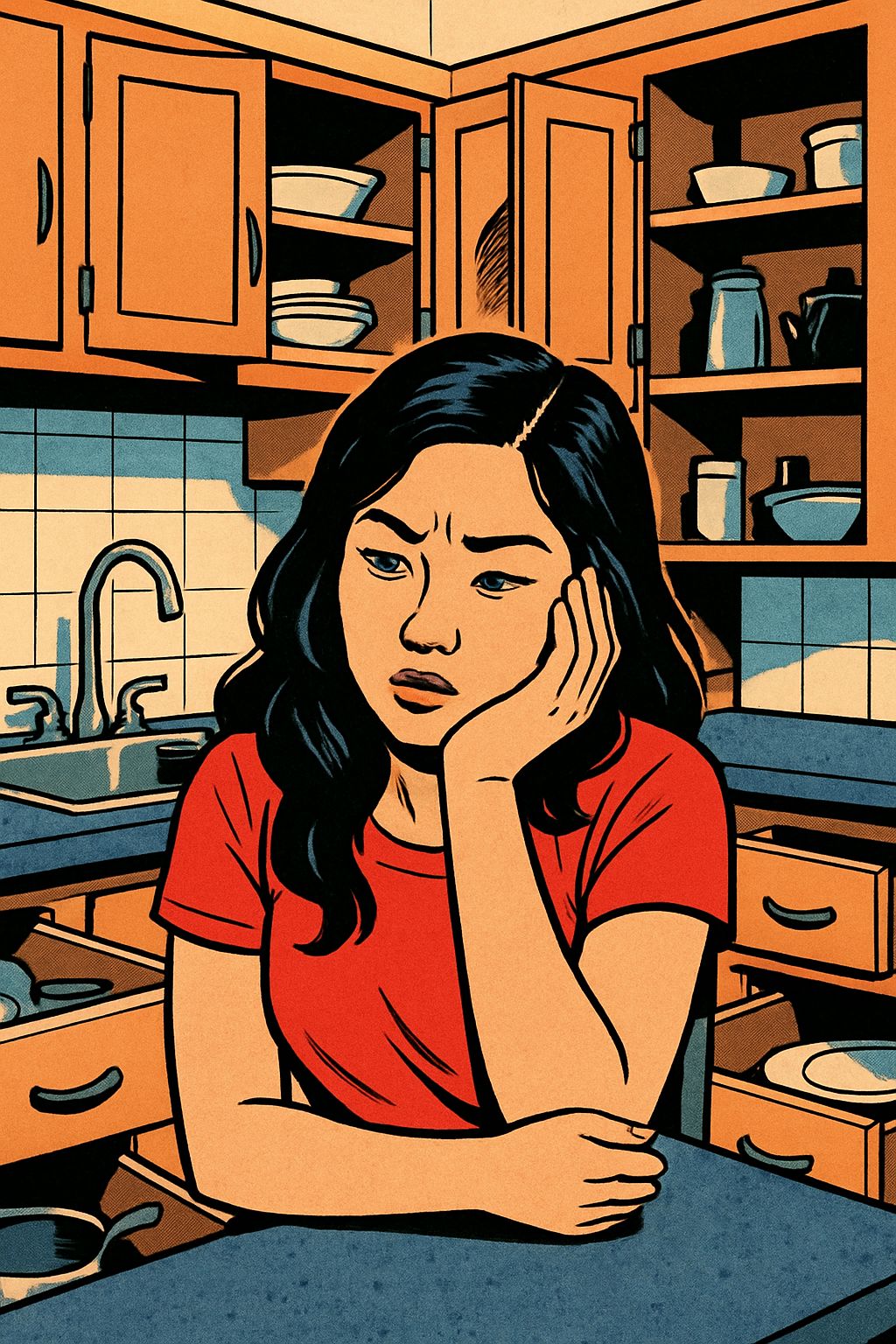
You finish a meeting, sit down to start something new, and somehow your brain is still replaying the conversation you just had — picking it apart, finishing sentences, solving problems that are technically already done. That is not a personal quirk. That is your brain doing exactly what it was built to do, and it has a name.
The Zeigarnik Effect is one of those psychological principles that explains so much about modern life — the cliffhanger you cannot stop thinking about, the argument you keep rehearsing, the half-finished email that somehow feels louder than the ten you already sent. Understanding it is not just academically interesting. It is genuinely useful. Psychology resources have long pointed to the Zeigarnik Effect as a foundational concept for anyone trying to improve focus, reduce stress, or understand how memory really works.
What the Zeigarnik Effect Actually Is
The Zeigarnik Effect is the psychological tendency to remember unfinished or interrupted tasks better than completed ones. Put simply, your brain assigns a kind of cognitive priority to open loops — things you started but have not yet resolved — and keeps them active in memory until they reach a clear endpoint.
The 1927 Discovery That Changed How We See Memory
Soviet psychologist Bluma Zeigarnik first identified this effect in 1927, and the origin story is surprisingly ordinary. While observing waitstaff in a Vienna café, her mentor Kurt Lewin noticed something odd: waiters had near-perfect recall of open tabs and unpaid orders, but the moment a bill was settled, the details vanished from memory almost immediately. Zeigarnik took that observation into the lab and tested it formally.
Her findings were striking. Participants who were interrupted mid-task remembered those incomplete tasks roughly twice as well as tasks they had fully completed. The brain, it turned out, was not treating all experiences equally. It was flagging unfinished tasks as worth holding onto.
A few things that made Zeigarnik’s original research significant:
- It challenged the idea that memory strength was purely about repetition or emotional weight
- It introduced the concept that incompleteness itself acts as a memory trigger
- It connected directly to Lewin’s broader field theory — the idea that psychological tension drives behavior
- It laid groundwork for how we now understand attention, motivation, and goal pursuit
The research was not without its critics. Later studies produced mixed results, with some finding the effect stronger under certain conditions than others. But the core insight — that unfinished tasks occupy a unique and persistent place in memory — has held up across decades of research in cognitive and motivational psychology.
The Psychological Tension Behind Incomplete Tasks
Zeigarnik’s explanation for the effect drew directly from Lewin’s concept of psychological tension. When you begin a task, your brain opens what functions like an active goal state — a kind of internal file marked “in progress.” That file carries tension. It is not distressing tension necessarily, but it is real mental energy directed toward resolution.
Once the task is completed, the tension releases and the brain deprioritizes that information. It no longer needs to be held at the front of the queue. But when a task is interrupted or left unfinished, that tension stays. The file stays open. And open files consume resources.
How the Ovsiankina Effect Connects to This
The Zeigarnik Effect rarely gets discussed without its close companion: the Ovsiankina Effect. Maria Ovsiankina, another researcher in Lewin’s circle, discovered something complementary. When people were interrupted mid-task and given free time afterward, they would spontaneously return to the unfinished task — even without any instruction or reward for doing so.
Where the Zeigarnik Effect is about memory — you remember what you did not finish — the Ovsiankina Effect is about motivation. You are pulled back toward it. Together, these two effects explain a lot about why procrastination feels so mentally noisy. You are not just avoiding a task; your brain is simultaneously trying to remember it and nudging you back toward it.
This is also why partially started tasks can be more effective motivators than tasks you have not touched at all. Beginning something — even briefly — activates that tension state and makes the pull toward completion much stronger.
What Happens in Your Brain When a Task Goes Unfinished
The Zeigarnik Effect is not just a memory curiosity. At the neurological level, unfinished tasks create a measurable drain on cognitive resources — and understanding that mechanism changes how you think about distraction, focus, and mental fatigue. If you’re interested in how early experiences shape our mental processes, you might explore how childhood experiences affect our behavior.
How Unfinished Tasks Hijack Working Memory
Working memory is your brain’s short-term workspace — the mental RAM that holds information you are actively using. It has limited capacity. Research in cognitive psychology consistently shows that the brain does not neatly file away incomplete tasks the way it does completed ones. Instead, they linger in working memory, occupying space that could otherwise be used for whatever you are trying to focus on right now. This phenomenon is similar to how trust is built and lost, where unresolved issues can linger and affect your mental processes.
Think of it as running too many applications at once. Each open loop is a background process. Individually, none of them might slow you down noticeably — but stack enough of them and the whole system starts to lag. This is a significant part of why long to-do lists feel so exhausting even when you have not done anything yet.
Attention Residue: Why Your Mind Stays Stuck on the Last Task
Organizational psychologist Sophie Leroy introduced the concept of attention residue to describe what happens when you switch from one task to another before fully completing the first. Part of your attention stays behind — still processing, still problem-solving — while you are physically and mentally trying to move on. The Zeigarnik Effect is essentially the memory component of what attention residue describes behaviorally. They are two ways of describing the same underlying phenomenon: your brain does not let go easily.
The Role of Executive Function Interference
Executive function — the set of cognitive processes that handle planning, decision-making, and impulse control — is directly impacted by open loops. When incomplete tasks sit in working memory, they compete for the same executive function resources you need to stay focused, make good decisions, and regulate your responses under pressure. This is why a stressful backlog of unfinished work does not just feel overwhelming emotionally. It literally makes you less effective at the next thing you try to do.
The Real Cost of Leaving Mental Loops Open
- Reduced ability to concentrate on current tasks
- Increased feelings of overwhelm even when workload is manageable
- Decision fatigue that sets in earlier in the day
- Emotional irritability linked to cognitive overload
- Disrupted sleep from intrusive task-related thoughts
The cost of an open loop is not always obvious in the moment. It does not announce itself the way a loud distraction does. Instead, it operates quietly in the background, slowly draining the mental resources you need for everything else. By the time most people notice the toll, they have already been running on a deficit for hours.
What makes this particularly tricky is that the brain does not distinguish between a high-stakes unfinished task and a trivial one. An unread message you meant to reply to three days ago can occupy the same cognitive real estate as a major unresolved work project. The brain flags incompleteness, not importance.
How Incomplete Tasks Fuel Anxiety and Stress
The relationship between open loops and anxiety is direct. According to research connecting the Zeigarnik and Ovsiankina effects, unfinished tasks do not sit quietly — they generate intrusive thoughts. These are the unbidden mental interruptions where a task you meant to handle suddenly surfaces while you are trying to do something else entirely. Over time, that pattern of interruption creates low-grade but persistent stress that compounds across the day.
This is especially relevant for people who carry large volumes of responsibility — whether in professional or personal life. The more open loops running simultaneously, the more psychological tension accumulates. That tension is not motivating at scale. Past a certain threshold, it tips into anxiety that actively undermines performance rather than enhancing it.
The Link Between Open Loops and Poor Sleep
Sleep is one of the clearest casualties of the Zeigarnik Effect in action. The hours just before sleep — when external stimulation drops and the mind quiets — are precisely when unfinished tasks tend to surface most aggressively. Without the noise of the day to drown them out, those open cognitive files find their way into conscious awareness, often right when you are trying to wind down.
This is not random. The prefrontal cortex, which handles executive function and deliberate thought, becomes less dominant as you move toward sleep. That shift can actually amplify the intrusive quality of unresolved thoughts because your ability to suppress or redirect them weakens. The result is a mental replay of everything you did not finish — the email, the conversation, the plan that still needs a decision.
The practical pattern looks like this: You lie down, your mind goes quiet, and within minutes you are mentally drafting the reply you forgot to send, rehearsing the conversation you need to have, or running through tomorrow’s unresolved agenda. That is not insomnia in the clinical sense — it is the Zeigarnik Effect doing exactly what it was designed to do, at the wrong time.
One of the most effective interventions for this specific problem comes from research by psychologist Michael Scullin, whose studies found that writing a detailed to-do list before bed — specifically one focused on future tasks rather than completed ones — significantly reduced the time it took participants to fall asleep. The act of externalizing the open loop gave the brain enough of a closure signal to stand down.
That finding matters because it suggests the brain is not actually demanding that you finish the task before it will let go. It just needs to know the task has been acknowledged and has a plan. A written list functions as a kind of cognitive handoff — proof that the information is safe somewhere outside your head. For more insights on how our brain fills in the blanks, explore this article.
Where the Zeigarnik Effect Shows Up in Daily Life
Once you know what to look for, the Zeigarnik Effect is everywhere. It shows up in the shows you binge, the arguments you mentally rehearse hours after they end, and the persistent background hum of everything you meant to do today but did not quite get to.
Why TV Cliffhangers Are So Addictive
Television writers and streaming platform architects understand the Zeigarnik Effect intimately, even if they do not always call it by name. The cliffhanger is a deliberate psychological tool — it ends an episode at the precise moment of peak unresolved tension, guaranteeing that the story loop stays open in the viewer’s mind. That is why “just one more episode” is such a universal experience. The discomfort of an unresolved narrative is real, and watching the next episode is the fastest way to close it. Netflix’s autoplay feature, which triggers the next episode within seconds of the credits rolling, is essentially a Zeigarnik Effect delivery mechanism.
Unresolved Arguments That Play on Repeat in Your Head
Interpersonal conflicts are some of the most stubborn open loops the brain creates. An argument that ended without resolution — or worse, one where you thought of the perfect response two hours too late — tends to replay persistently. Your brain is not torturing you. It is running the scenario again because the goal state (resolution, clarity, being understood) was never reached, and the psychological tension from that incomplete interaction is still active.
This is also why closure matters so much after difficult conversations. It is not purely emotional — it is cognitive. When a conflict reaches a genuine resolution, the brain receives the signal it needs to release the tension and deprioritize the memory. Without that signal, the loop stays open and the replay continues.
The To-Do List That Never Leaves Your Mind
The mental to-do list is perhaps the most universal experience of the Zeigarnik Effect. Tasks that live only in your head — without a written record or a clear plan — stay perpetually active in working memory because your brain has no other way to track them. Every item on that invisible list is an open file, and the cumulative weight of carrying all of them mentally is one of the primary drivers of that end-of-day exhaustion that has nothing to do with physical effort.
How to Use the Zeigarnik Effect to Your Advantage
The same mechanism that makes unfinished tasks mentally sticky can be turned into a deliberate productivity tool. Instead of letting open loops happen to you, you can create them strategically — using the brain’s bias toward incompleteness to maintain momentum, sustain engagement, and keep creative thinking active even when you step away from a problem.
Start Small to Open a Loop Intentionally
One of the most practical applications of the Zeigarnik Effect is using task initiation as a motivational trigger. If you are struggling to start something, committing to just the first five minutes is not a motivational trick — it is a neurological one. The moment you begin a task, your brain opens a goal state and activates the tension that drives completion. Starting, even minimally, changes your relationship to the task from avoidance to pursuit.
Writers, researchers, and creatives have used this for decades without necessarily knowing the psychology behind it. Ernest Hemingway reportedly stopped writing each day mid-sentence — not because he ran out of ideas, but because he knew an open loop would pull him back to the desk the next morning with momentum already built in. That is the Zeigarnik Effect being used as a feature rather than a bug.
Write It Down to Signal Closure to Your Brain
Externalizing tasks — moving them from your head onto paper or a trusted system — is one of the most cognitively efficient things you can do. Research supports what productivity systems like David Allen’s Getting Things Done have long argued: the brain is not a reliable storage system for open commitments. When you write something down with enough specificity that your brain trusts the record, the cognitive tension associated with that task drops significantly. You are not completing the task — you are giving your brain permission to stop holding it at the front of the queue.
Use Structured Breaks Instead of Avoiding Tasks
Strategic breaks work differently than avoidance. When you step away from a task intentionally — with a clear plan to return — you are not closing the loop, you are using it. The Zeigarnik Effect keeps your brain engaged with the problem in the background, which is why solutions so often surface during a walk, a shower, or any low-demand activity that gives your conscious mind room to idle. The background processing continues whether you are actively working or not.
The key distinction is structure. A break with a defined return point gives your brain enough of a framework to keep the loop productive rather than anxious. Techniques like the Pomodoro Method — 25 minutes of focused work followed by a 5-minute break — work partly because they create deliberate, bounded interruptions. You are not abandoning the task. You are pausing it in a way that keeps the tension active and working for you rather than against you.
When the Zeigarnik Effect Works Against You
Not every open loop is productive. When incomplete tasks accumulate faster than they can be processed, the Zeigarnik Effect stops being a motivational asset and starts functioning as a source of chronic cognitive overload. The same tension that drives you toward completion becomes noise when it is coming from too many directions at once. This is the psychological reality behind the kind of overwhelm where you have so much to do that you end up doing nothing — every task is pulling for attention simultaneously, and the competition paralyzes rather than motivates.
There are also specific emotional contexts where the Zeigarnik Effect can cause real harm. Rumination — the repetitive, passive replay of negative experiences — is the Zeigarnik Effect operating on painful or unresolved emotional content. Grief, regret, trauma, and fractured relationships can all generate open loops that the brain returns to compulsively, not because resolution is possible in the traditional sense, but because the goal state was never cleanly closed. In these cases, the psychological tension that the Zeigarnik Effect creates is not a productivity signal. It is distress, and it warrants a different kind of response than a to-do list can provide.
The Zeigarnik Effect Does Not Have to Run Your Life
Awareness is the first and most powerful intervention. Once you understand that your brain is not malfunctioning when it fixates on the unfinished — that it is doing exactly what evolution and psychology shaped it to do — you stop fighting the feeling and start working with the mechanism. You externalize your open loops. You initiate tasks deliberately to harness the tension. You use structured breaks instead of avoidance. You create closure signals where natural resolution does not exist. The Zeigarnik Effect is not a flaw in your cognitive architecture. It is a feature that, used consciously, makes you sharper, more motivated, and significantly less mentally cluttered.
Frequently Asked Questions
The Zeigarnik Effect comes up in conversations about productivity, psychology, and mental health — and it raises some genuinely important questions about how the brain works and what to do about it. Here are the most common ones, answered directly.
What is the Zeigarnik Effect in simple terms?
The Zeigarnik Effect is the tendency to remember unfinished tasks better than finished ones. Your brain keeps incomplete tasks active in memory — treating them as unresolved priority items — until they reach a clear endpoint. It was first documented by Soviet psychologist Bluma Zeigarnik in 1927, after observing that waiters could recall unpaid orders in vivid detail but forgot settled ones almost immediately.
Does the Zeigarnik Effect cause anxiety?
It can, particularly when open loops accumulate beyond a manageable threshold. Each unfinished task generates a form of psychological tension — a low-level cognitive activation that keeps the task present in working memory. Individually, this tension is motivating. Collectively, across too many simultaneous open loops, it becomes a persistent background stress that manifests as anxiety, difficulty concentrating, and emotional irritability.
The intrusive thoughts associated with unfinished tasks — where a task surfaces unbidden while you are trying to focus on something else — are a direct product of this tension. The brain is not choosing to distract you. It is doing its job of flagging unresolved goal states. The problem is that in modern life, the volume of unresolved goal states has grown far beyond what the system was designed to handle simultaneously. For more insights on how childhood experiences affect our behavior, explore this comprehensive guide.
How do I stop unfinished tasks from taking up mental space?
The most evidence-supported approach is to externalize them. Write down every open task with enough specificity that your brain trusts the record — not just “email Sarah” but “email Sarah by Thursday about the Q3 report.” Research, including a sleep study done by Michael Scullin, shows that the brain responds to a credible written plan almost the same way it responds to actual task completion. The cognitive tension drops because the brain no longer needs to hold the information actively. A trusted task management system — whether a notebook, an app, or a structured planning method — functions as an external working memory that frees up internal resources for the work itself.
Can the Zeigarnik Effect actually improve productivity?
Yes, when used deliberately. Opening a loop intentionally — by starting a task briefly before stepping away, or by stopping work mid-thought rather than at a clean stopping point — keeps the brain engaged with the problem during downtime. Background cognitive processing continues, which is why insights often arrive during low-demand activities like walking or showering. Strategically initiated open loops also make it easier to return to difficult tasks because the psychological tension from incompleteness creates a pull toward resumption that reduces the friction of starting again.
What is the difference between the Zeigarnik Effect and the Ovsiankina Effect?
They are closely related but describe different aspects of the same underlying phenomenon. The Zeigarnik Effect is primarily about memory — you remember unfinished tasks better than completed ones because the brain keeps them active in working memory until they are resolved.
The Ovsiankina Effect, identified by Maria Ovsiankina in Lewin’s research group, is about motivation. It describes the spontaneous tendency to return to and resume an interrupted task, even without external prompting or reward. Where the Zeigarnik Effect explains why you cannot stop thinking about something unfinished, the Ovsiankina Effect explains why you feel compelled to go back and complete it.
Both effects are rooted in the same concept of psychological tension introduced by Kurt Lewin — the idea that beginning a task creates an active goal state that generates motivational energy directed toward completion. That energy expresses itself as persistent memory through the Zeigarnik Effect and as behavioral resumption through the Ovsiankina Effect.