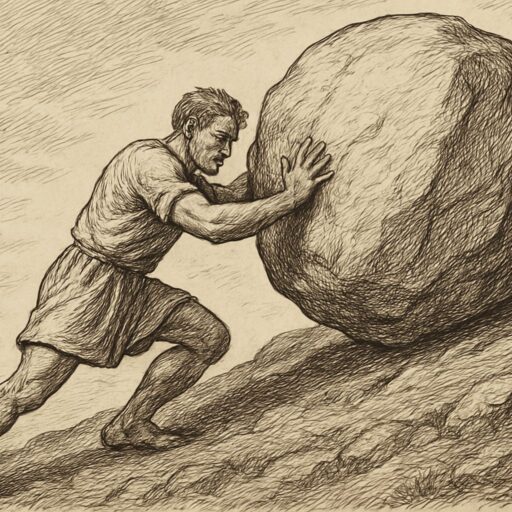
Article-At-A-Glance
- Breaking bad habits is neurologically harder than building new ones because your brain has already carved out dedicated neural pathways for the old behavior.
- Willpower alone is one of the least effective tools for breaking bad habits — and science backs this up.
- The secret most people miss: you can’t just stop a bad habit, you have to replace it with something else.
- Self-judgment and shame actually slow down the habit-change process — here’s what works instead.
- It takes an average of 66 days to form a new habit, not the commonly cited 21 — and breaking one takes a different strategy entirely.
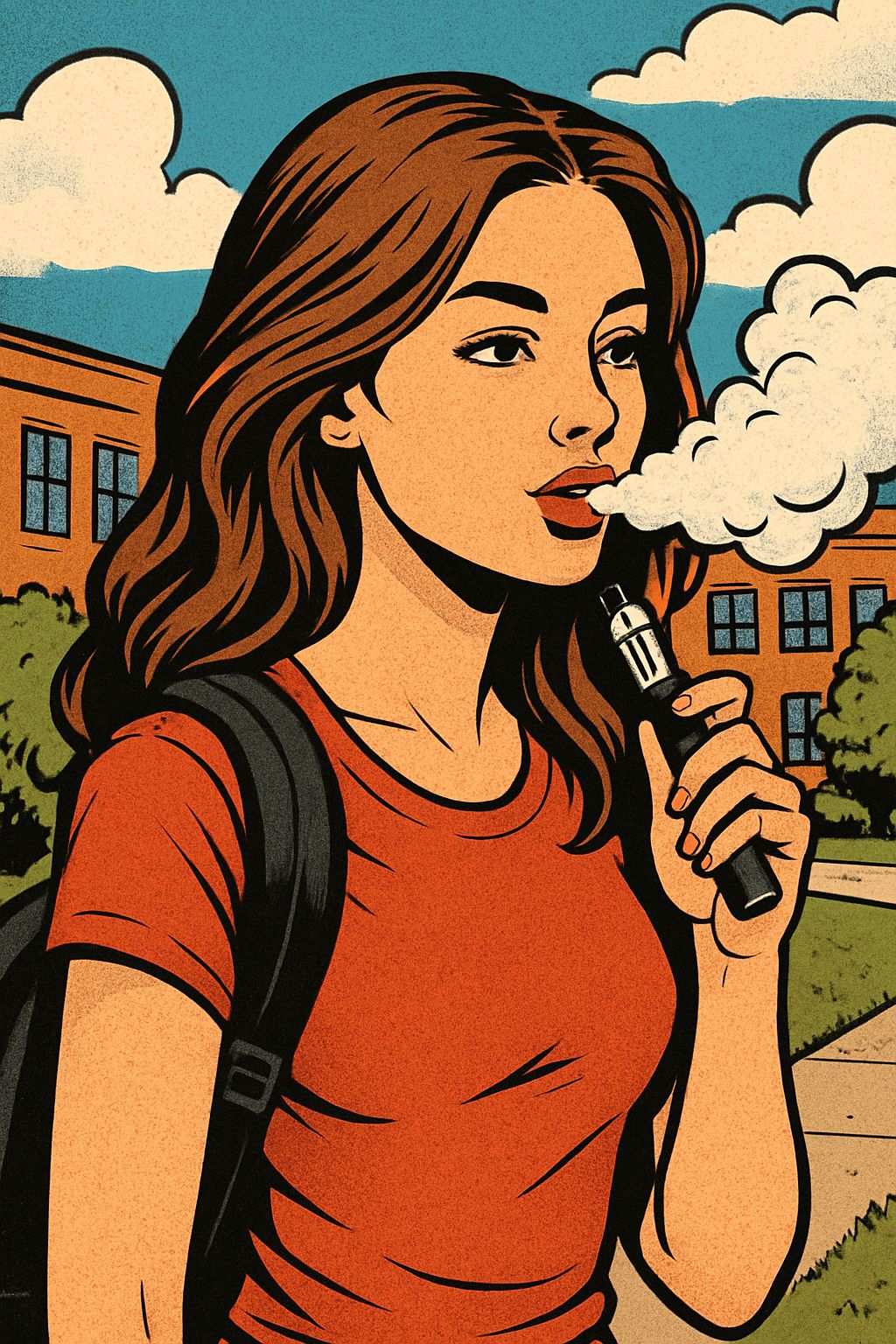
You already know what you should stop doing — so why can’t you just stop?
That question haunts millions of people every January, every Monday, and every “fresh start” that quietly fades back into the same old patterns. The frustrating truth is that breaking a bad habit isn’t a willpower problem or a motivation problem. It’s a brain architecture problem. And once you understand what’s actually happening inside your head, the path forward becomes a lot clearer.
The Science Behind Why Bad Habits Stick
Bad habits aren’t character flaws. They’re deeply etched patterns in your brain that formed because, at some point, they worked. Understanding the mechanism behind them is the first step to dismantling them.
Neural Pathways: The Highways Your Brain Refuses to Close
Every time you repeat a behavior, your brain strengthens the neural pathway associated with it. Think of it like a trail through a forest — the more you walk it, the more defined and easy to follow it becomes. Bad habits aren’t just patterns; they’re physical structures in your brain. The neural connections formed through repetition become faster and more automatic over time, which is exactly why a habit you’ve had for years feels almost involuntary. To understand more about how these pathways can lead to compulsive actions, consider exploring compulsive behaviors and behavioral addictions.
Here’s the key insight most people overlook: those neural pathways don’t disappear when you decide to quit. They stay exactly where they are, waiting to be activated by the right trigger. You’re not erasing a path — you’re trying to grow enough weeds over it that it becomes less appealing than a new one you’re building alongside it.
The Habit Loop: Cue, Routine, Reward
Neuroscientist Charles Duhigg popularized the concept of the habit loop, and it remains one of the most useful frameworks for understanding why bad habits are so sticky. Every habit — good or bad — follows the same three-part structure:
- Cue: A trigger that tells your brain to initiate the behavior (stress, a time of day, a location, an emotion)
- Routine: The behavior itself — the habit you want to break
- Reward: The payoff your brain receives, reinforcing the loop
The problem is that your brain doesn’t distinguish between a “good” reward and a “bad” one. If scrolling social media for 45 minutes relieves anxiety — even temporarily — your brain logs that as a win and files the entire sequence for future use. The reward is real, even when the habit is destructive.
Why Your Brain Treats Bad Habits as Survival Tools
This is where it gets uncomfortable. Your bad habits aren’t random — they serve a purpose. Whether it’s stress eating, smoking, procrastinating, or doomscrolling, each behavior is your brain’s answer to an unmet need. It’s seeking comfort, relief, stimulation, or escape.
According to research highlighted by the NIH, when your brain learns that a particular action produces a pleasurable or relieving response, it actively compels you to repeat that action in the future. This isn’t weakness — it’s your brain doing exactly what it was designed to do: protect you from discomfort and move toward reward.
- Bad habits often fill emotional gaps (loneliness, boredom, anxiety)
- The brain prioritizes short-term relief over long-term consequences
- Habits that reduce stress are especially hard to break because stress is a powerful and frequent cue
- Your brain experiences habit disruption similarly to loss — which triggers resistance
Recognizing that your bad habits are trying to solve a problem — even if they’re solving it badly — changes how you approach breaking them. Instead of fighting yourself, you start working with your brain’s wiring instead of against it. Understanding substance use vs. abuse can also provide insights into how habits form and persist.
Building New Habits vs. Breaking Old Ones: What’s the Real Difference?
Most people assume that building a good habit and breaking a bad one are two sides of the same coin. They’re not. The difference between the two is significant — and understanding it explains why you can pick up a new morning routine in weeks but still struggle with the same bad habit you’ve been fighting for years.
New Habits Start With a Blank Slate
When you build a new habit, you’re creating a neural pathway from scratch. There’s no competing behavior, no existing reward system to override, and no automatic response pulling you in a different direction. You simply repeat the behavior consistently until the brain starts to automate it. It’s hard, but it’s straightforward — like drawing a new road on an empty map.
Bad Habits Force You to Fight Your Own Autopilot
Breaking a bad habit is a completely different challenge. You’re not working with a blank slate — you’re working against an established, well-reinforced system. As one behavioral expert put it plainly: “You’re fighting your physical brain, neuronal pathways already built and working.” Every time your cue appears, your brain’s default response fires automatically, often before your conscious mind even registers what’s happening. To understand more about how these neuronal pathways influence behavior, exploring psychological concepts can be insightful.
The autopilot is the problem. And unlike a new habit — which just needs repetition to build — a bad habit requires you to intercept an existing reflex, redirect the behavior, and do it consistently enough that a new pathway becomes the brain’s preferred route. That’s not twice as hard. For many people, it’s an entirely different kind of hard.
Why Willpower Alone Won’t Break Bad Habits
Willpower feels like the obvious solution — just try harder, want it more, be more disciplined. But relying on willpower to break a bad habit is like trying to hold back a river with your hands. It works for a moment, then the pressure becomes too much.
The reality is that willpower is a finite resource. Research in behavioral psychology consistently shows that the more decisions you make and the more you resist urges throughout the day, the less mental energy you have left to resist the next one. This is sometimes called decision fatigue — and it’s a major reason why people who do well all day long tend to fall back into bad habits at night, when their resistance is at its lowest.
The Resistance Effect: Why Trying Harder Makes It Worse
Here’s something counterintuitive: the harder you try to suppress a thought or behavior, the more power you give it. Psychologists call this ironic process theory — the mental effort of trying NOT to think about something actually keeps it front and center in your mind. Tell yourself not to think about eating chips, and suddenly chips are all you can think about.
The same principle applies to habits. The more you white-knuckle your way through cravings using sheer resistance, the more mentally exhausting the process becomes — and the more dramatically you tend to rebound when your guard finally drops. This is why so many people who “successfully” quit a bad habit through pure willpower end up back where they started, often worse than before.
The Role of Stress and Emotional Triggers
Stress is the single most powerful activator of bad habits. When cortisol levels spike, your brain instinctively reaches for whatever has provided relief in the past — and those well-worn neural pathways light up like a switchboard. Emotional triggers like loneliness, boredom, anxiety, and frustration work the same way. They bypass your rational thinking and go straight to the habit center of your brain, which is why you often find yourself mid-bad-habit before you even consciously decided to start.
Why New Year’s Resolutions Fail Within Weeks
New Year’s resolutions are essentially willpower experiments conducted under the worst possible conditions — high expectations, vague plans, and zero structural support. Most resolutions fail not because people lack commitment, but because they rely entirely on motivation, which fluctuates daily, rather than on system design, which doesn’t. Without changing the environment, identifying triggers, or replacing the behavior with something else, the old habit simply waits for motivation to dip — and then it moves right back in.
The Most Effective Way to Break a Bad Habit Is to Replace It
You can’t just leave a void where a habit used to be. The brain needs something to do with the cue and the craving — so if you don’t give it an alternative, it defaults to what it already knows. The most effective habit-breaking strategy isn’t subtraction. It’s substitution.
How Habit Substitution Works in the Brain
Habit substitution works by keeping the existing cue and reward intact while swapping out the routine in the middle. Because the neural pathway is triggered by the cue and sustained by the reward, the habit loop itself doesn’t need to be destroyed — it just needs a new middle section. Over time, with enough repetition, the new routine becomes the brain’s automatic response to the old cue.
For example, if stress (cue) triggers you to smoke (routine) because it creates a moment of pause and relief (reward), you can substitute a five-minute walk or a breathing exercise that provides the same pause and physiological calm. The cue is the same. The reward is similar. But the routine — the part doing the damage — has changed.
This is why cold turkey approaches have a lower success rate for deeply ingrained habits. They eliminate the routine without addressing the cue or replacing the reward, leaving the brain in a state of unresolved craving. Substitution gives the brain a path forward, not just a dead end.
Stop Judging Yourself: Self-Compassion Speeds Up Change
One of the most counterproductive things you can do when trying to break a bad habit is beat yourself up every time you slip. Shame and self-criticism activate the brain’s threat response, which increases stress — which is often the very trigger driving the habit in the first place. Research consistently shows that self-compassion after a setback leads to faster recovery and greater long-term success than self-criticism does. Treat a relapse like data, not defeat. For more on overcoming setbacks, explore setback psychology.
How to Identify Your Triggers Like a Scientist
Before you can substitute a behavior, you need to know exactly what’s setting it off. Most people have a vague sense of their triggers but have never actually mapped them. Treat this like an experiment — observe without judgment and look for patterns across five variables every time the habit occurs. For a deeper understanding, explore compulsive behaviors and behavioral addictions to see how they might relate to your habits.
The Trigger Audit Framework
📍 Location: Where were you when the urge hit?
⏰ Time: What time of day was it?
😌 Emotional State: What were you feeling right before?
👥 People: Who were you with, or were you alone?
⏮ Preceding Action: What did you do immediately before the urge appeared?
Run this audit for at least one week, logging each instance honestly. Patterns will emerge quickly — most people discover that their bad habit is tied to just two or three consistent triggers, not the endless stream of uncontrollable urges it felt like before.
Once you know your triggers, you have two powerful options: avoid the trigger when possible, or pre-plan your substitution response so that when the trigger fires, a new routine is already queued up. The second option is more sustainable for triggers you can’t avoid, like stress or boredom.
This is where implementation intentions come in — a strategy backed by behavioral science where you create an explicit if-then plan. “If I feel the urge to check my phone during work, then I will take three deep breaths and write down one task I need to complete.” Studies show that people who use if-then planning are significantly more likely to follow through on behavior changes than those who rely on general intentions alone.
Shift Your Focus From Stopping to Starting
The language you use when approaching habit change matters more than most people realize. When your entire focus is on stopping something, your brain fixates on the very behavior you’re trying to avoid. Shift the frame entirely — instead of “I’m trying to stop eating junk food,” say “I’m building a habit of eating one nutritious meal a day.” That single reframe moves your attention from deprivation to progress, and your brain responds to that difference in a measurable way.
Small wins compound. Every time you successfully execute a replacement behavior, you’re laying down a new neural pathway and weakening the pull of the old one. You’re not just breaking something down — you’re building something up. That distinction keeps motivation alive during the process, because progress feels very different from punishment. For more insights, you can explore ways to build good habits and break bad ones.
You Can Rewire Your Brain — But It Takes the Right Strategy
The popular belief that it takes 21 days to break a habit is a myth that has set back more people than it has helped. A landmark study published in the European Journal of Social Psychology found that it takes an average of 66 days for a new behavior to become automatic — and the range varied from 18 to 254 days depending on the person and the behavior. Breaking a deeply ingrained bad habit sits firmly on the longer end of that spectrum.
That’s not discouraging — it’s liberating. It means that slipping up on day 10 or day 30 doesn’t mean you’ve failed. It means you’re still in the middle of a process that was always going to take longer than a few weeks. The right strategy is not perfection. It’s consistency over time, paired with a clear substitution behavior, an understanding of your triggers, and the self-compassion to keep going when you stumble. Your brain can be rewired — it just requires patience, the right tools, and the willingness to stop fighting yourself and start working with how your brain actually functions, as discussed in the psychology of open and closed loops.
Frequently Asked Questions
Here are honest, science-backed answers to the most common questions people have when they’re struggling to break a bad habit.
How Long Does It Actually Take to Break a Bad Habit?
It takes longer than most people expect. While the “21 days” figure is widely repeated, research found the average is closer to 66 days, with significant variation based on the complexity of the habit and individual differences. Some habits — especially those tied to strong emotional triggers or long histories of repetition — can take several months to meaningfully change. The key is not to measure success by a fixed timeline, but by the consistency of your substitution behavior over time.
Is It Possible to Break a Bad Habit Without Replacing It?
Technically yes, but practically speaking, it’s far less effective. When you remove a habit without replacing it, you leave the cue-reward loop incomplete. The trigger still fires, the craving still appears, and without a designated alternative behavior, your brain defaults to what it knows. For habits tied to deep emotional needs — stress relief, boredom, social anxiety — going cold turkey without a substitution plan tends to produce short-term results followed by relapse. Building a replacement behavior is the structural difference between lasting change and a temporary streak. For more on this, consider exploring the psychology of open and closed loops.
Why Do Bad Habits Come Back Even After You’ve Quit?
Bad habits come back because the neural pathways that support them never fully disappear — they just become less active. When a powerful enough trigger appears — usually high stress, a familiar environment, or an emotional low point — those dormant pathways can reactivate quickly. This is especially common during periods of major life disruption. The brain under pressure looks for the fastest route to relief, and old habits represent the most well-worn path available. This is why relapse doesn’t mean failure; it means a trigger caught you without a ready substitute response.
Does Breaking One Bad Habit Make It Easier to Break Others?
Yes — and there’s a compelling reason for this. Successfully changing one behavior builds what researchers call self-efficacy: your belief in your own ability to change. That belief is not just psychological — it tangibly increases your capacity to take on harder challenges. There’s also evidence of what some researchers call a keystone habit effect, where certain foundational habits (like regular exercise or consistent sleep) create positive ripple effects that make other behaviors easier to regulate.
The practical takeaway: don’t try to break five bad habits at once. Start with one that is meaningful but achievable. Use it as proof to yourself that change is possible. Then stack the next one on top of the confidence and discipline you’ve already built. Sequential habit change is significantly more sustainable than simultaneous overhaul.
What Is the Biggest Mistake People Make When Trying to Break a Bad Habit?
The single biggest mistake is relying on motivation and willpower as the primary strategy. Both are unreliable — motivation fluctuates with mood, sleep quality, stress levels, and circumstance. Willpower depletes throughout the day. Building your entire habit-breaking plan on either one is building on sand.
The second major mistake — closely related — is having no plan for the moment the craving hits. Most people vaguely intend to “resist” when the urge appears, but without a specific pre-decided replacement behavior, resistance becomes a battle of willpower that the habit usually wins. Implementation intentions — explicit if-then plans — dramatically outperform vague goals in behavioral research.